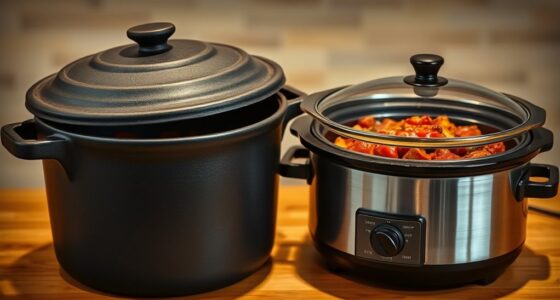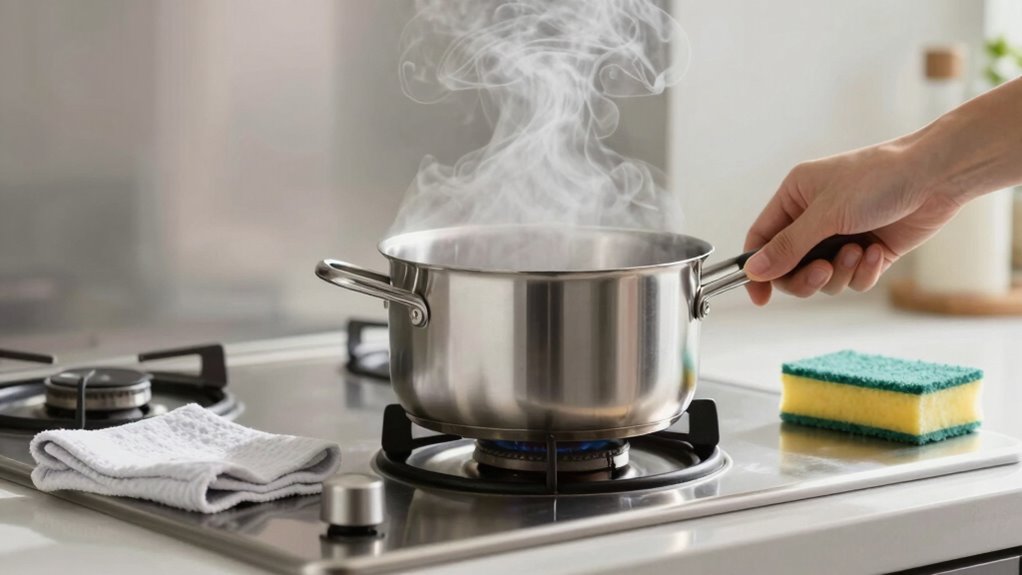

To prevent burnt smells from sticking around, make sure you use proper ventilation like a range hood or exhaust fan during and after cooking. Clean your stovetop, oven, and filters regularly to remove grease and food spills that cause odors. Use lids to trap steam, and avoid burning food by cooking on lower heat and not leaving food unattended. Address smells quickly by opening windows and running fans. Keep your kitchen fresh—there’s more you can do to make it smell clean and inviting.

Get kitchen staples and gadgets delivered free with Prime
- Fast, free delivery on millions of items
- Prime Video, Amazon Music and more included
- Member-only deals all year
Key Takeaways
- Ensure proper ventilation by turning on range hoods or exhaust fans during and after cooking.
- Clean stovetop, oven, and filters regularly to prevent grease buildup that causes lingering odors.
- Cover pots and pans to contain steam and prevent smoke or burnt smells from escaping.
- Use natural odor absorbers like vinegar or baking soda to neutralize residual smells promptly.
- Address developing odors immediately by increasing airflow and cleaning surfaces to prevent odors from settling.
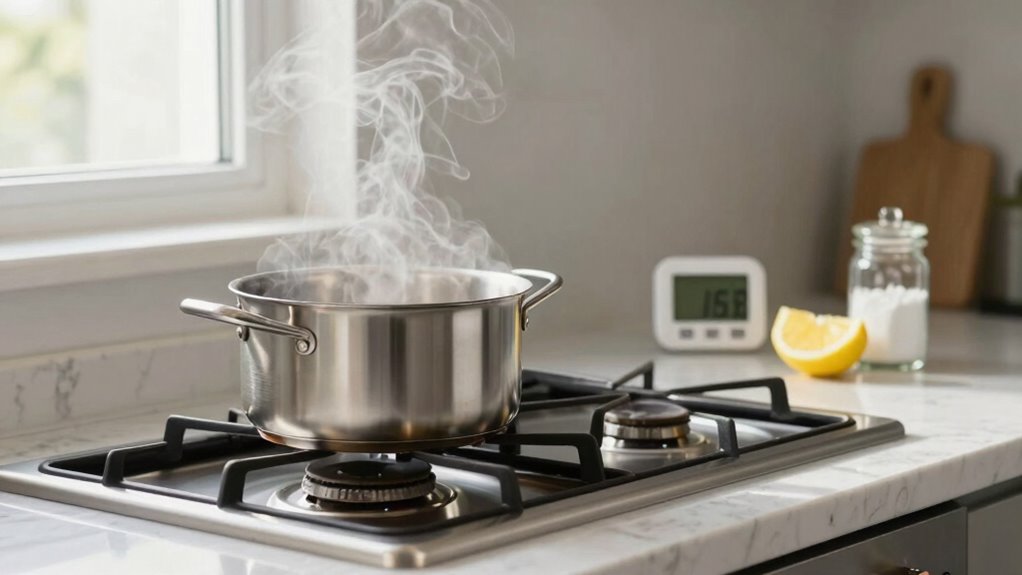
Burnt smells can quickly fill your home and ruin the atmosphere, but you can prevent them with simple steps. One of the most effective ways is to focus on your kitchen ventilation. When cooking, especially when frying or roasting, make certain your range hood or exhaust fan is turned on and functioning properly. Good ventilation helps remove smoke, steam, and odors before they settle into your walls and furniture. If your ventilation system is outdated or insufficient, consider upgrading to a more powerful range hood or adding a portable air purifier with a carbon filter. Keeping the kitchen well-ventilated during and after cooking minimizes the chances of lingering burnt smells that can be difficult to eliminate later.
Effective kitchen ventilation prevents burnt smells from lingering and ruining your home’s atmosphere.
Proper cleaning plays an essential role in preventing burnt odors from sticking around. Regularly clean your stovetop, oven, and microwave to remove food spills and grease that can burn and produce strong odors. Pay special attention to spills that occur during cooking, as they can quickly burn and emit unpleasant smells. Use non-abrasive cleaners on surfaces to avoid damage and ensure thorough cleaning. Don’t forget to clean your range filters, as accumulated grease can impair ventilation efficiency and trap odors, making it even harder to get rid of burnt smells once they develop. Maintaining a clean cooking environment reduces the likelihood of burnt food residue causing persistent odors. Additionally, understanding how ventilation systems work can help you optimize their use for better odor control. Learning about how airflow and extraction operate can help you make more informed decisions when maintaining or upgrading your ventilation setup. An improved understanding of smoke and odor removal can also assist in selecting the right solutions for your home. Moreover, choosing the right filter types can significantly enhance your system’s ability to trap and neutralize odors effectively. Familiarizing yourself with ventilation efficiency can further improve your setup’s performance and help you keep your space fresh.
In addition to ventilation and cleaning, be mindful of how you cook. Use lower heat settings when possible, and avoid leaving food unattended, especially when frying or roasting. Using lids on pots and pans traps steam and odors, preventing them from spreading throughout your home. If you notice a smell starting to develop while cooking, open windows or turn on fans immediately to disperse the odor before it becomes a problem. It’s also helpful to have some natural odor absorbers on hand, like bowls of vinegar or baking soda, which can neutralize lingering smells if you notice them before they set in.
Finally, after cooking, take immediate steps to freshen your space. Wipe down surfaces, empty trash cans, and run your exhaust fan for a few extra minutes. This routine keeps your kitchen smelling clean and prevents burnt odors from seeping into the fabric of your home. By maintaining good kitchen ventilation, practicing proper cleaning, and being proactive during cooking, you’ll noticeably reduce the chances of burnt smells sticking around and enjoy a fresher, more inviting home environment.
As an affiliate, we earn on qualifying purchases.
Frequently Asked Questions
Can Burnt Smells Linger on Clothing?
Yes, burnt smells can linger on clothing. To tackle this, use laundry tips like washing clothes with vinegar or baking soda, which help neutralize odors. You can also try scent masking by adding essential oils or scented fabric softeners during the wash. If the smell persists, air dry your clothes outside or rewash them. These steps will help guarantee your clothes smell fresh and free of burnt odors.
How Long Do Burnt Odors Typically Last?
Burnt odors usually last a few hours to several days, depending on the source and ventilation. You can reduce their duration by improving kitchen ventilation—like opening windows or turning on exhaust fans—and using odor absorbers such as baking soda or activated charcoal. Regularly airing out your space helps dissipate lingering smells faster, preventing them from settling into fabrics or surfaces. Proper odor absorption techniques keep your home smelling fresh longer.
Are Certain Materials More Prone to Retaining Burnt Smells?
Yes, certain materials are more prone to retaining burnt smells due to their scent absorption and material sensitivity. Fabrics like wool, velvet, and thick curtains tend to trap odors longer, making it harder to eliminate the smell. Hard surfaces like metal or plastic are less susceptible. To prevent lingering scents, choose materials less sensitive to scent absorption, and guarantee proper cleaning and ventilation to reduce odor retention effectively.
Can Using Air Purifiers Eliminate Burnt Odors?
Yes, air purifiers can help eliminate burnt odors. Their effectiveness depends on the type, especially models with activated carbon filters, which excel at odor absorption techniques. For best results, run the air purifier in the affected area continuously, ensuring proper ventilation. Regularly replace filters and combine this with thorough cleaning to maximize odor removal. This approach markedly reduces lingering burnt smells and improves air quality.
Does Burning Candles Help Remove Burnt Smells?
Burning candles can help mask burnt smells temporarily, but they don’t truly eliminate them. Opt for candles with strong, pleasant scents like vanilla or citrus, which can improve the room’s atmosphere. Some candles are formulated to absorb odors, aiding in odor absorption, but for lasting results, combine candle use with thorough cleaning. Remember, ventilation is key—burning candles alone won’t fully remove stubborn burnt odors.
kitchen air purifier with carbon filter
As an affiliate, we earn on qualifying purchases.
As an affiliate, we earn on qualifying purchases.
Conclusion
To keep your kitchen smelling fresh, it’s best to act quickly when something starts to burn. Many believe that boiling vinegar or citrus peels can neutralize lingering odors, but research shows these methods only mask smells temporarily. Instead, thoroughly ventilate the space and clean surfaces promptly. Trusting proven techniques like airing out the room and using baking soda will help prevent burnt smells from sticking around, ensuring your kitchen stays inviting and odor-free.
As an affiliate, we earn on qualifying purchases.
As an affiliate, we earn on qualifying purchases.
Halloween Picks
halloween
As an affiliate, we earn on qualifying purchases.