
🔍 Read the full analysis: Malloreddus Alla Campidanese: Sardinia's Saffron Sausage Pasta on Mad Tasting

Get kitchen staples and gadgets delivered free with Prime
- Fast, free delivery on millions of items
- Prime Video, Amazon Music and more included
- Member-only deals all year
TL;DR
Malloreddus alla Campidanese is a traditional pasta dish associated with Campidano in southern Sardinia, combining ridged semolina pasta with pork sausage, tomato, saffron and pecorino. A Mad Tasting guide explains the ingredients, cooking method and practical substitutions; the source does not report a new announcement or event.
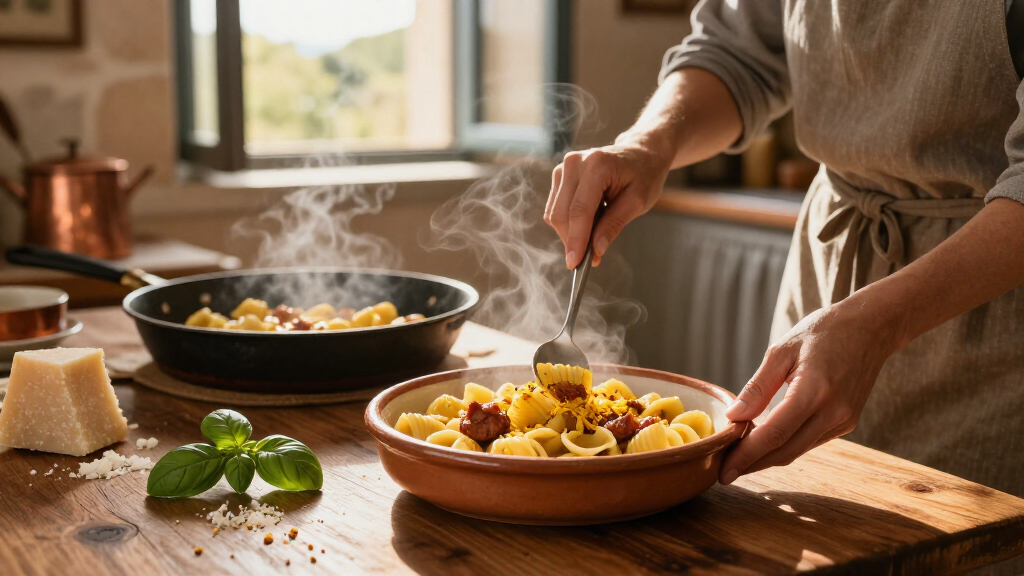
Mad Tasting has published a guide to malloreddus alla Campidanese, a traditional pasta dish associated with Campidano in southern Sardinia. The guide describes ridged semolina pasta served with pork sausage, tomato, saffron and pecorino, and offers a practical method for making the dish at home.
The dish’s identity rests on the pairing of malloreddus, a small semolina pasta, with a savory sauce built around sausage and tomato. Saffron adds fragrance and a golden tint, while pecorino—typically made from sheep’s milk—gives the finished dish a salty, tangy note. Mad Tasting says cream is not a defining ingredient; the sauce’s richness comes from the sausage, olive oil and cheese.
The guide’s method is to cook the sausage gently, add tomato and let the sauce simmer, and steep saffron separately in warm water before incorporating it. Cook the pasta until tender but still firm, then toss it with the sauce and a little reserved pasta water. The starchy water can help the sauce cling to the pasta’s ridges and bring the ingredients together. The source advises a restrained approach to added salt and saffron so neither overwhelms the other flavors.
Malloreddus are sometimes called “Sardinian little gnocchi,” but the name does not mean they contain potato. They are semolina pasta, traditionally shaped by rolling small pieces of dough over a ridged surface. The grooves catch sauce and small pieces of sausage. Dried malloreddus are a practical option outside Sardinia; the guide suggests cavatelli or small pasta shells if the Sardinian shape is unavailable, while noting that the result will differ in texture and shape.
Sardinia · Campidano · A regional pasta guide
Malloreddus Alla Campidanese
Ridged semolina pasta meets pork sausage, tomato, saffron and pecorino in a hearty dish associated with southern Sardinia. Here is the flavor logic, the home-cooking method and the details behind its name.
Southern Sardinia
Small, ridged shapes
Fragrance and golden color
No event or announcement reported
01 / The flavor framework
Four ingredients, one savory balance
The sauce feels substantial through the richness of sausage, olive oil and cheese. Tomato brings acidity, saffron adds aroma, and pecorino finishes with a salty, tangy edge.
Malloreddus
Semolina pasta rolled over a ridged surface. Its grooves catch sauce and small pieces of sausage.
Pork sausage
Cooked gently to build the sauce’s hearty base and provide much of its richness.
Saffron
Steeped in warm water, then added for fragrance and a golden tint. Use a measured hand.
Pecorino
Typically made from sheep’s milk; a little adds concentrated, salty and tangy flavor.
Tomato’s acidity offsets the sausage’s richness. Herbs, garlic and bay leaf may vary by cook; cream is not a defining ingredient in the guide.
02 / From pan to plate
A gentle, practical cooking sequence
Cook the sauce while the pasta boils, then bring them together with a splash of starchy water. Taste before adding salt: sausage and pecorino already season the dish.
Brown gently
Cook the sausage in olive oil over gentle heat. Add tomato and let the sauce simmer.
Steep separately
Soak saffron in warm water, then stir the fragrant liquid into the simmering sauce.
Tender, still firm
Boil malloreddus until just tender. Reserve some pasta water before draining.
Toss and finish
Coat pasta in sauce over low heat. Add reserved water a little at a time, then finish with pecorino.
Flavor roles
Illustrative flavor roles, not measured quantities. Keep saffron aromatic rather than dominant.
The finishing move
Starchy pasta water helps the sauce cling to the ridges and brings the ingredients together. Add it gradually while tossing; stop when the pasta is coated.
Season cautiously and taste after adding pecorino. The guide provides a method, not universally fixed measurements.
03 / Shape, place and variation
A regional style, not one fixed recipe
Malloreddus alla Campidanese is strongly associated with Campidano, a broad plain in southern Sardinia. Household habits, available ingredients and occasion can shape the finished dish.
“Little gnocchi” describes the shape
“Gnocchetti sardi” means “Sardinian little gnocchi,” but malloreddus are semolina pasta, not potato dough. The name is traditionally linked to malloru, a Campidanese word for bull or calf—sometimes interpreted as “little calves.” That origin is a traditional interpretation, not a confirmed etymology.
The ridges help hold a substantial sauce. Dried malloreddus are a practical option outside Sardinia.
Cavatelli or small pasta shells can catch sauce when malloreddus are unavailable, though texture and shape will differ.
The sausage, tomato, saffron and semolina pasta combination is a familiar Campidano style. Herbs and other additions can vary from cook to cook.
04 / Quick answers
What to know before cooking
The guide is culinary in focus. It reports no new product, official designation, change in food practice or future event.
What is malloreddus alla Campidanese?
A Sardinian pasta dish associated with Campidano, made with ridged semolina pasta and a sauce featuring pork sausage, tomato, saffron and pecorino.
Does malloreddus contain potato?
No. It is semolina pasta; “Sardinian little gnocchi” refers to its small shape, not its ingredients.
Is cream a defining ingredient?
No. The guide describes richness coming from sausage, olive oil and pecorino rather than cream.
How should saffron be added?
Steep it in warm water, then add the liquid to the sauce. Use enough for fragrance without overwhelming the other flavors.
05 / The cooking logic
Follow the chain
Each step supports the next: build a balanced sauce, let the pasta’s ridges catch it, and adjust the finish to taste.
Campidano style
A familiar combination shaped by local and household practice.
Semolina + sauce
Ridged malloreddus meet savory sausage, tomato and saffron.
Starchy water
A small splash helps the sauce coat the pasta evenly.
Pecorino + taste
Add cheese, then decide whether the dish needs extra salt.
A Regional Pasta, Not One Fixed Recipe
The guide presents the dish as a way to understand a regional Sardinian cooking tradition through the roles of its ingredients. Tomato’s acidity offsets the sausage’s richness, saffron contributes aroma rather than extra salt, and pecorino finishes the sauce with concentrated flavor. That combination explains why the dish can feel substantial without relying on cream.
For home cooks, the practical point is flexibility without losing the dish’s central character. The source describes the sausage, tomato, saffron and semolina pasta combination as a familiar Campidano style, not a single recipe with fixed measurements. Herbs, garlic and bay leaf may vary by cook. Substituting another small, sauce-catching pasta can make the dish more accessible, though it does not reproduce malloreddus exactly.
Products Worth Considering

Ninja Sizzle Indoor Grill and Griddle, 14-Inch, 500°F, Grey/Silver (GR101)

De'Longhi Magnifica Duo Fully Automatic Espresso Machine with Milk Frother, Silver

Cuisinart Chef's Classic 11-Piece Stainless Steel Cookware Set
As an affiliate, we earn on qualifying purchases.
Campidano’s Malloreddus Tradition
Campidano is a broad plain in southern Sardinia, and malloreddus alla Campidanese is strongly associated with the area. The source emphasizes that Sardinian cooks serve malloreddus in different ways. The sausage-and-saffron sauce is a regional style, rather than the only accepted preparation; household habits, available ingredients and occasion can shape the finished dish.
The pasta’s nickname can also cause confusion. “Gnocchetti sardi” means “Sardinian little gnocchi,” referring to its small shape, not a potato-based dough. The source says the name malloreddus is traditionally connected to malloru, a Campidanese word for bull or calf, and is sometimes interpreted as “little calves.” It cautions that this is a traditional interpretation, not a certain account of the word’s origin.
““The defining combination is the semolina pasta and savory saffron-sausage sauce.””
— Mad Tasting
Recipe Variations and Source Limits
The source describes a regional dish with room for household variation, not a single standardized formula. It does not provide universally agreed ingredient quantities, and it notes that cooks differ in their use of herbs and other additions. The account also offers no publication date, named recipe author or reporting on how widely the dish is prepared across Sardinia.
The word’s proposed connection to malloru is presented as a traditional interpretation, not a confirmed etymology. The source’s guidance is culinary rather than a report of a new product, official designation or change in food practice.
Using the Guide at Home
Readers following the guide can prepare the sauce while the pasta cooks, steep saffron in warm water, and reserve some cooking water before draining. Toss the pasta with the sauce over gentle heat, adding the reserved water in small amounts until the sauce coats the ridges. Taste before adding extra salt, since sausage and pecorino can already contribute substantial seasoning.
The source provides no future event or announced follow-up. Its practical next step is to choose malloreddus where available—or a small substitute such as cavatelli—and treat the sausage, tomato, saffron and pecorino as the dish’s central combination, adjusting other additions to taste.
Key Questions
What is malloreddus alla Campidanese?
It is a pasta dish associated with Campidano in southern Sardinia, made with ridged semolina pasta and a sauce featuring pork sausage, tomato, saffron and pecorino.
Does malloreddus contain potato?
No. Malloreddus are semolina pasta. The nickname “Sardinian little gnocchi” refers to their small shape, not potato in the dough.
Is cream a traditional defining ingredient?
The Mad Tasting guide says cream is not a defining ingredient. It describes the dish’s richness as coming from sausage, olive oil and pecorino.
What can replace malloreddus?
The guide suggests cavatelli or small pasta shells because their shapes can hold a substantial sauce. They can work as substitutes, though their texture and shape differ from malloreddus.
How does saffron get added to the sauce?
The method described is to steep saffron in warm water and add it to the sauce. The guide recommends using a measured hand so its aroma does not dominate the sausage and tomato.
Source: Mad Tasting