
If you’re deciding between chamber and external sealers for home use, consider your storage needs. External sealers are quick, easy to operate, and perfect for smaller jobs or casual use. Chamber sealers, on the other hand, offer stronger, more consistent seals ideal for long-term storage and bulk packing, though they’re more complex. Understanding these differences can help you choose the right option for your kitchen, and more details are just ahead.

Get kitchen staples and gadgets delivered free with Prime
- Fast, free delivery on millions of items
- Prime Video, Amazon Music and more included
- Member-only deals all year
Key Takeaways
- Chamber sealers provide more consistent, stronger seals ideal for long-term storage, while external sealers are simpler and suitable for small-scale use.
- External sealers are easier to operate and require less maintenance, making them more user-friendly for home users.
- Chamber sealers are better for bulk and demanding preservation tasks, despite their complexity.
- External sealers are compact, quick, and perfect for casual, everyday sealing needs.
- The choice depends on storage volume, frequency, and user experience preferences.
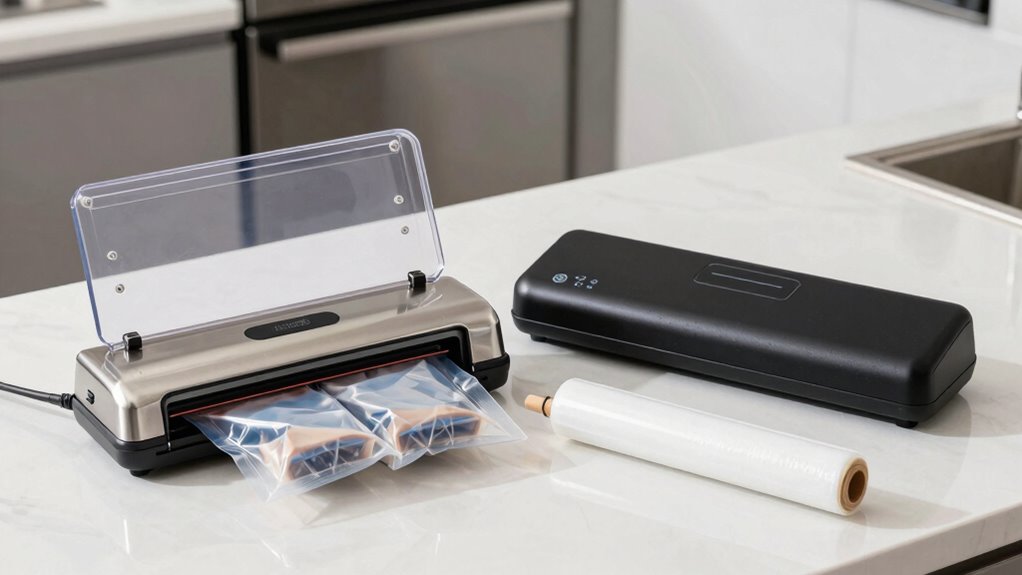
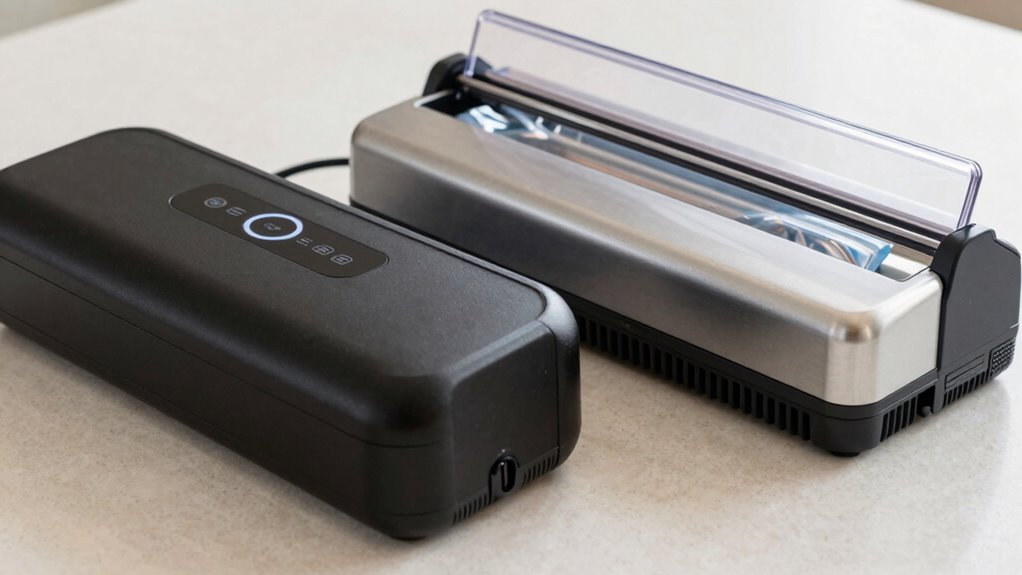
When it comes to preserving your food at home, choosing the right vacuum sealer can make a significant difference. If you’re debating between chamber vacuum sealers and external sealers, understanding their differences helps you pick the best fit for your needs. One key factor to consider is vacuum sealing durability. Chamber sealers tend to offer superior durability because they create a more consistent and even seal, which is crucial for long-term storage. They work by placing the entire bag inside a sealed chamber, removing all air before sealing the bag. This method reduces the risk of punctures or weak seals, making them ideal if you plan to store food for extended periods. External sealers, on the other hand, are more common for home use and are generally built to be sturdy but may not provide the same level of durability as chamber models. Their seals are made by pressing the open end of a bag against a sealing strip, which can sometimes be less reliable if the bag isn’t perfectly aligned or if the machine isn’t maintained properly. Additionally, the types of vacuum sealing technology used in each can influence their overall performance and longevity. For example, the seal quality in chamber sealers is often more consistent, contributing to their increased durability. A vacuum sealing process** that ensures a tight and reliable seal is essential for maintaining fresh food and preventing freezer burn over time. Proper maintenance and understanding the vacuum sealing techniques can further extend the lifespan of your equipment. Moreover, the construction materials** of the machine can also impact its durability and lifespan, making it an important consideration when choosing a model.
Ease of operation is another critical aspect to weigh. External sealers are typically more straightforward, compact, and user-friendly, making them a popular choice for everyday use. They often feature simple controls, quick setup, and minimal maintenance, so you can start sealing your food with just a few presses. Chamber sealers, however, tend to be more complex, requiring a bit more knowledge to operate efficiently. They often come with additional settings and features that might seem intimidating at first, but once you get the hang of them, they can streamline your sealing process for larger quantities or bulk storage. If you’re someone who wants quick results and minimal fuss, an external sealer might be more suitable. But if you’re looking for maximum sealing strength and durability, and don’t mind a steeper learning curve, a chamber model could be worth the investment.
Ultimately, your choice depends on how often you seal food, the types of items you store, and your comfort with operating the machine. External sealers are perfect for casual or smaller-scale use, providing convenience and ease of operation. Chamber vacuum sealers, while more involved, deliver better vacuum sealing durability, especially for long-term storage or more demanding preservation tasks. Both options have their strengths, so consider what’s most important for your kitchen and storage needs.
chamber vacuum sealer for home use
As an affiliate, we earn on qualifying purchases.
As an affiliate, we earn on qualifying purchases.
Frequently Asked Questions
Which Sealer Is More Energy-Efficient for Home Use?
Chamber vacuum sealers are generally more energy-efficient for home use. They have lower energy consumption because they use less power during operation, thanks to their sealed chamber design that minimizes heat loss. Their power efficiency means you save on electricity bills over time. External sealers tend to use more energy for shorter periods, making chamber sealers a smarter choice if you’re aiming for energy savings and efficient operation.
Can Chamber Vacuum Sealers Be Used for Liquids Safely?
Yes, chamber vacuum sealers can be used for liquid sealing safely. They excel at maintaining vacuum integrity even when sealing liquids, unlike external sealers that struggle with spillage. When using a chamber sealer for liquids, you can seal soups, marinades, or juicy items without worry. Just guarantee you leave enough headspace and avoid overfilling to maintain the vacuum’s effectiveness and prevent leaks.
Are External Sealers Suitable for Sealing Large Quantities?
They say “a stitch in time saves nine,” and that applies here. External sealers are generally suitable for sealing large quantities, but their sealing efficiency can decrease with bigger batches. For large quantities, you might find that external sealers take longer and may not provide as tight a seal as chamber sealers. If you need consistent, reliable sealing for large amounts, a chamber vacuum sealer might be your best bet.
How Long Does Each Type Typically Last With Regular Use?
With regular use, chamber vacuum sealers typically last longer than external sealers, often around 10-15 years, thanks to their durable construction and fewer moving parts. External sealers generally have a shorter lifespan of about 5-8 years, but this varies based on usage and maintenance. For maximum vacuum seal longevity and seal durability, proper cleaning and storing are essential, regardless of the type you choose.
Do Chamber Sealers Require Special Maintenance or Repairs?
Chamber sealers do require some gentle seal maintenance to keep them running smoothly, but they’re generally reliable. You might occasionally need to address minor repair costs if parts wear out or if there’s an issue with the sealing mechanism. Regular cleaning and inspections help prevent major problems, ensuring your investment stays efficient. With proper care, your chamber sealer can serve you well, making maintenance a manageable part of your routine.
external food vacuum sealer machine
As an affiliate, we earn on qualifying purchases.
As an affiliate, we earn on qualifying purchases.
Conclusion
So, whether you choose the fancy chamber vacuum sealer or the humble external one, remember: sealing your snacks like a pro won’t turn you into a gourmet chef overnight. But hey, at least you’ll have perfectly preserved leftovers and a new hobby to brag about. Just don’t expect the vacuum to do your laundry—or your life. In the end, it’s all about sealing the deal, not sealing your social life. Happy sealing!
heavy-duty vacuum sealer for long-term storage
As an affiliate, we earn on qualifying purchases.
As an affiliate, we earn on qualifying purchases.
As an affiliate, we earn on qualifying purchases.
Halloween Picks
halloween
As an affiliate, we earn on qualifying purchases.