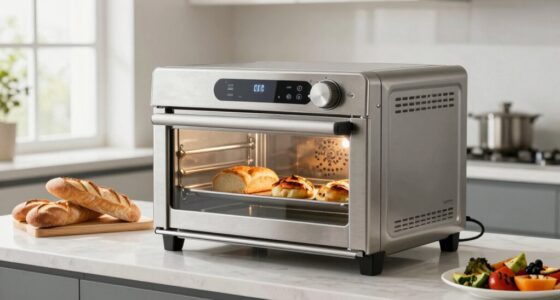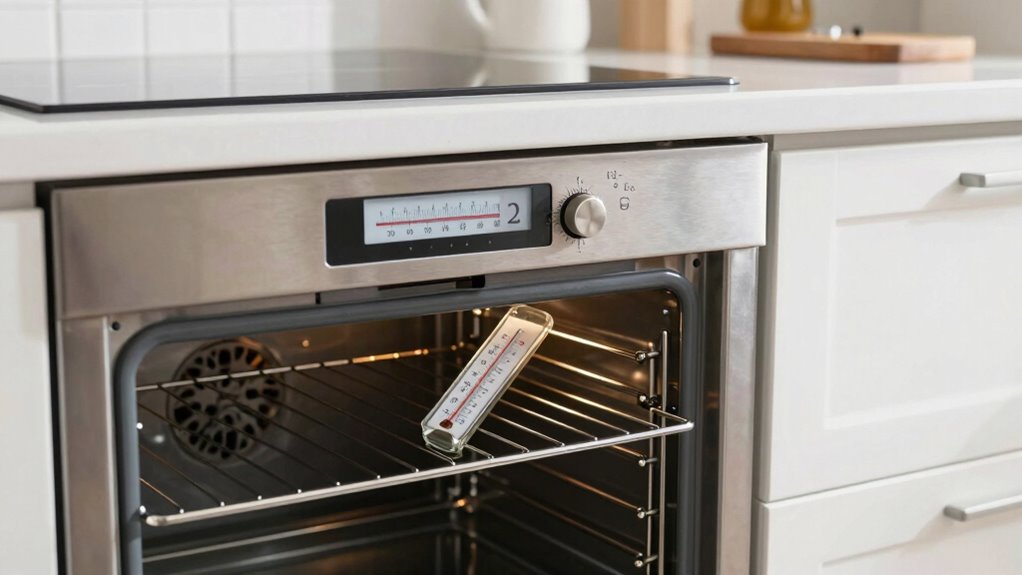
To check your oven’s accuracy, start by placing a reliable oven thermometer in the center on the middle rack, then preheat to your target temperature. Wait 15-20 minutes for the temperature to stabilize, then compare the thermometer’s reading to your oven’s setting. If there’s a discrepancy, you can calibrate or manually adjust the temperature. Keep your oven well-maintained to prevent fluctuations, and you’ll enjoy consistent baking results—stay tuned for more tips!

Get kitchen staples and gadgets delivered free — and shop member deals
- Fast, free delivery on millions of items
- Access to Prime Big Deal Days deals on October 6–7
- Prime Video, Amazon Music and more included
Key Takeaways
- Use a reliable oven thermometer placed in the center of the oven on the middle rack.
- Preheat the oven to the desired temperature and wait 15-20 minutes for temperature stabilization.
- Compare the oven thermometer reading with the oven’s built-in gauge to identify discrepancies.
- Adjust the oven’s temperature settings or calibrate if your model allows, based on the thermometer’s reading.
- Regularly repeat the check to ensure continued accuracy and maintain consistent baking results.
If you want to guarantee your baked goods turn out perfectly every time, checking your oven’s accuracy is essential. The key is to verify your oven’s temperature matches the setting on the dial or digital display. An inaccurate oven can lead to uneven baking, undercooked centers, or burnt edges. This is where understanding your oven calibration and controlling the baking temperature become crucial. Many ovens tend to drift from their set temperature over time, making it necessary to verify and adjust them periodically.
Regularly check your oven’s accuracy to ensure perfectly baked goods every time.
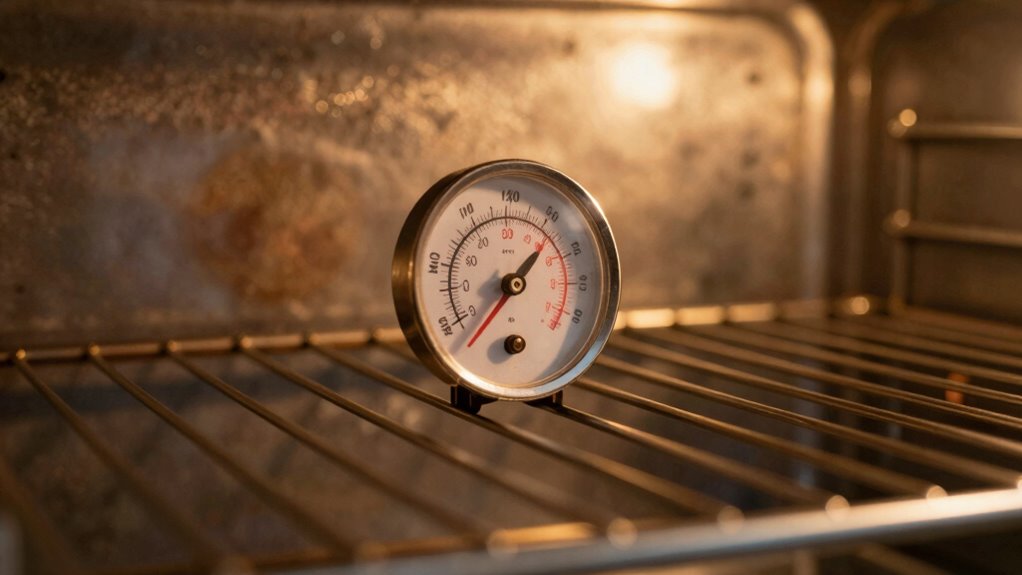
To start, you’ll need a reliable oven thermometer. Unlike the built-in oven gauges, which can be inaccurate, a good thermometer provides a true reading of your oven’s actual temperature. Place the thermometer in the center of the oven on the middle rack. Preheat the oven to the desired temperature, say 350°F, and give it about 15-20 minutes to stabilize. Once the oven signals it’s ready, check the thermometer reading. If it shows a different temperature, you’ll know your oven needs calibration or adjustment. For example, if it reads 340°F instead of 350°F, your oven runs slightly cool, and you may need to increase the baking temperature or recalibrate it.
Many modern ovens have a calibration feature, allowing you to adjust the temperature settings directly. Refer to your oven’s manual to see if it supports calibration adjustments, and follow the instructions carefully. If your oven doesn’t have a calibration option, you might need to manually adjust your baking temperature to compensate for the discrepancy. Regular oven maintenance can help prevent temperature fluctuations and ensure consistent performance. Additionally, understanding body jewelry measurements can be helpful when replacing or adjusting oven knobs or controls if needed. Keep in mind that consistent calibration ensures your baked goods are cooked evenly and predictably. If you notice frequent temperature fluctuations or large differences from the set temperature, it might be time to have your oven serviced or consider replacing the thermostat.
Regularly checking your oven’s accuracy isn’t just about better baking; it also saves you time and ingredients by preventing failed batches. When you know the true baking temperature, you can adjust recipes accordingly or recalibrate your oven for ideal performance. Ultimately, a well-calibrated oven helps you achieve consistent results, whether you’re baking bread, cookies, or delicate pastries. Maintaining accurate oven temperature control is a simple but essential step that ensures every baked item comes out just right, making your baking experience more successful and enjoyable.
As an affiliate, we earn on qualifying purchases.
Frequently Asked Questions
How Often Should I Check My Oven’s Accuracy?
You should check your oven’s accuracy at least once every three to six months to guarantee proper oven maintenance and temperature consistency. Regular checks help catch any calibration issues early, preventing uneven cooking or baking failures. If you notice temperature fluctuations or inconsistent results, it’s wise to test more frequently. Keeping your oven properly calibrated guarantees accurate temperatures, improves cooking results, and prolongs its lifespan.
Can a Faulty Oven Thermometer Affect Cooking Results?
A faulty oven thermometer can definitely affect your cooking results because inaccurate thermometer accuracy leads to inconsistent cooking temperatures. When your thermometer isn’t precise, you might think your oven is at the right temperature, but it isn’t. This inconsistency impacts cooking results, making baked goods underdone or overcooked. To maintain cooking consistency, regularly check and calibrate your oven thermometer, ensuring it provides accurate readings for better, more reliable cooking outcomes.
What Tools Are Best for Measuring Oven Temperature?
They say, “A stitch in time saves nine,” and that’s true for oven safety and baking consistency. To measure oven temperature accurately, use an oven thermometer or a digital probe thermometer. These tools give you precise readings, ensuring your oven heats correctly. Regularly checking with reliable tools helps prevent accidents and guarantees your baked goods turn out perfect every time. Trust these tools to keep your cooking safe and consistent.
How Do I Calibrate My Oven if It’s Off?
To calibrate your oven if it’s off, you’ll need to perform oven repair by adjusting the temperature dial or control. Use calibration techniques like placing an oven thermometer inside and noting discrepancies at various settings. Then, consult your oven’s manual for specific adjustment instructions, which may involve turning a screw or reprogramming. Regular calibration guarantees accurate cooking temperatures, saving you time and frustration in the kitchen.
Do Different Oven Brands Require Different Calibration Methods?
You know what they say, “Different strokes for different folks.” When it comes to oven brand differences, each brand may require calibration method variations. Some ovens have built-in calibration settings, while others need manual adjustments. Always check your user manual because calibration procedures can differ considerably. Understanding these nuances helps guarantee your oven heats accurately, no matter the brand, so your cooking turns out just right every time.
As an affiliate, we earn on qualifying purchases.
Conclusion
Now that you know how to check your oven’s accuracy, you can guarantee your baked goods turn out just right every time. Think of your oven as a trusted compass guiding your culinary adventures—if it’s off, even the best recipes can go awry. Regularly verifying its temperature keeps your kitchen running smoothly and your dishes perfectly cooked. Keep your oven in check, and your baked masterpieces will always hit the sweet spot, like a melody in perfect harmony.
As an affiliate, we earn on qualifying purchases.
As an affiliate, we earn on qualifying purchases.
Halloween Picks
halloween
As an affiliate, we earn on qualifying purchases.