
TL;DR

Get kitchen staples and gadgets delivered free with Prime
- Fast, free delivery on millions of items
- Prime Video, Amazon Music and more included
- Member-only deals all year
Vitriform3D has introduced a new 3D printing method that uses recycled glass and binder jet technology. The process creates durable, high-value products from waste glass, with potential for scaling and broader application.
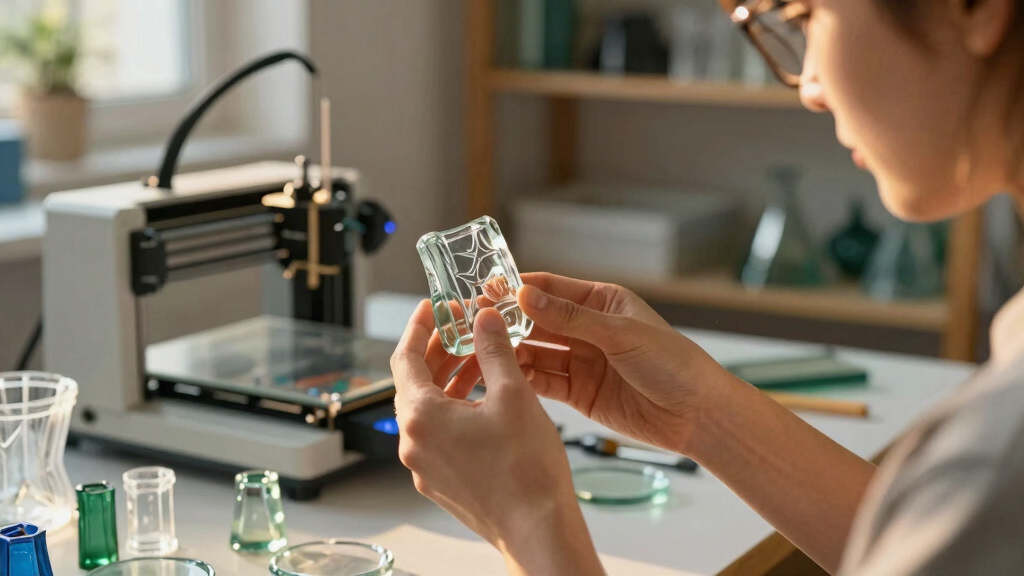
Vitriform3D has developed a novel 3D printing process that uses recycled glass and binder jet technology to create architectural and decorative products, marking a significant step toward sustainable manufacturing.
The startup, in collaboration with Oak Ridge National Laboratory’s Manufacturing Demonstration Facility, has patented a process that employs crushed post-consumer glass as the primary material. Unlike traditional glass recycling which requires energy-intensive melting, Vitriform3D’s method involves crushing glass bottles into powder and selectively separating colors to enhance aesthetic options. The process uses a binder jet technique, where a binder agent is precisely deposited onto thin layers of powdered material, building objects layer by layer. This approach allows for the creation of items such as countertops, tiles, and wall accents from waste glass.
Ryan Dehoff from ORNL explained that the binder jet process involves laying down a powder layer and then using an inkjet-like head to apply a binder, which glues particles together in specific areas. The process is adaptable to various powdered materials, but glass’s physical properties and abundance make it particularly attractive. The company reports that the process is scalable and could potentially be adapted for desktop or hobbyist 3D printers, broadening its accessibility and impact.
Why It Matters
This innovation could transform waste glass into high-value construction and design materials, reducing landfill waste and energy consumption associated with traditional recycling. Its scalable nature offers potential for widespread adoption in sustainable manufacturing, impacting industries from architecture to consumer products. The development aligns with global efforts to promote circular economies and environmentally friendly production methods.
recycled glass 3D printing filament
As an affiliate, we earn on qualifying purchases.
As an affiliate, we earn on qualifying purchases.
Background
Glass recycling has traditionally been limited by the need for energy-intensive melting and strict separation of colors and grades. Vitriform3D’s approach sidesteps these limitations by using crushed glass in powder form, combined with binder jet technology—an additive manufacturing method already proven in other materials. The collaboration with ORNL’s MDF has helped refine the process, which builds upon existing binder jet technology used in metals and ceramics. The startup’s focus on sustainability and innovative use of waste materials positions it as a potential leader in eco-friendly 3D printing.
“We lay that powder out in a very thin sheet, then take an inkjet head and put some sort of binder agent where we want to print or glue that material together.”
— Ryan Dehoff, Oak Ridge National Laboratory
“Our process allows us to turn waste glass into durable, high-quality products that can be used in various architectural and decorative applications.”
— Vitriform3D spokesperson
sustainable architectural decorative tiles
As an affiliate, we earn on qualifying purchases.
As an affiliate, we earn on qualifying purchases.
What Remains Unclear
It is not yet clear how quickly the process can be scaled commercially or adopted widely outside of pilot projects. Details about the material properties, long-term durability, and cost competitiveness of products made with this method remain to be confirmed through further testing and market trials.
eco-friendly 3D printed countertops
As an affiliate, we earn on qualifying purchases.
As an affiliate, we earn on qualifying purchases.
What’s Next
Vitriform3D plans to continue scaling its technology, conduct broader product testing, and seek commercial partnerships. The company aims to demonstrate the process’s viability at larger manufacturing facilities and explore desktop-scale applications for hobbyists and small businesses.
As an affiliate, we earn on qualifying purchases.
Key Questions
How does the binder jet process work with recycled glass?
The process involves crushing glass bottles into powder, layering it in thin sheets, and then using an inkjet-like head to deposit a binder agent that glues the particles together, building up 3D objects layer by layer.
What types of products can be made with this technology?
Vitriform3D has produced kitchen countertops, floor tiles, architectural wall accents, and other decorative or functional items from waste glass.
Is this process environmentally friendly?
Yes, it utilizes post-consumer glass waste directly, reducing landfill contributions and avoiding energy-intensive melting processes typical of traditional glass recycling.
Can this technology be used at a small or desktop scale?
The company suggests the process could be adapted for smaller, desktop or hobbyist 3D printers, potentially broadening its accessibility.
Fall Picks
fall essentials
As an affiliate, we earn on qualifying purchases.