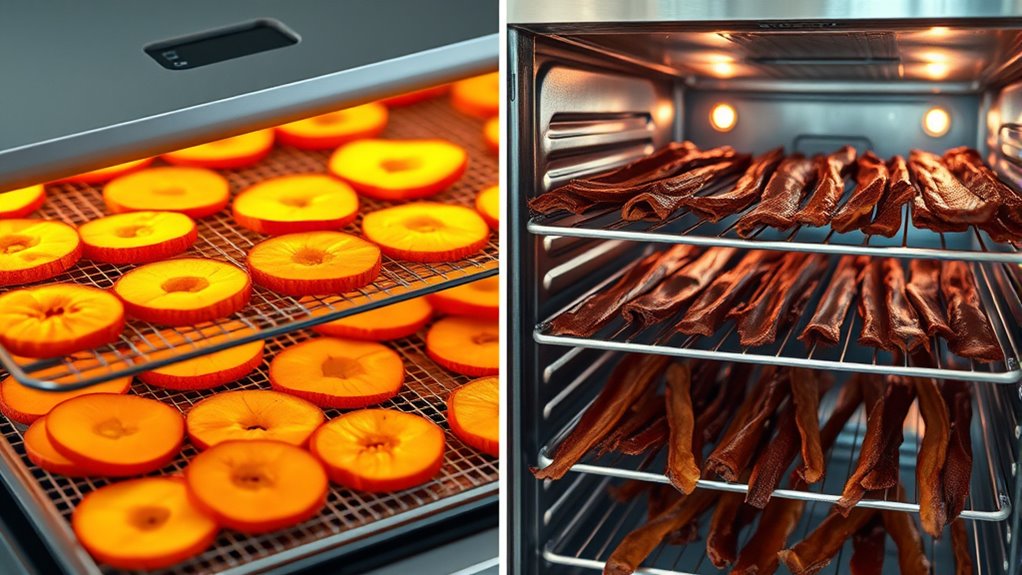

For making dried fruits and jerky, a dehydrator is your best choice. It’s more energy-efficient, provides consistent results, and preserves flavor and nutrients better than an oven. Dehydrators are designed specifically for drying, with even airflow and set-it-and-forget-it features. Ovens can work, but they tend to use more power, require more monitoring, and may produce uneven drying. Keep exploring to discover how each option can suit your needs even better.
Key Takeaways
- Dehydrators are more energy-efficient and cost-effective for drying large batches of fruits and jerky over time.
- They preserve flavor and nutrients better due to lower, even temperatures compared to ovens.
- Dehydrators offer easier operation with preset timers and adjustable controls, reducing monitoring effort.
- They ensure more consistent and uniform drying results thanks to specialized airflow systems.
- For optimal drying of fruits and jerky, a purpose-built dehydrator is generally the better choice over a standard oven.
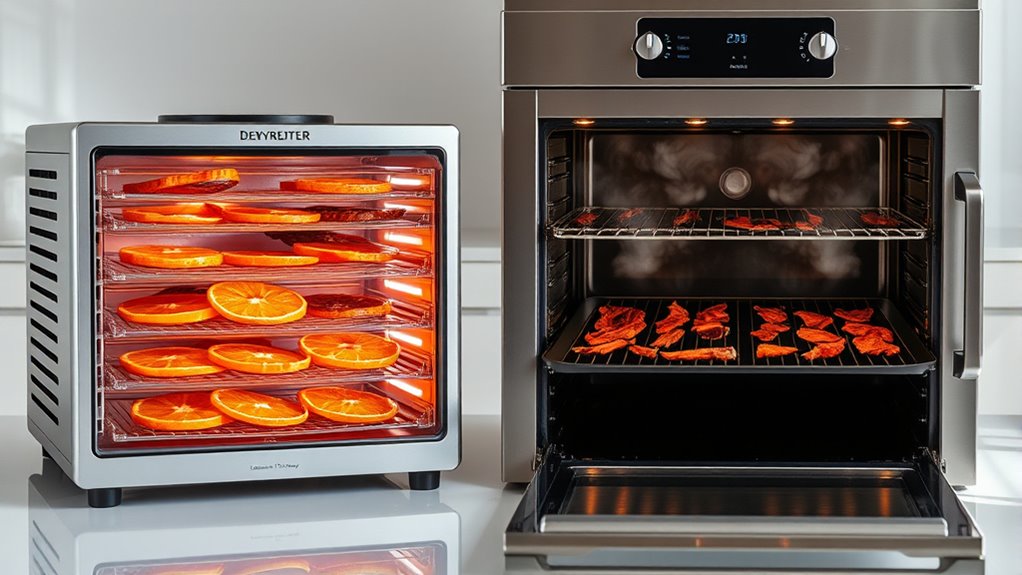
When it comes to drying foods at home, choosing between a dehydrator and an oven can substantially impact your results and convenience. Both options have their merits, but understanding their differences helps you make an informed decision based on your goals. Cost efficiency is a key factor; generally, dehydrators are more economical over time because they consume less energy and are designed specifically for drying. Ovens, especially older or larger models, tend to use more power, which can add up on your energy bill. If you’re planning to dry food regularly, investing in a dehydrator might save you money in the long run. Additionally, dehydrators often come with adjustable temperature controls and even airflow, which ensures consistent drying without wasting energy. This precision can make the process more efficient and cheaper, especially when drying large batches of fruits or jerky. Moreover, dehydrators typically have specialized airflow systems that promote even drying, minimizing the need for manual tray rotations. Flavor retention is another important aspect to contemplate. Dehydrators excel at preserving the natural flavors of fruits and meats because they operate at lower temperatures and with even heat distribution. This gentle drying process helps retain more of the food’s original taste, aroma, and nutrients. With an oven, higher temperatures and uneven heat distribution can sometimes cause flavor loss or slight caramelization, which might alter the intended taste. If you’re keen on maintaining the authentic flavor of your dried products, a dehydrator is usually the better choice. Not only does it preserve the taste, but it also helps retain the nutrients that might otherwise degrade at higher oven temperatures. Another point to ponder is ease of use. Dehydrators are purpose-built for drying, featuring racks and trays that make arranging food simple and cleanup straightforward. They often come with timers and temperature controls tailored for different foods, allowing you to set it and forget it. Ovens require more monitoring, and you might need to rotate trays or adjust settings frequently to prevent uneven drying. This extra effort can influence your convenience and overall experience, especially if you’re drying multiple batches or experimenting with different foods.
Frequently Asked Questions
Which Method Retains More Nutrients in Dried Fruits?
Using a dehydrator generally maintains more nutrients in dried fruits because it offers better nutrient preservation at controlled, lower temperatures. This method also ensures drying efficiency, preventing nutrient loss caused by high heat. With an oven, higher temperatures can degrade vitamins and antioxidants, reducing nutritional value. So, if your goal is maximum nutrient retention, a dehydrator is the better choice for drying fruits effectively and healthily.
How Do Energy Costs Compare Between Dehydrators and Ovens?
You might think ovens are more energy-efficient, but dehydrators typically cost less to operate over time. Dehydrators use less energy because they run at lower wattages and focus on drying without heating large spaces. A clear cost comparison shows dehydrators consume markedly less electricity, making them more energy-efficient for drying fruits and jerky. So, if you’re saving on energy costs, a dehydrator often wins out over an oven.
Can Both Methods Be Used Simultaneously for Larger Batches?
Yes, you can use both methods simultaneously for larger batches, but you need to take into account batch processing and equipment compatibility. Using a dehydrator and oven together can increase capacity, but ensure your equipment fits well in your space and can operate safely side-by-side. Keep an eye on temperature settings and airflow to avoid uneven drying. Combining both methods may save time but requires careful monitoring to achieve consistent results.
What Are the Best Types of Fruits for Each Method?
For best results, choose fruits like apples, pears, and strawberries for dehydrators, as their firm texture helps preserve flavor and prevents sticking. Ovens work well with softer fruits like peaches or bananas, which dry quickly and retain flavor. Using a dehydrator keeps fruit texture firm and flavor intact, while an oven may slightly alter texture but offers quicker drying. Select your method based on your desired fruit texture and flavor preservation.
How Long Do Dried Products Last With Each Drying Technique?
Imagine your dried treasures lasting for months or even years—shelf life depends on your preservation techniques. Using a dehydrator often preserves fruits and jerky longer, up to a year when stored properly, while oven drying might limit shelf life to 3-6 months due to uneven drying and potential moisture retention. Proper packaging and storage are key to maximizing longevity, so choose your method based on your preservation goals.
Conclusion
So, whether you swear by your fancy dehydrator or just throw fruit in the oven and hope for the best, remember: the real secret’s in patience, not gadgets. Sure, one’s quicker, the other more “authentic,” but at the end of the day, you’re just drying out food—like we all secretly want to do with our patience. So choose your tool wisely, or just embrace the chaos of dried fruit and jerky experiments. After all, who needs perfection?