

To quiet a noisy refrigerator, start by checking if it’s level using a spirit level and adjusting the legs accordingly to reduce vibrations. Make certain nothing is vibrating or knocking against the sides, and clean or replace door gaskets if they don’t seal properly. Also, inspect the fan for dust or damage, and tighten any loose panels or screws inside. For more tips on minimizing noise, discover how these simple adjustments can make a big difference.

Get kitchen staples and gadgets delivered free with Prime
- Fast, free delivery on millions of items
- Prime Video, Amazon Music and more included
- Member-only deals all year
Key Takeaways
- Ensure the refrigerator is level using a spirit level and adjust the leveling legs to reduce vibrations.
- Clean or replace worn door gaskets to improve sealing and decrease compressor workload and noise.
- Clear clutter and secure items inside or on top of the fridge to prevent rattling sounds.
- Turn off and clean fan blades and surrounding areas to eliminate dirt-related noise; replace damaged fans if needed.
- Tighten loose panels or screws to minimize internal vibrations and rattling.
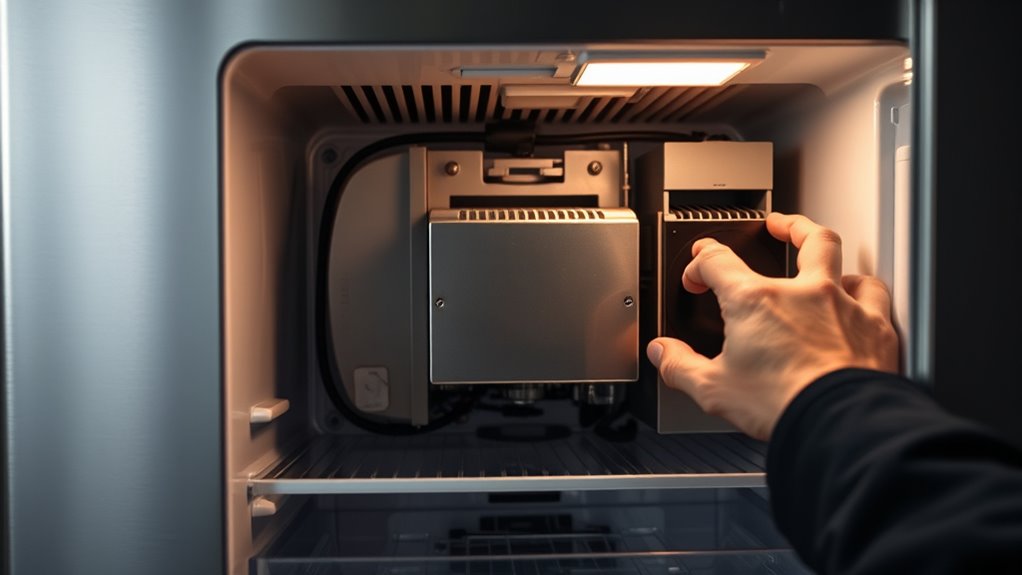
If your refrigerator is making loud or constant noises, it can be both annoying and concerning. One common culprit is compressor noise, which occurs when the compressor struggles to operate smoothly. This noise often sounds like buzzing or humming and can become louder if the compressor is overworking. Sometimes, the compressor vibrates against the cabinet, amplifying the sound. To address this, start by ensuring your refrigerator is level. Use a spirit level to check, and adjust the leveling legs if necessary. When the fridge isn’t stable, the compressor’s vibrations are more noticeable. Also, inspect if anything is touching or vibrating against the compressor or the fridge’s exterior. Clearing away clutter or repositioning the unit can considerably reduce noise.
Another frequent source of noise comes from door gasket issues. If your refrigerator door isn’t sealing properly, it can cause the compressor to run longer than needed, leading to increased noise levels. To check for gasket problems, close the door on a piece of paper or dollar bill. If you can pull it out easily without resistance, the gasket may be worn or loose. Damaged or dirty gaskets can cause the door to not seal tightly, allowing cold air to escape and forcing the compressor to work harder. Cleaning the gasket with warm, soapy water can often improve the seal. If the gasket is cracked or deformed, replacing it is the best fix to restore proper sealing and reduce unnecessary compressor noise.
Beyond these issues, rattling sounds might be caused by items stored on top of the refrigerator or loose panels inside. Make sure nothing is vibrating or knocking against the sides. Tighten any loose screws or panels to prevent rattles from becoming louder. For buzzing sounds, the fan might be the culprit, especially if it’s dirty or obstructed. Turn off the power and carefully clean the fan blades and the area around it. If the fan is damaged or wobbling, replacing it might be necessary to eliminate the noise. Additionally, understanding the importance of contingency plans can help when dealing with appliance failures or ongoing issues.
Frequently Asked Questions
Can a Noisy Refrigerator Affect Its Energy Efficiency?
A noisy refrigerator can impact its energy efficiency because increased noise often indicates the compressor or fan is working harder than necessary, raising energy consumption. The noise impact might signal underlying issues causing the appliance to run continuously or inefficiently. Addressing the noise not only reduces sound but can also improve energy performance, saving you money and extending your fridge’s lifespan. Keep it well-maintained for peak efficiency.
How Often Should I Perform Maintenance to Prevent Noise?
You should perform a maintenance schedule at least once every six months to prevent noise. Regularly cleaning coils and checking for loose parts helps with noise prevention tips. Keep the compressor area clear and ensure the door seals are tight. Staying on top of maintenance minimizes vibrations and rattling, keeping your refrigerator quieter and more efficient. Consistent upkeep saves you time and money in the long run.
Are Certain Refrigerator Brands More Prone to Noise Issues?
Some refrigerator brands are more prone to noise issues due to their reputation for manufacturing quality. Brands like Samsung and LG often have a better track record, but cheaper or lower-end models from various brands can be noisier because of lower manufacturing standards. You should research brand reputation and read reviews before buying, as quality markedly impacts the likelihood of persistent noise. Regular maintenance can also help reduce noise regardless of the brand.
Is It Safe to Use DIY Methods to Quiet a Refrigerator?
Using DIY methods to quiet your refrigerator can be safe if you follow proper DIY safety precautions, like unplugging the appliance first. For example, a homeowner carefully adjusted the leveling legs and avoided tampering with the compressor, preserving their appliance warranty. Always check your warranty terms before attempting repairs, as some DIY fixes might void it. When unsure, consulting a professional ensures safety and protects your investment.
When Should I Call a Professional for Refrigerator Noise Problems?
You should call a professional repair if your refrigerator makes an urgent noise that persists despite simple fixes or if you notice any unusual vibrations or leaks. Don’t ignore strange sounds, especially if they worsen or are accompanied by temperature issues. A professional can diagnose and fix complex problems safely, preventing further damage or potential hazards. Trust their expertise when DIY methods don’t resolve the noise or if you’re unsure about handling electrical components.
Conclusion
Just like tuning a guitar, a few simple adjustments can restore your fridge’s quiet hum. I once helped a friend whose buzzing fridge sounded like a swarm of bees; after checking the fan and leveling it, the noise disappeared. Remember, small fixes can make a big difference—so don’t ignore that rattle or hum. With patience and a little know-how, you’ll have your kitchen peaceful again, turning chaos into calm just like tuning a perfect melody.
Fall Picks
fall essentials
As an affiliate, we earn on qualifying purchases.