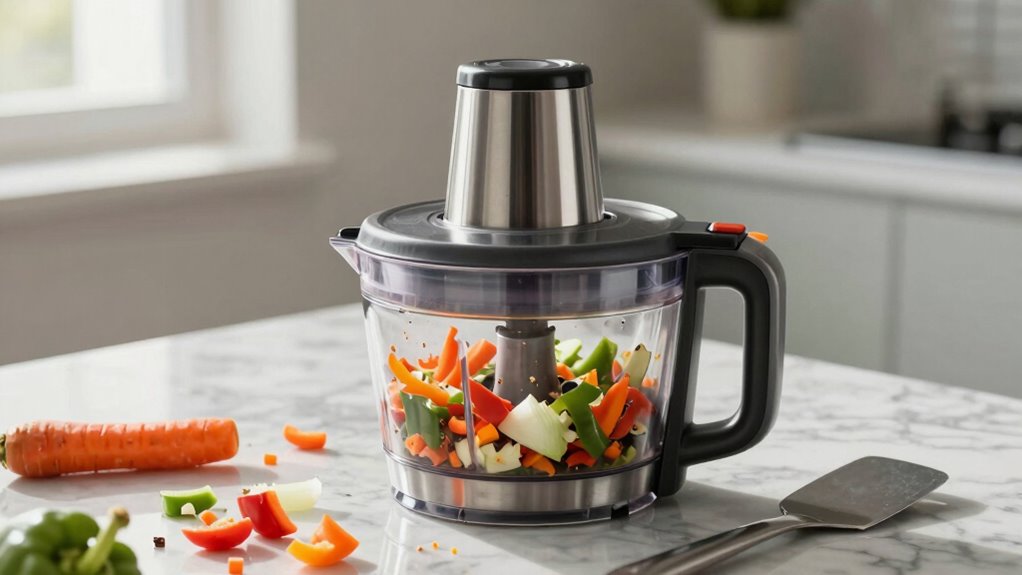
One of the biggest mistakes you can make is overloading your food processor, which causes uneven results and risks motor burnout. Not cutting ingredients into manageable pieces or using the wrong attachments can also lead to poor performance. Additionally, ignoring capacity limits and failing to clean and maintain the appliance properly shortens its lifespan. If you want to avoid these common errors and get the best from your processor, keep exploring these tips.

Get kitchen staples and gadgets delivered free with Prime
- Fast, free delivery on millions of items
- Prime Video, Amazon Music and more included
- Member-only deals all year
Key Takeaways
- Overloading the bowl with large quantities of ingredients, causing uneven processing or motor strain.
- Not cutting vegetables into manageable pieces before processing, leading to inefficient chopping or pureeing.
- Running the processor continuously during dough kneading, resulting in tough textures or motor burnout.
- Ignoring manufacturer guidelines on processing limits and recommended times, risking damage.
- Failing to clean and maintain the appliance properly, which affects performance and longevity.
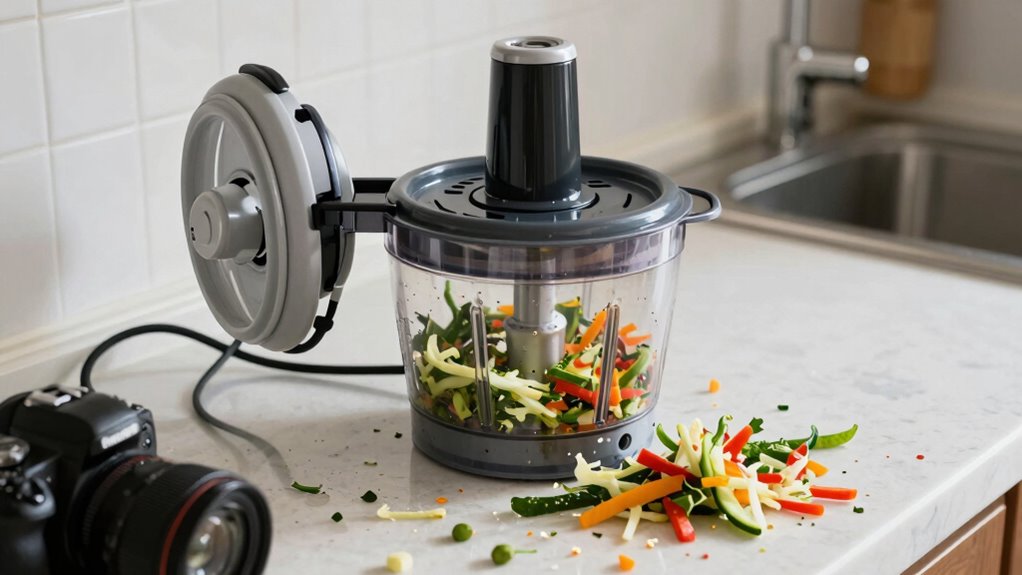
Have you ever struggled with your food processor, wondering why it’s not performing as expected? It’s frustrating when your appliance doesn’t deliver the results you want, especially after investing in it. One common mistake is not understanding how to properly handle vegetable preparations. If you toss in a large amount of vegetables all at once or don’t cut them into manageable pieces, your processor can become overwhelmed. Overloading the bowl causes uneven chopping or pureeing, leaving you with inconsistent textures. To get smooth, uniform results, cut your vegetables into smaller chunks before processing, and don’t cram the bowl full. Working in batches when necessary ensures the blades can do their job efficiently. Also, keep in mind that some vegetables, like carrots or potatoes, require longer processing or pulsing rather than continuous running to prevent over-processing or burning out the motor.
Another mistake that trips up many users involves dough techniques. If you’re trying to knead dough with your food processor, you might be tempted to run it continuously until the dough forms. However, this often results in overworking the dough, making it tough and dense. Instead, pulse the ingredients carefully and check frequently. Incorporate liquids gradually, and don’t forget to scrape down the sides of the bowl to ensure even mixing. Using the wrong blade can also cause trouble—make sure you’re using the appropriate attachment, like the dough blade, for bread or pastry doughs. Over-processing dough can develop gluten too much or heat the mixture, ruining the desired texture. Patience and gentle pulsing are key here. Additionally, understanding the processing limits of your appliance can help prevent overheating and damage. Recognizing the importance of motor capacity can also help you choose the right model for your needs and avoid overloading it, which can lead to premature wear or failure. Considering manufacturer guidelines can offer specific tips on optimal usage and maintenance to prolong your appliance’s life. Proper body jewelry measurements are also essential if you’re using your processor for tasks like grinding or crushing, as mismatched parts can cause malfunctions.
A less obvious mistake is neglecting to read the manual or understand your food processor’s specific features and limitations. Each model has its quirks, like recommended processing times or maximum capacities. Ignoring these can strain your machine or lead to subpar results. For example, some processors are better suited for chopping rather than pureeing or kneading. Using the wrong setting or overloading the bowl can also cause your food processor to stall or shut off unexpectedly, which might seem like a malfunction but is often just a protective feature.
Lastly, don’t forget to clean your food processor properly after each use. Failing to do so can cause residue buildup, which affects performance and hygiene. Proper cleaning also prevents cross-contamination of flavors, especially when switching between vegetable preparations and doughs. By paying attention to these details—proper vegetable prep, gentle dough techniques, understanding your machine, and diligent cleaning—you’ll avoid common mistakes and get the most out of your food processor.
food processor overload protection
As an affiliate, we earn on qualifying purchases.
As an affiliate, we earn on qualifying purchases.
Frequently Asked Questions
How Do I Properly Clean My Food Processor After Use?
To properly clean your food processor, start by unplugging it and removing the blade and removable parts. Use warm, soapy water for cleaning, applying effective cleaning techniques like scrubbing gently with a soft brush. Rinse thoroughly and dry all parts completely to prevent rust. Follow maintenance tips by regularly checking for residue buildup and lubricating the blades if needed. This guarantees your food processor stays in top shape and lasts longer.
Can I Process Hot Foods in a Food Processor?
Did you know that over 60% of food processor mishaps happen because of processing hot foods? You can process hot foods, but you should do so carefully. Use cooking techniques like letting hot ingredients cool slightly before blending to prevent damage. Proper appliance maintenance, like avoiding overloading and not processing boiling liquids directly, helps extend your food processor’s life. Always consult your manufacturer’s guidelines to make certain safe and effective use.
What Safety Precautions Should I Take When Operating It?
When operating your food processor, always wear safety gloves to protect your hands from sharp blades, and make certain the appliance is unplugged before cleaning or changing parts. Keep electrical safety in mind by inspecting the cord for damage and avoiding water contact to prevent shocks. Never overfill the bowl, and always use the lid securely. Following these precautions helps you operate the processor safely and prevents accidents.
How Often Should I Replace the Blades or Discs?
You should replace blades and discs when they become dull, chipped, or warped, which affects performance and safety. Regular blade maintenance involves inspecting them after each use and sharpening or replacing as needed. Disc replacement is necessary when discs show signs of rust or damage. Keep an eye on their condition, and don’t delay replacing them to guarantee efficient processing and to prevent accidents. Proper maintenance keeps your food processor working smoothly.
Is It Okay to Overfill the Food Processor?
Don’t be a rebel like a 90s hacker—overfilling your food processor can lead to hazards. It’s essential to respect the processor’s capacity limits, as overfilling can strain the motor, cause uneven chopping, or even damage the blades. Always stay within the recommended fill line, and process in batches if needed. This way, you guarantee safety and keep your appliance running smoothly, preventing unnecessary mishaps.
best food processor blades for dough
As an affiliate, we earn on qualifying purchases.
As an affiliate, we earn on qualifying purchases.
Conclusion
Avoid these common mistakes, and your food processor will become a trusty kitchen companion, slicing through ingredients like a chef’s knife. Picture your countertop as a bustling culinary stage, where each chop and blend flows seamlessly. When you respect its limits and maintain it well, you’ll see your dishes come together with effortless precision. With a little attention, your food processor transforms simple ingredients into vibrant, delicious creations—making every meal a masterpiece waiting to be savored.
As an affiliate, we earn on qualifying purchases.
food processor capacity extender
As an affiliate, we earn on qualifying purchases.
As an affiliate, we earn on qualifying purchases.
NFL season / tailgating Picks
team gear
As an affiliate, we earn on qualifying purchases.