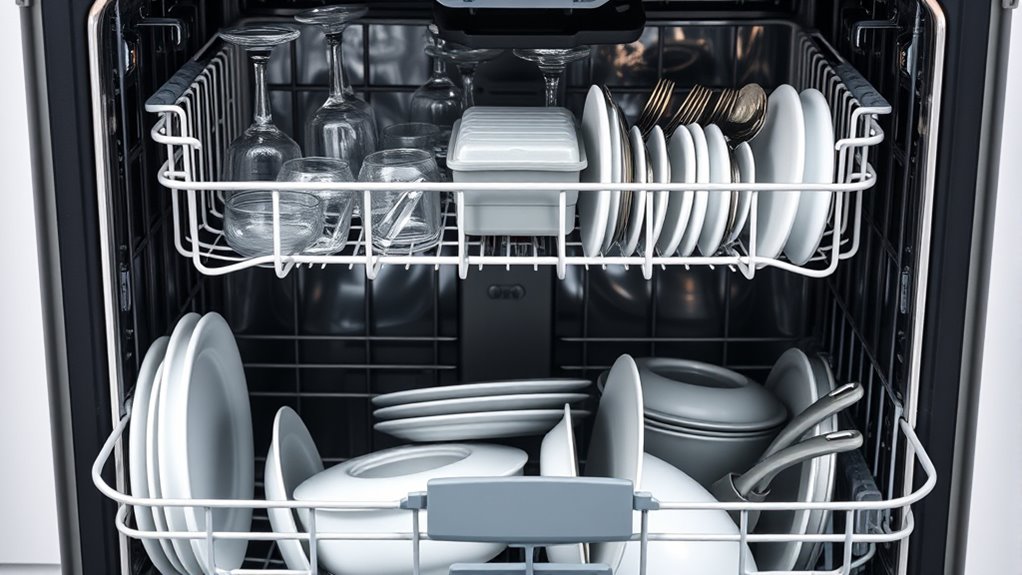

To load your dishwasher for the best results, place larger pots and heavily soiled dishes in the bottom rack, angling them toward the spray arm for thorough cleaning. Use the top rack for cups, glasses, and small items, guaranteeing they sit upside down and aren’t tightly packed. Keep plastics on top and avoid blocking spray arms to make certain water reaches all surfaces. Continue exploring these tips to optimize your dishwasher’s performance even more.
Key Takeaways
- Load larger, heavily soiled items on the bottom rack, angling them toward the spray arm for thorough cleaning.
- Place cups and glasses upside down on the top rack, ensuring proper spacing to prevent breakage and water spots.
- Keep plastics and lightweight items on the top rack to avoid warping or melting during the cycle.
- Avoid overcrowding both racks to allow water and detergent to reach all surfaces effectively.
- Secure delicate items and utensils to prevent damage and ensure they are properly cleaned.

Loading your dishwasher correctly guarantees your dishes come out spotless and prevents damage to your appliance. To get the best results, you need to pay close attention to how you load the top and bottom racks, making sure everything is positioned for ideal dishwasher cleaning. Proper loading not only ensures sparkling dishes but also helps conserve water, making your dishwasher more efficient and eco-friendly. When you load smartly, you reduce the need for rewashing and avoid wasting water or energy, which benefits both your wallet and the environment.
Start with the bottom rack. Place the larger, more heavily soiled items here, such as pots, pans, and plates. Make sure they’re angled toward the center spray arm so water reaches all surfaces thoroughly. Avoid overcrowding; if dishes are too tightly packed, water and detergent won’t reach every spot, reducing dishwasher cleaning effectiveness. Leave space between items so water can circulate freely. This way, your dishes come out cleaner and you use less water—since better cleaning means you might not need to run the cycle twice. Use the tines on the bottom rack to secure plates and bowls upright, ensuring water flows into every crevice. Avoid blocking the spray arm with large utensils or items, which can hinder water flow and compromise the cleaning process. Incorporating proper water circulation can further improve cleaning results and efficiency.
Moving to the top rack, place cups, glasses, and smaller items here. Position glasses upside down, but avoid placing them too tightly together, which can lead to water spots or breakage. Use the designated holders for cups and small bowls to keep them stable during the wash. Since the top rack typically gets less direct water pressure, placing delicate items here minimizes the risk of damage and ensures they’re cleaned gently. Also, avoid stacking items on top of each other—this prevents water from reaching every surface and ensures dishwasher cleaning is thorough. When loading, keep plastics and lightweight items on the top rack to prevent warping or melting. Properly loaded, the top rack enhances water conservation because it ensures water reaches all items efficiently, reducing the need for additional rinses.

60pcs Universal Dishwasher Prong Rack Caps Dishwasher Rack Repair Tip Tine Cover Caps by Jocon
60 pcs new white silicone tip end caps. Extra long: 1" in length
As an affiliate, we earn on qualifying purchases.
As an affiliate, we earn on qualifying purchases.
Frequently Asked Questions
Can I Load Non-Dishwasher Safe Items?
You shouldn’t load non dishwasher safe items in your dishwasher, as it compromises dishwasher safety and risks damaging the items or your machine. Non dishwasher safe items, like certain plastics, wood, or delicate glassware, can warp, crack, or release harmful chemicals. Always check labels and manufacturer instructions before washing, and hand wash non dishwasher safe items to keep both your belongings and dishwasher in good condition.
Should Plastics Be Placed on the Top Rack?
Yes, plastics should be placed on the top rack to prevent warping from the heating element. When organizing your dish rack, keep plastic items secure and upright to avoid blocking water spray. Proper plastic placement guarantees thorough cleaning and prevents damage. Be mindful of your dish rack organization by placing lightweight plastics on top, away from sharp or heavy items, to keep everything safe and effectively cleaned.
How Do I Prevent Glassware From Breaking?
To prevent glassware from breaking, handle fragile items carefully during loading and make certain of proper glassware safety. Place delicate glassware securely on the top rack, angling it to avoid contact with other items. Use the appropriate cycle for fragile items, and avoid overcrowding, which can cause bumping. Always check for loose or weak points before loading, and consider using dishwasher-safe protectors for extra safety.
Is It Okay to Overload the Dishwasher?
Overloading risks damaging your dishes and reducing cleaning efficiency, so it’s not okay to cram your dishwasher full. For ideal loading, leave space between items to allow water and detergent to circulate properly. This prevents breakage and ensures everything gets thoroughly cleaned. Remember, proper spacing and not overloading help your dishwasher work effectively, saving you time and money in the long run. Always follow manufacturer guidelines for best results.
How Often Should I Clean My Dishwasher?
You should clean your dishwasher at least once a month to maintain peak performance. Regular dishwasher maintenance prevents buildup of grease, soap scum, and food particles that can cause odors or reduce cleaning efficiency. Stick to a cleaning schedule involving running a hot water cycle with a dishwasher cleaner or vinegar. This helps keep your appliance fresh, prevents clogs, and extends its lifespan.
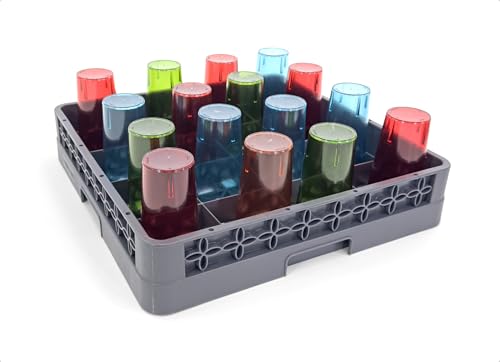
Commercial Glass Rack | 16 Compartment | Dishwasher Safe | Restaurant Grade Storage | Commercial Dishwasher Rack | Gray
A spacious full-size cup rack with 16 compartments, perfect for keeping your cups organized and easily accessible.
As an affiliate, we earn on qualifying purchases.
As an affiliate, we earn on qualifying purchases.
Conclusion
By following these tips, you’ll master the art of loading your dishwasher, ensuring every dish comes out spotless—like a knight wielding a shining sword. Think of your dishwasher as your trusty steed, ready to conquer the battlefield of dirty dishes. When you load wisely, you’re not just cleaning; you’re creating a symphony of sparkle and shine. So, channel your inner hero, and let your dishwasher work its magic with every cycle.

Dishwasher Basket for Small Items, 304 Stainless Steel Dishwasher Basket, Bottle Parts, Scoops, Forks, Chopsticks Cleaning (Silver)
All-in-One Storage for Baby Bottles, Utensils & More This dishwasher basket for baby items neatly organizes spoons, chopsticks,…
As an affiliate, we earn on qualifying purchases.
As an affiliate, we earn on qualifying purchases.
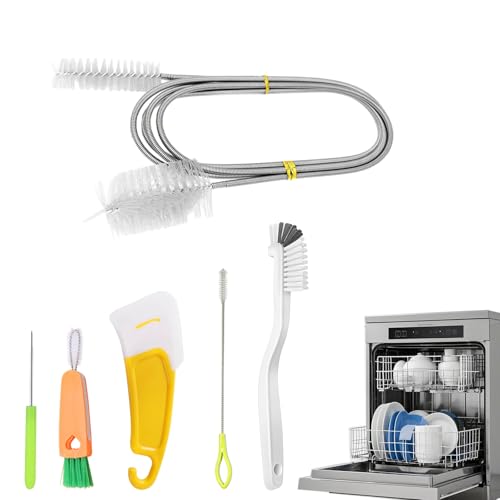
Dishwasher Cleaner Brush Kit – 6PCS Deep Cleaning Tools with Pick, Scraper, Straw Brush, Gap & Angle Brush, Flexible Tubes Brush for Spotless Dishwasher
Deep Clean Every Corner Tackle hidden grime with our 6-piece brush kit! Includes a pick, silicone scraper, straw…
As an affiliate, we earn on qualifying purchases.
As an affiliate, we earn on qualifying purchases.