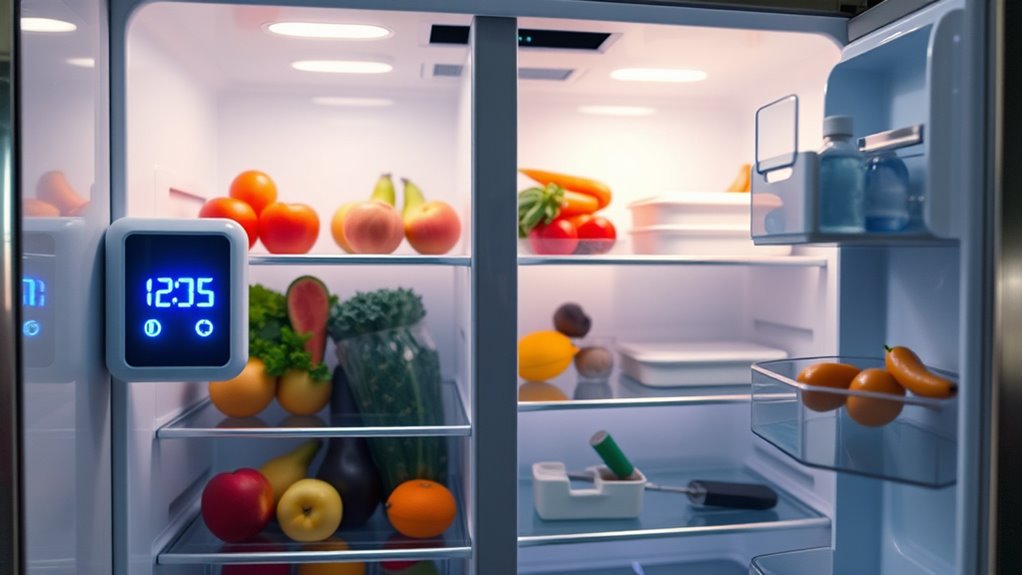

To keep your fridge safe and fresh, set it to 37°F (3°C), and your freezer to 0°F (-18°C). Use a digital thermometer with a probe to get accurate readings—place it in the middle of the fridge and near the center of the freezer. Check the temperatures weekly and adjust the thermostat if needed. Proper maintenance and measurement help prevent spoilage and save energy; keep going to learn more tips.
Key Takeaways
- Keep the fridge at 37°F (3°C) and freezer at 0°F (-18°C) for optimal food safety and freshness.
- Use a digital probe thermometer placed in the middle of each appliance for accurate readings.
- Check temperatures weekly and adjust thermostats to maintain proper ranges.
- Proper maintenance, like cleaning coils and sealing doors, supports consistent temperature regulation.
- Avoid placing thermometers near doors or walls to ensure precise measurements.
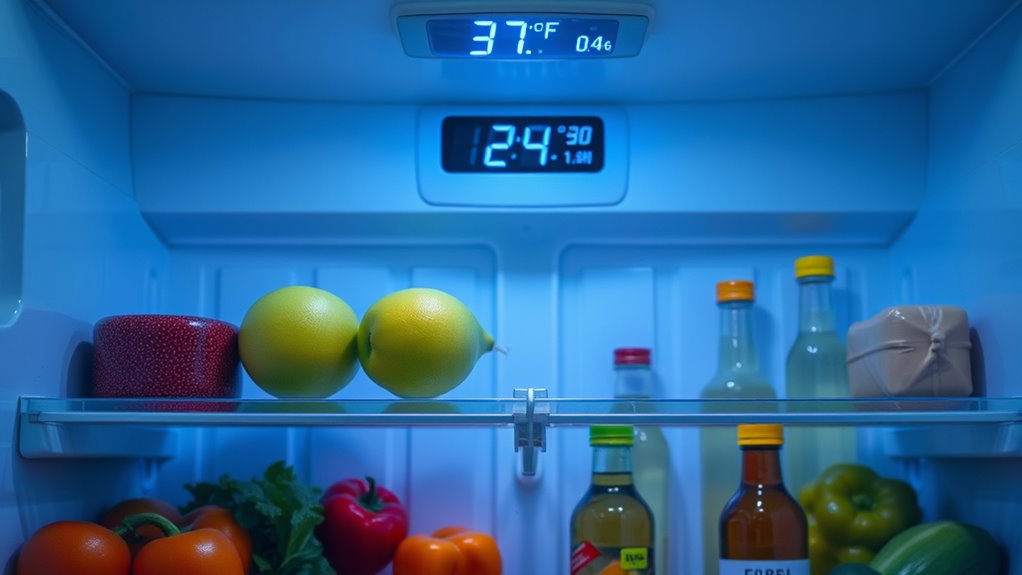
Maintaining the right temperatures in your fridge and freezer is crucial for keeping food fresh and safe. When temperatures aren’t properly regulated, bacteria can grow rapidly, increasing the risk of foodborne illnesses. Keeping your fridge at the recommended 37°F (3°C) and your freezer at 0°F (-18°C) helps promote food safety and reduces waste caused by spoilage. Proper temperature control also enhances energy efficiency, as appliances don’t have to work harder to maintain unsafe or inefficient settings. When your fridge is too warm, it consumes more energy trying to cool down, and the same applies if the freezer is set too cold, wasting electricity and increasing your utility bills.
To achieve ideal temperatures, it’s important to measure them accurately. A digital thermometer with a probe is the best tool for this task because it provides precise readings. You should place the thermometer in the middle of the fridge to get an accurate measure of its overall temperature, avoiding the door or back wall, where temperature fluctuations are common. For your freezer, position the thermometer near the center, away from the door or freezer walls, to monitor the true temperature. Checking these readings regularly, at least once a week, helps you catch any temperature deviations early. If you notice your fridge or freezer isn’t maintaining the correct temperature, adjust the thermostat settings accordingly. Temperature regulation is essential for food safety and appliance efficiency.
Most modern appliances come with built-in temperature controls, but these aren’t always accurate. If you find that the internal temperature isn’t within the recommended range, consult your appliance manual for troubleshooting tips or consider replacing the thermostat. Proper maintenance, like cleaning condenser coils and ensuring door seals are tight, also plays a crucial role in maintaining consistent temperatures and ensuring your appliances operate efficiently. When your fridge or freezer runs too frequently or struggles to stay cold, it’s often a sign that it’s working harder than it should, leading to increased energy consumption.
Top picks for "ideal fridge freezer"
Open Amazon search results for this keyword.
As an affiliate, we earn on qualifying purchases.
Frequently Asked Questions
How Often Should I Check My Fridge and Freezer Temperatures?
You should check your fridge and freezer temperatures at least once a month to make certain of proper food safety. During these checks, verify the thermometer’s accuracy through temperature calibration and consider the impact of power outages, which can raise temperatures and spoil food. Regular monitoring helps you catch issues early, keeping your food fresh and safe. Make these checks a routine to prevent costly spoilage or health risks.
What Tools Are Best for Measuring Fridge Temperatures Accurately?
Think of digital thermometers as your fridge’s personal health checkups. They’re the best tools for measuring temperatures accurately. To keep readings reliable, regularly calibrate your thermometer, like tuning a fine instrument. Look for models with quick response times and clear digital displays. By using a well-calibrated digital thermometer, you’ll guarantee your fridge stays at the perfect chill, keeping food fresh and safe for longer.
Why Does My Fridge Temperature Fluctuate Frequently?
Your fridge temperature fluctuates because of frequent door openings, improper appliance maintenance, or overloading it, which can disrupt airflow. This affects food safety by risking spoilage. To prevent this, keep the door closed as much as possible, regularly clean and inspect your appliance, and avoid overstuffing. Consistent temperature helps maintain food freshness and safety, so monitor with a reliable thermometer and address any issues promptly.
How Can I Maintain Consistent Temperatures in My Fridge and Freezer?
To keep your fridge and freezer temperatures consistent, regularly calibrate your thermometer to guarantee accuracy. Maintain door gasket seals by cleaning and replacing them if they’re damaged, preventing warm air from entering. Avoid frequently opening the doors, and keep items organized to minimize door openings. These steps help stabilize temperatures, reduce fluctuations, and keep your food fresh longer.
Are There Specific Storage Tips to Keep Temperatures Stable?
To keep temperatures stable, focus on humidity control and door insulation. Use humidity controls in your fridge to prevent excess moisture, which can raise temperatures or cause spoilage. Make certain your door seals tightly to improve insulation and avoid temperature fluctuations caused by frequent opening. Keep your fridge and freezer full but not overcrowded, as proper air circulation and good door seals help maintain consistent temperatures.
Conclusion
Keeping your fridge between 37°F and 40°F and your freezer at 0°F is like having a well-tuned orchestra—everything works in harmony to keep your food fresh and safe. Regularly checking these temperatures ensures your kitchen’s symphony stays in tune. Think of a thermometer as your trusty conductor, guiding you to ideal settings. With just a quick glance, you can prevent waste and enjoy peace of mind, knowing your appliances are performing their best.