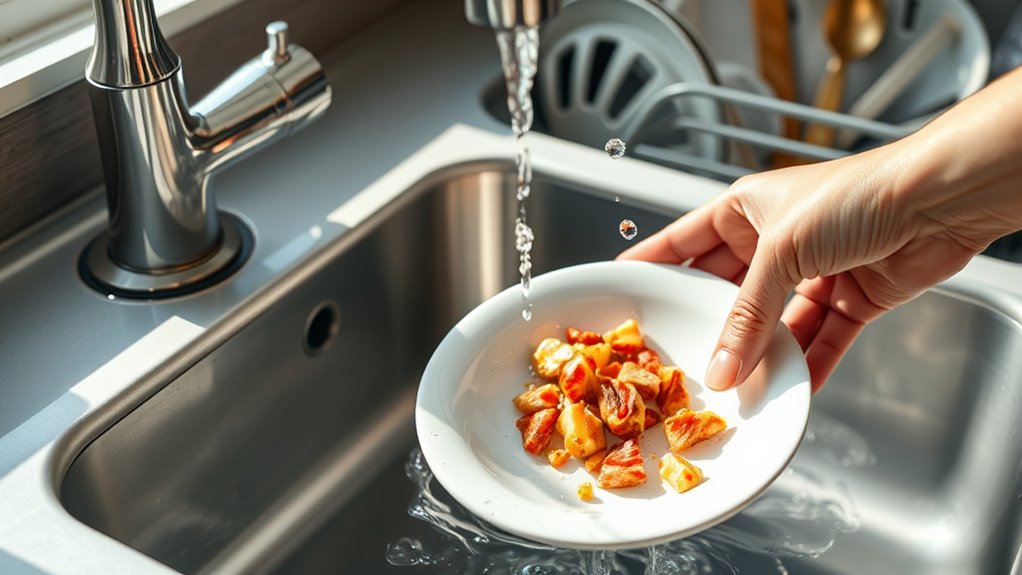

Pre-rinsing dishes before the dishwasher isn’t necessary and can waste water, energy, and time. Modern dishwashers are designed to handle food residue without pre-rinsing, which can actually reduce cleaning efficiency and cause extra wear on your machine. Instead, simply scrape off large messes and load dishes properly. To discover more about how to get the best results and maintain your dishwasher effectively, keep exploring this topic.

Get kitchen staples and gadgets delivered free — and shop member deals
- Fast, free delivery on millions of items
- Access to Prime Big Deal Days deals on October 6–7
- Prime Video, Amazon Music and more included
Key Takeaways
- Modern dishwashers are designed to clean effectively without pre-rinsing, especially with advanced sensors and cycles.
- Pre-rinsing wastes water and energy, which can be better utilized for actual cleaning tasks.
- Removing all food debris can hinder the dishwasher’s cleaning process and reduce detergent effectiveness.
- Skipping pre-rinsing helps prevent filter and spray arm blockages, reducing maintenance needs.
- Properly loading and maintaining your dishwasher is more important than pre-rinsing for optimal performance.
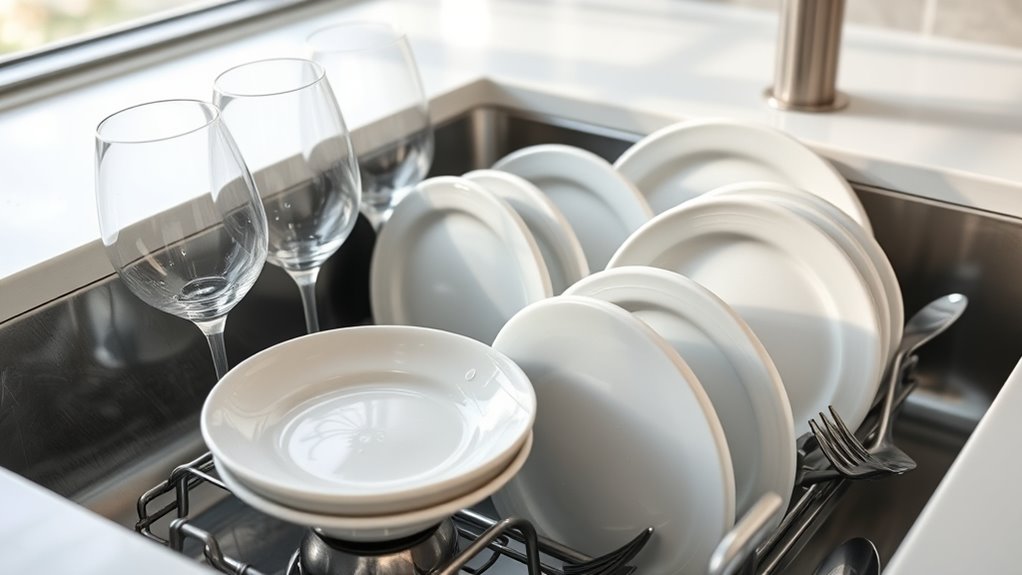
Many people wonder whether pre-rinsing dishes before loading them into the dishwasher is necessary. The answer depends on your goals and your dishwasher’s design. Some believe rinsing ensures cleaner dishes, but in reality, it can impact energy efficiency and dishwasher maintenance. When you pre-rinse, you’re using extra water and energy that could be better spent on cleaning. Modern dishwashers are designed to handle food residue and grease, so rinsing isn’t always essential. By skipping pre-rinsing, you can save water, reduce energy consumption, and keep your dishwasher functioning at its best over time.
Skipping pre-rinsing saves water, energy, and helps your dishwasher last longer.
Pre-rinsing dishes may seem like a good way to prevent clogs or buildup, but it can actually be counterproductive. Many dishwasher models now come with advanced sensors and cleaning cycles that adjust based on how dirty the dishes are. When you pre-rinse, you’re removing food particles that could help the machine gauge how dirty the load is, potentially leading to overuse of water and energy. This unnecessary rinsing could cause your dishwasher to run longer or use more hot water, which affects overall energy efficiency. Over time, this extra workload might also contribute to wear and tear, increasing maintenance needs.
Furthermore, pre-rinsing can lead to a false sense of cleanliness. You might think dishes are spotless after rinsing, but the dishwasher’s powerful jets and detergents are often enough to clean dishes without pre-rinsing. Rinsing can also wash away the detergent’s effectiveness by removing grease and food residue that help break down stubborn stains. This means you might end up re-washing dishes or using more detergent than necessary, which again diminishes energy efficiency and increases costs.
From a maintenance standpoint, skipping pre-rinsing is beneficial. When you rinse off all food debris beforehand, you might think you’re helping your dishwasher, but in fact, it can cause buildup in filters and spray arms if not cleaned regularly. This buildup can decrease your machine’s efficiency and lead to costly repairs. Keeping dishes moderately dirty, rather than spotless, prevents excess debris from clogging components and helps your dishwasher run smoothly for longer periods. Regularly cleaning the filter and spray arms is more effective than pre-rinsing to maintain your dishwasher’s health. Additionally, proper dishwasher maintenance can prevent the need for frequent repairs and extend the lifespan of your appliance.
As an affiliate, we earn on qualifying purchases.
Frequently Asked Questions
Does Pre-Rinsing Save Energy or Water?
Pre-rinsing dishes doesn’t save water or energy; in fact, it often wastes both. Modern dishwashers are designed to handle dishes with some food residue, so pre-rinsing can lead to unnecessary water use. To conserve water and energy, scrape off food scraps and run full loads. This way, you optimize your dishwasher’s efficiency, saving resources while still getting your dishes clean.
Can Pre-Rinsing Damage the Dishwasher?
Pre-rinsing your dishes won’t damage your dishwasher, but improper techniques can cause pre-rinse consequences. You might loosen debris that clogs filters or spray arms, leading to poor cleaning and potential malfunctions. Avoid using harsh scrubbers or excessive water, which can strain the machine’s components. Keep your pre-rinse routine simple and gentle to prevent dishwasher damage while maintaining ideal performance. Proper handling ensures longevity and keeps your appliance running smoothly.
How Much Should I Pre-Rinse for Effectiveness?
You should only pre-rinse dishes enough to remove large food particles and residue, ensuring rinse effectiveness without overdoing it. Use a gentle stream of water to loosen stuck-on bits, but avoid excessive rinsing that can waste water and reduce dishwasher efficiency. The goal is to leave dishes relatively clean, so the dishwasher can handle the remaining residue removal effectively, giving you spotless results without unnecessary effort.
Are There Specific Dishes That Don’T Need Pre-Rinsing?
Some dish types, like glassware and heavily soiled pots, don’t need pre-rinsing because modern dishwashers and detergents handle food residue effectively. However, for plates with minimal food residue or delicate items, it’s best to lightly scrape or rinse. You should avoid pre-rinsing overly greasy or baked-on dishes unless your dishwasher’s cleaning power is limited. Always check your appliance’s recommendations for ideal results.
Is Pre-Rinsing Necessary With Modern Dishwasher Detergents?
Just like a trusty knight’s armor, modern dishwasher detergents are designed to handle food residue, so pre-rinsing isn’t necessary. With better detergent effectiveness, you can skip the pre-rinse, saving time and water. However, for ideal dishwasher maintenance, scrape off large food bits first. This ensures your machine works efficiently, maintains its lifespan, and your dishes come out spotless without the extra pre-rinse step.
dishwasher filter cleaning tools
As an affiliate, we earn on qualifying purchases.
As an affiliate, we earn on qualifying purchases.
Conclusion
Ultimately, whether you pre-rinse or not, remember that your dishwasher is like a trusty sidekick, ready to do the heavy lifting. Skipping the pre-rinse saves time and water, letting your appliance shine and your dishes sparkle. Trust in your dishwasher’s power to clean, and don’t let the extra step weigh you down. Sometimes, less is more—letting go of the pre-rinse can turn your kitchen routine into a breeze, brightening your day.
dishwasher spray arm maintenance kit
As an affiliate, we earn on qualifying purchases.
As an affiliate, we earn on qualifying purchases.
energy-efficient dishwasher detergent
As an affiliate, we earn on qualifying purchases.
As an affiliate, we earn on qualifying purchases.
NFL season / tailgating Picks
team gear
As an affiliate, we earn on qualifying purchases.