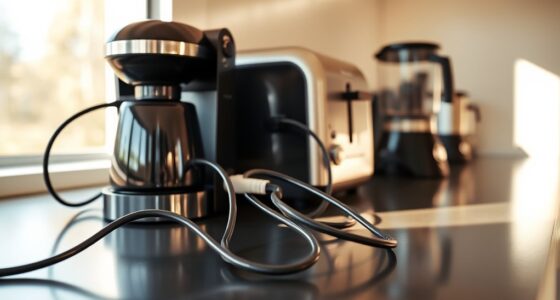
Kitchen appliances like microwaves, refrigerators, and electric stoves emit very low levels of electromagnetic fields (EMF), which are unlikely to pose health risks if used correctly. These appliances are regulated to meet safety standards, and proper maintenance guarantees minimal leakage. Staying a bit away while they operate and unplugging unused devices further reduces exposure. If you’re curious about how safe these emissions really are, there’s more to discover about safety guidelines and regulation measures.
Key Takeaways
- Most kitchen appliances emit low levels of EMF that diminish with distance, generally remaining within safety standards.
- Microwaves contain radiation safely contained when in good condition; damage can increase EMF leakage.
- Regulatory agencies set safety limits to ensure household EMF exposure remains harmless.
- Maintaining appliances and following manufacturer instructions help prevent excessive EMF emissions.
- Keeping a safe distance from appliances during operation minimizes potential health risks from EMF exposure.
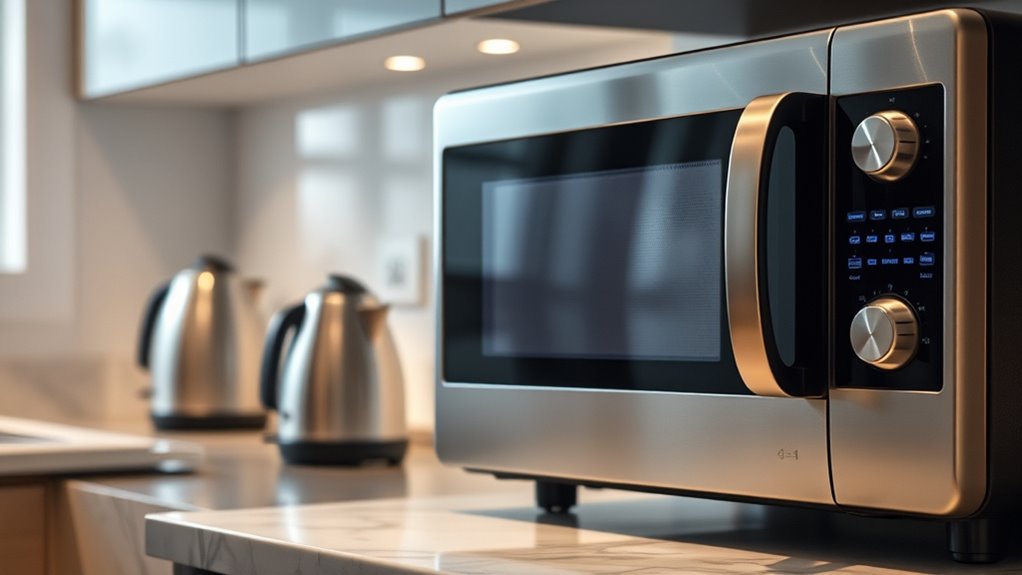
Many common kitchen appliances emit electromagnetic fields (EMF), and while these devices make cooking easier, it’s important to understand potential health implications. EMF exposure from appliances like microwaves, refrigerators, and toasters is a topic that concerns many people, especially when considering household safety. Although these appliances are regulated to ensure they operate within safe limits, understanding how they emit EMF and what that means for your health is essential.
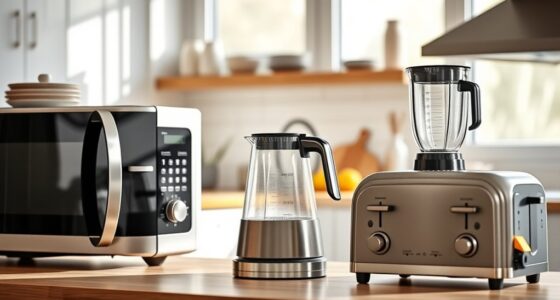
Microwave ovens are among the most notable sources of EMF in the kitchen. They work by generating microwave radiation to heat food quickly, but this radiation is contained within the appliance when it’s in good working condition. Appliance regulations require microwave manufacturers to adhere to strict safety standards, ensuring that emissions stay well below levels considered harmful. However, it’s wise to avoid standing directly against or near a microwave while it’s operating for prolonged periods, especially if the door seals are damaged or if the appliance is old. Proper maintenance and following manufacturer instructions can help maintain household safety.
Microwave radiation is contained within the appliance when in good condition.
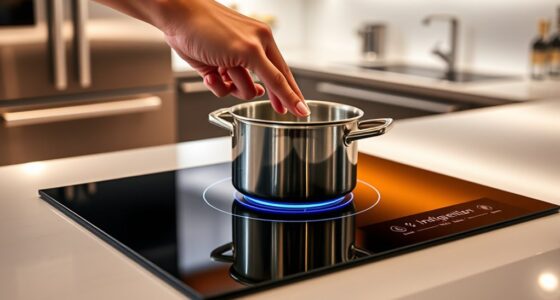
Other appliances, such as refrigerators, blenders, and electric stoves, also emit low levels of EMF during operation. These fields are generally weak and diminish rapidly with distance. The key concern is not just the presence of EMF but prolonged, close exposure. Appliance regulations mandate safety limits designed to prevent health risks, but it’s still prudent to keep a safe distance when possible. For example, avoiding leaning on or holding onto appliances while they’re running can reduce exposure, especially with high-power devices like toasters or kettles.
While the scientific community continues researching the long-term effects of EMF exposure, current evidence suggests that typical household EMF levels are unlikely to cause harm. Nonetheless, being aware of household safety practices helps you minimize unnecessary exposure. For instance, unplugging appliances when not in use, ensuring devices are well-maintained, and following safety guidelines set by regulatory agencies can help protect you and your family. It’s also helpful to keep appliances at a safe distance from where you spend a lot of time, like countertops and dining areas.
Understanding EMF regulation standards and how they limit exposure can further reassure consumers about household safety measures.
Top picks for "kitchen applianc emit"
Open Amazon search results for this keyword.
As an affiliate, we earn on qualifying purchases.
Frequently Asked Questions
Are All Kitchen Appliances Equally Risky for EMF Exposure?
Not all kitchen appliances are equally risky for EMF exposure. Some, like microwaves, emit higher levels of EMF, but appliance safety often depends on proper use and emf shielding features. You should prioritize appliances with built-in emf shielding and follow safety guidelines to minimize exposure. Be mindful of distance and usage duration, and regularly check for updates on appliance safety standards to protect yourself effectively.
How Can I Measure EMF Levels From My Appliances Accurately?
You can measure EMF levels from your appliances with a reliable EMF meter, which acts like a superhero scanner for invisible fields. To guarantee appliance safety, place the meter close to the device during operation and record the readings. For accuracy, keep the meter steady and follow manufacturer instructions carefully. Regular EMF measurement helps you catch any dangerous spikes, making your kitchen a safer, less electrified zone.
Do Newer Appliances Emit Less Harmful EMF Than Older Models?
Yes, newer appliances generally emit less harmful EMF than older models. Advances in appliance design and improved electromagnetic shielding help reduce electromagnetic fields. Manufacturers now prioritize safety features that limit EMF exposure, making modern appliances safer for your home. However, it’s still wise to maintain a safe distance during operation and use appliances responsibly to minimize your overall EMF exposure.
Can EMF Exposure From Kitchen Appliances Cause Long-Term Health Issues?
Long-term health risks from EMF exposure are still debated, but current evidence suggests that typical kitchen appliance emissions are unlikely to cause serious issues. You can reduce potential risks by using EMF shielding and keeping a safe distance from devices like microwaves and toasters. While occasional exposure may not harm you, staying cautious and minimizing prolonged contact helps safeguard your health over time.
Are There Safe Ways to Reduce EMF Exposure While Cooking?
To reduce EMF exposure while cooking, prioritize cooking safety by keeping appliances at a safe distance when in use. Use appliance shielding, like microwave covers or shields, to contain electromagnetic fields. Avoid standing directly next to appliances during operation, especially microwaves and electric stoves. Additionally, unplug devices when not in use, and opt for newer appliances with lower EMF emissions to minimize your exposure effectively.
Conclusion
So, you now know that kitchen appliances can emit EMF, from microwaves to other gadgets. You can choose to limit your exposure, unplug devices when not in use, and stay informed about safe practices. You can reduce your risk, protect your health, and create a safer kitchen environment. Because awareness matters, caution counts, and your well-being depends on your choices. Take action today, and make your kitchen a safer space for yourself and your loved ones.