Kitchen ventilation matters more than you might think because it improves air quality, reducing harmful pollutants like smoke, odors, and steam. It helps control humidity and heat, making your space more comfortable. Proper airflow also protects your cabinets and appliances from moisture damage and extends their lifespan. Plus, it lowers energy bills by reducing the load on cooling systems. If you want to know more about how ventilation benefits your home, there’s plenty more to discover.

Get kitchen staples and gadgets delivered free with Prime
- Fast, free delivery on millions of items
- Prime Video, Amazon Music and more included
- Member-only deals all year
Key Takeaways
- Proper ventilation reduces airborne pollutants, improving indoor air quality and safeguarding respiratory health.
- It helps regulate temperature and humidity, increasing energy efficiency and lowering utility bills.
- Effective airflow prevents mold, mildew, and moisture damage to cabinets and appliances.
- Good ventilation controls heat and odors, creating a more comfortable and cleaner kitchen environment.
- Well-designed systems ensure pollutant removal and support overall indoor health and sustainability.
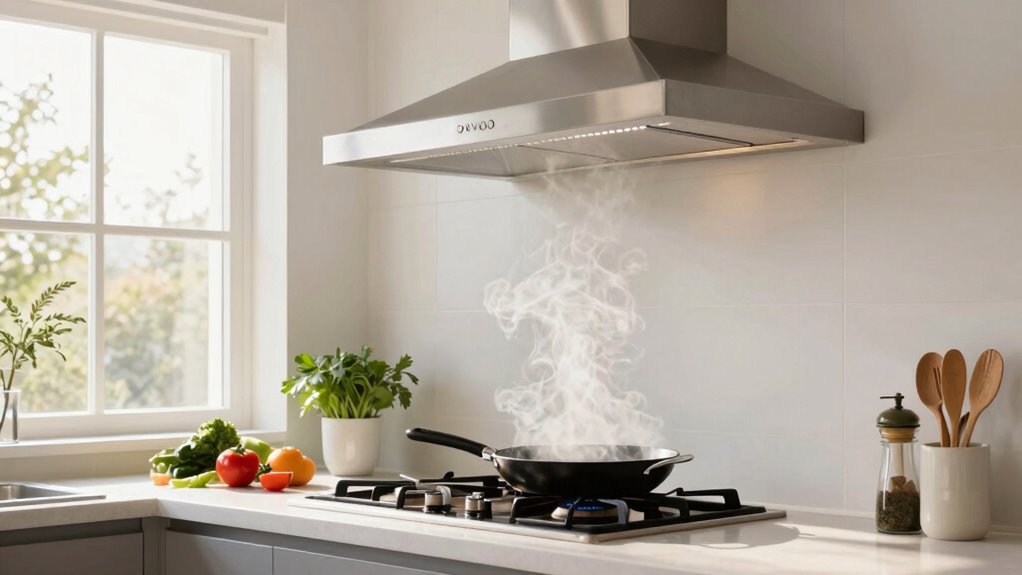
Good kitchen ventilation is essential for maintaining a healthy and comfortable cooking environment. When you cook, airborne pollutants like smoke, steam, and odors are produced, and without proper ventilation, these can linger and compromise your home’s air quality. Poor air quality isn’t just about unpleasant smells; it can lead to respiratory issues, allergies, and even long-term health problems. By ensuring your kitchen is well-ventilated, you actively improve air circulation, reduce airborne contaminants, and create a space where you and your family feel healthier and more comfortable.
Effective kitchen ventilation improves air quality and health by reducing smoke, steam, and odors during cooking.
Beyond health concerns, good ventilation plays a key role in energy efficiency. When your kitchen is properly ventilated, it helps regulate temperature and humidity levels, preventing excessive heat and moisture buildup that can make your entire home less comfortable. For example, a good range hood or exhaust fan removes heat generated during cooking, reducing the load on your air conditioning system. This means your cooling system doesn’t have to work as hard, saving you energy and lowering utility bills. Proper ventilation also minimizes the need for additional air purification systems, which consume electricity and add to your energy costs. So, investing in quality ventilation isn’t just about immediate comfort; it’s a strategic way to make your entire home more energy-efficient.
You might not realize it, but the way your kitchen is ventilated impacts the longevity of your appliances and cabinetry too. Excess moisture from cooking can cause mold, mildew, and warping of wooden cabinets if not properly vented. By installing effective ventilation, you prevent these issues, saving you money on repairs and replacements in the long run. Additionally, good airflow helps keep your appliances in better condition, as excessive humidity can lead to corrosion or malfunction. This means your investment in kitchen appliances lasts longer, and you avoid unnecessary expenses. A well-designed ventilation system can also help maintain optimal conditions for storing perishable foods and ingredients, further supporting your kitchen’s efficiency. Proper air circulation is crucial to maintaining a healthy kitchen environment and prolonging the life of your appliances. Furthermore, understanding the importance of indoor air quality can guide you in choosing the right ventilation solutions for your kitchen. From an energy standpoint, improved ventilation efficiency helps reduce overall electricity consumption, making your home more sustainable.
kitchen range hood with high CFM
As an affiliate, we earn on qualifying purchases.
As an affiliate, we earn on qualifying purchases.
Frequently Asked Questions
How Often Should Kitchen Vents Be Cleaned for Optimal Performance?
You should clean your kitchen vents at least every three to six months for peak performance. Regular filter maintenance is key, so replace or clean filters regularly to prevent grease buildup. Additionally, schedule duct cleaning annually to remove accumulated grease and debris that can hinder airflow. Staying consistent with these maintenance tasks ensures your ventilation system works efficiently, reduces fire risks, and keeps your kitchen air clean and safe.
Can Poor Ventilation Affect Indoor Air Quality Long-Term?
Poor ventilation can seriously wreck your indoor air quality over time. Without proper air circulation, pollutant buildup from cooking fumes, smoke, and moisture can turn your home into a toxic trap. This can lead to health issues like allergies, asthma, and fatigue. Ignoring ventilation isn’t just uncomfortable; it’s a long-term health hazard. Keep your air flowing, and protect your home from invisible, dangerous pollutants.
What Are the Energy Costs of Running a High-Quality Kitchen Vent?
Running a high-quality kitchen vent can increase your energy costs, but it’s worth the investment. With a focus on energy efficiency, modern vents use less power while providing ideal airflow. A thorough cost analysis shows that, despite higher upfront expenses, long-term savings come from reduced energy consumption and better air quality. You’ll likely notice lower utility bills and a healthier kitchen environment over time.
Are There Specific Ventilation Systems Recommended for Small Kitchens?
For small kitchens, opting for a discreet yet effective ventilation system is key. You should look for units focusing on ideal kitchen airflow and a thoughtful ventilation design that fits tight spaces. Consider under-cabinet range hoods or compact ductless systems for quiet operation and easy installation. These options help maintain a fresh environment without overwhelming your space, ensuring your kitchen remains comfortable and safe while preserving its cozy charm.
How Does Ventilation Impact the Longevity of Kitchen Appliances?
Proper ventilation improves airflow efficiency, which directly impacts the longevity of your kitchen appliances. When you guarantee good airflow, heat and moisture are effectively expelled, reducing wear and tear on your stove, refrigerator, and dishwasher. This appliance protection prevents overheating and corrosion, extending their lifespan. By maintaining ideal ventilation, you keep your appliances running smoothly longer, saving you money on repairs and replacements while ensuring a healthier, more efficient kitchen environment.
As an affiliate, we earn on qualifying purchases.
Conclusion
Remember, your kitchen’s ventilation isn’t just a background player—it’s the heartbeat that keeps your space healthy and safe. Think of it as the lungs of your home, quietly working behind the scenes to clear out smoke, odors, and harmful particles. When you give it the attention it deserves, you’re not just improving air quality—you’re nurturing a more comfortable, vibrant space where cooking becomes a joy, not a chore. So, don’t overlook it; your kitchen’s breath depends on it.
As an affiliate, we earn on qualifying purchases.
kitchen air purifier with odor removal
As an affiliate, we earn on qualifying purchases.
As an affiliate, we earn on qualifying purchases.
Halloween Picks
halloween
As an affiliate, we earn on qualifying purchases.