
Microwave power levels control how quickly and evenly your food cooks. Higher levels (like 100%) heat food fast, perfect for boiling or dense items, while lower levels (around 30-50%) gently melt or soften delicate ingredients. Adjusting these settings helps prevent overcooking and saves energy. By understanding how power levels work, you can cook more precisely and efficiently. Keep exploring, and you’ll discover even more ways to make your microwave work better for you.

Get kitchen staples and gadgets delivered free — and shop member deals
- Fast, free delivery on millions of items
- Access to Prime Big Deal Days deals on October 6–7
- Prime Video, Amazon Music and more included
Key Takeaways
- Microwave power levels control how quickly and evenly food heats, from gentle melting to rapid boiling.
- Higher power (100%) heats food faster, ideal for dense or large quantities.
- Lower power (30-50%) prevents overcooking, perfect for delicate tasks like melting chocolate.
- Adjusting power levels helps with specific tasks like defrosting or reheating evenly.
- Proper use of power settings saves energy, improves results, and extends the microwave’s lifespan.
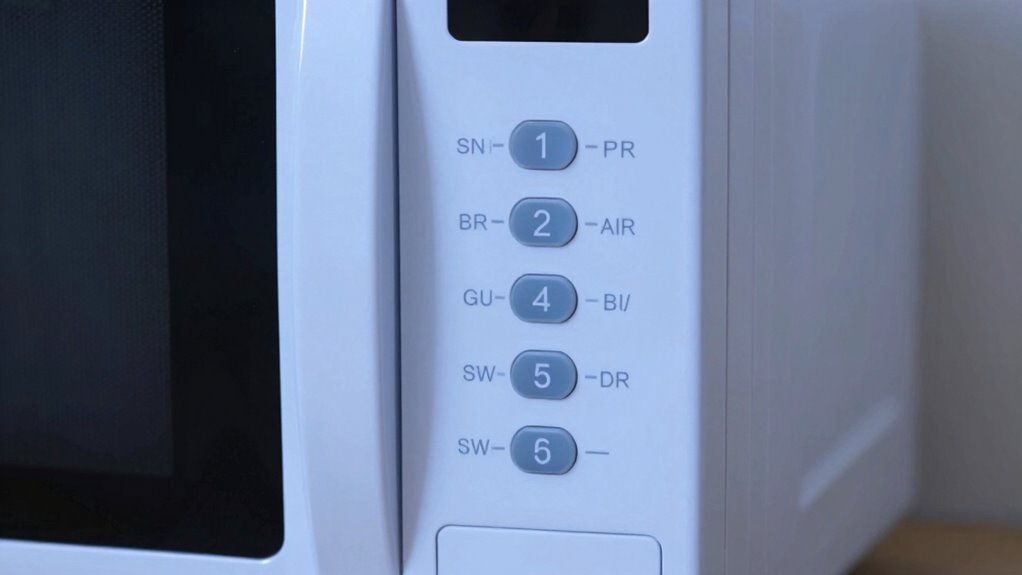
Have you ever wondered how adjusting microwave power levels affects cooking? When you change the power setting, you’re fundamentally controlling how much energy your microwave uses during the cooking process. This adjustment can have a considerable impact on your cooking techniques and the overall energy efficiency of your microwave. Using high power levels, like 100%, heats food quickly and is ideal for boiling water or cooking large quantities rapidly. On the other hand, lower power settings, such as 30% or 50%, are better suited for delicate tasks like melting chocolate, softening butter, or gently reheating leftovers. By understanding how to manipulate these settings, you can improve your cooking results and save energy.
Adjusting microwave power levels impacts cooking speed, food quality, and energy efficiency for better kitchen results.
Adjusting microwave power levels allows you to tailor your cooking techniques to suit different foods. For example, slow-cooking on lower power prevents overcooking or burning sensitive ingredients, while high power speeds up the process for dense foods like potatoes or frozen meals. If you’re reheating a small portion, a lower power setting will prevent uneven warming or over-drying. Similarly, defrosting frozen items at a reduced power level ensures they thaw evenly without partially cooking edges. This control over power levels gives you flexibility and precision, making your microwave more versatile in handling various culinary tasks. Additionally, understanding how the power levels influence cooking time and texture can help you achieve more consistent results. Recognizing the energy consumption involved in different settings can help you make more eco-friendly choices in your kitchen. Maintaining your microwave properly and cleaning it regularly also ensures optimal performance and efficiency.
In addition to enhancing your cooking techniques, using the appropriate power level can notably improve energy efficiency. When you don’t need rapid heating, dialing down the power reduces the amount of energy consumed, which is better for the environment and your utility bill. For delicate tasks that require gentle heat, operating at a lower power means your microwave doesn’t waste energy trying to achieve high heat levels unnecessarily. Over time, this mindful approach to power settings can lead to less energy waste and longer appliance lifespan, since your microwave isn’t constantly working at full blast for every task.
Understanding how microwave power levels work helps you optimize both your cooking results and energy consumption. It’s not just about cooking faster or slower; it’s about choosing the right setting for each task. By experimenting with different power levels, you develop better cooking techniques and become more efficient in your energy use. Whether you’re reheating coffee or cooking a complete meal, adjusting the power level ensures you get the best results while conserving energy. This simple yet effective control makes your microwave a more precise and eco-friendly kitchen tool. Recognizing the importance of power level control allows you to maximize your microwave’s capabilities and efficiency.
microwave power level control dial
As an affiliate, we earn on qualifying purchases.
As an affiliate, we earn on qualifying purchases.
Frequently Asked Questions
How Do Microwave Power Levels Affect Cooking Time?
Adjusting microwave power levels directly affects cooking time—you’ll generally need longer at lower settings and shorter at higher ones. This influences energy efficiency, as higher levels cook faster, saving time and power. It also impacts safety considerations; cooking at the right power guarantees even heating and prevents overheating or accidents. So, choose the appropriate level based on your food to optimize both safety and efficiency, and avoid overcooking or undercooking.
Can I Cook Food Evenly at Lower Power Settings?
Yes, you can cook food evenly at lower power settings, and it benefits your cooking texture and energy efficiency. Lower power allows heat to penetrate more gradually, reducing the risk of overcooking edges while keeping the inside moist. This gentle approach promotes consistent cooking, preserves texture, and uses less energy. By adjusting power levels carefully, you create a more even, tender result, making your microwave cooking more effective and efficient.
Are Higher Power Levels Always Better for Cooking?
Higher power levels aren’t always better for cooking, as they can compromise microwave safety and reduce energy efficiency. Using the right level guarantees your food heats evenly without overheating or causing splatters. Lower settings are ideal for gentle reheating, while higher levels work for quick cooking. Always follow your microwave’s guidelines to balance safety, energy use, and cooking quality, rather than defaulting to maximum power every time.
How Do Power Levels Vary Between Different Microwave Brands?
When comparing brands, you’ll notice power levels vary considerably, affecting cooking performance. Some brands prioritize precise power level consistency, ensuring even heating and better control. Others might offer a wider range of power levels for versatile cooking, but with less consistency. To choose the right microwave, consider brand comparison and how well the power levels match your cooking needs, ensuring you get reliable performance and consistent results every time.
What Is the Best Power Setting for Defrosting?
For defrosting, you should set your microwave to a low power level, typically around 30%, to prevent cooking the edges while thawing the center. Use defrost techniques like pausing to turn or rearrange food for even thawing. Always prioritize microwave safety by avoiding partially frozen or warm spots, and monitor your food closely to prevent overheating. This guarantees safe and effective defrosting every time.
microwave defrosting and reheating settings
As an affiliate, we earn on qualifying purchases.
As an affiliate, we earn on qualifying purchases.
Conclusion
So, next time you blindly press “high,” remember you’re wielding a tiny nuclear reactor in your kitchen. Your microwave’s power levels are like a secret recipe—only, instead of delicious food, you’re controlling the chaos of heat. Ironically, what seems like a simple button turns out to be the conductor of a miniature storm inside, transforming your leftovers from cold to scorching with just a flick. Who knew such power was just a dial away?
microwave melting chocolate tray
As an affiliate, we earn on qualifying purchases.
As an affiliate, we earn on qualifying purchases.
As an affiliate, we earn on qualifying purchases.
NFL season / tailgating Picks
team gear
As an affiliate, we earn on qualifying purchases.