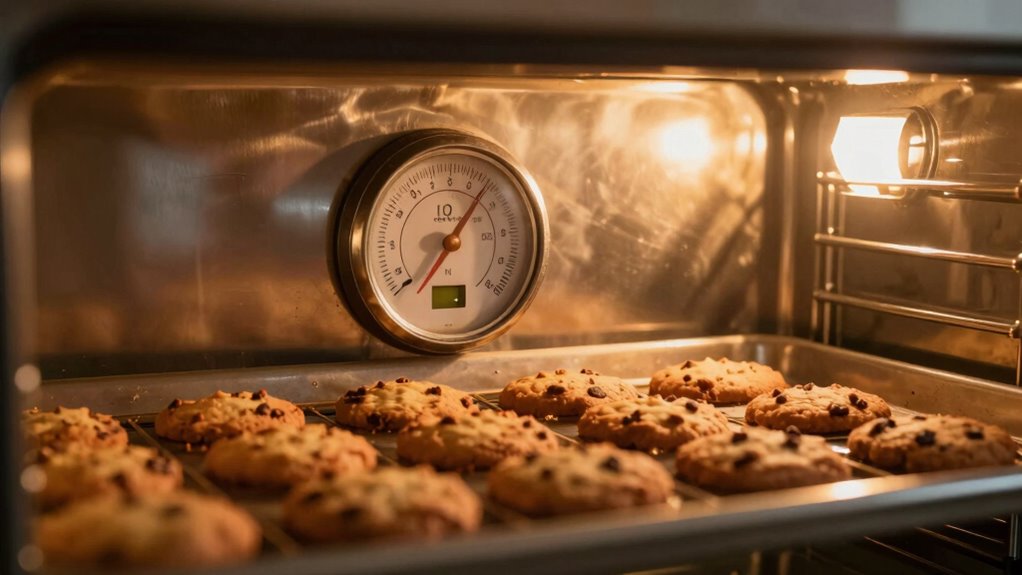
Your oven temperature might be lying because of calibration issues or heat distribution problems. Faulty thermometers can give false readings, causing you to cook at incorrect temperatures. Over time, thermostats can drift, leading to inconsistent heat. Additionally, poor oven design or airflow can create hot spots, making some areas hotter than others. These issues can leave your dishes undercooked or overcooked despite following recipes. Stay with us to discover how to fix these common problems and improve your oven’s accuracy.

Get kitchen staples and gadgets delivered free with Prime
- Fast, free delivery on millions of items
- Prime Video, Amazon Music and more included
- Member-only deals all year
Key Takeaways
- Faulty or uncalibrated thermometers can give false temperature readings, making the oven seem hotter or cooler than it is.
- Oven thermostats can drift over time, causing inaccuracies in temperature control.
- Uneven heat distribution due to poor design or airflow issues leads to inconsistent cooking, regardless of thermostat accuracy.
- Older or poorly maintained ovens often develop hot spots, distorting actual cooking temperatures.
- Lack of regular calibration and maintenance can cause oven temperature sensors to malfunction, misleading users about the true temperature.

You might think that setting your oven to a specific temperature guarantees perfect results every time, but the truth is, many ovens don’t heat accurately. This discrepancy often stems from issues like thermometer calibration and uneven heat distribution. When your oven’s thermometer isn’t properly calibrated, it can give false readings, making you believe your oven is hotter or cooler than it actually is. Over time, thermostats can drift from their original settings, especially if they haven’t been checked or replaced. Without accurate thermometer calibration, you might be cooking at the wrong temperature, leading to undercooked or overcooked dishes despite following recipes precisely. Regular appliance maintenance can help ensure your oven’s components, including thermostats, are functioning correctly and accurately. Heat distribution inside your oven also plays a significant role in how your food turns out. Even if the thermostat is accurate, uneven heat can cause certain areas to be hotter than others. This is common in older ovens or models with poor airflow, which can be affected by oven design flaws. Hot spots can lead to inconsistent baking, with some parts of your dish cooking faster than others. You might notice that cookies on one side of the tray are perfectly golden, while those on the other side remain pale. This uneven heat distribution can make it seem like your oven isn’t reaching the set temperature, but in reality, it’s just not evenly spreading the heat across the cooking chamber. Addressing heat distribution issues and ensuring proper calibration can greatly improve your cooking results. Recognizing and addressing these issues is essential for achieving consistent cooking results.
oven thermometer for calibration
As an affiliate, we earn on qualifying purchases.
As an affiliate, we earn on qualifying purchases.
Frequently Asked Questions
How Often Should I Calibrate My Oven’s Temperature?
You should calibrate your oven’s temperature every 1-2 years or if you notice uneven cooking. Regular oven repair checks ensure the temperature sensors are accurate, preventing discrepancies. Use an oven thermometer to test the actual temperature and adjust if needed. Proper calibration keeps your oven reliable, saving you time and frustration. Periodic calibration is especially important after repairs or if your baked goods aren’t turning out right.
Can Oven Temperature Errors Affect Cooking Times Significantly?
Yes, oven temperature errors can considerably affect cooking times. If your thermometer isn’t placed correctly—away from heating elements or drafts—you might get inaccurate readings. Also, poor oven insulation can cause uneven heat distribution, making some areas hotter or cooler. This combination results in longer or shorter cooking times than expected. To avoid this, guarantee proper thermometer placement and check your oven’s insulation regularly for consistent, accurate cooking results.
What Tools Are Best for Checking Oven Temperature Accuracy?
You should use a reliable oven thermometer, like a dial or digital thermometer, to check accuracy. To guarantee proper calibration, place the thermometer inside your oven and heat it to a specific temperature, then compare it to your oven’s display. If needed, adjust the oven’s temperature controls or use calibration methods such as resetting or recalibrating your oven’s thermostat. Regular checks help maintain accurate cooking temperatures.
Do Different Oven Brands Vary in Temperature Accuracy?
Did you know that studies show nearly 60% of ovens from different brands have temperature discrepancies? Brand reputation often influences accuracy, with premium brands typically maintaining better calibration. However, calibration methods vary widely; some ovens need manual adjustments, while others self-calibrate. So, yes, different oven brands can vary in temperature accuracy, making it vital to regularly check and calibrate your oven to guarantee consistent cooking results.
How Does Oven Age Impact Temperature Consistency?
As your oven ages, it’s likely to experience temperature inconsistency. Over time, components like thermostats and heating elements wear out, causing fluctuations in heat. This oven aging can make your oven less reliable, leading to uneven cooking and baking results. Regular calibration and maintenance can help mitigate temperature issues, but ultimately, an older oven may naturally struggle with maintaining consistent temperatures, impacting your cooking quality.
As an affiliate, we earn on qualifying purchases.
Conclusion
If you’ve been trusting your oven’s thermometer blindly, it’s time to double-check. An inaccurate temperature can turn your cooking into a recipe for disaster, like chasing rainbows. Regular calibration and using an independent thermometer can save you from surprises. Remember, it’s better to nip problems in the bud than to find yourself in hot water later. Keep your oven honest, and your dishes will turn out just right every time.
oven temperature calibration kit
As an affiliate, we earn on qualifying purchases.
As an affiliate, we earn on qualifying purchases.
As an affiliate, we earn on qualifying purchases.
Columbus Day / Indigenous Peoples' Day Picks
long weekend sales
As an affiliate, we earn on qualifying purchases.