To fry safely at home, choose a heavy, deep pot or dedicated fryer with high sides, filling it only halfway with high smoke point oil like vegetable or canola. Keep the oil temperature between 350°F and 375°F using a reliable thermometer, adjusting heat as needed. Always supervise hot oil, wear protective gear, and have a lid nearby for fires. Proper equipment, careful temperature control, and safety precautions can help you fry confidently—more tips await to keep you safe and successful.
Key Takeaways
- Use a deep, heavy pot or dedicated fryer with high sides, filling it halfway with oil for safety.
- Monitor oil temperature with a reliable thermometer, keeping it between 350°F and 375°F.
- Choose oils with high smoke points like vegetable, canola, or peanut oil for safe frying.
- Never leave hot oil unattended and keep a fire extinguisher nearby for emergencies.
- Add food gently, avoid overcrowding, and use long-handled tools to prevent splatters and spills.

Deep frying at home can be delicious and satisfying, but it also comes with safety risks if not done properly. One of the most significant aspects of safe deep frying is maintaining the correct oil temperature. If the oil is too hot, it can ignite or cause burns, and if it’s too cool, your food will absorb excess oil, becoming greasy and unevenly cooked. To avoid these issues, always use a reliable thermometer to monitor the oil temperature. Ideally, keep the oil between 350°F and 375°F, adjusting your heat source as needed. This control helps prevent dangerous splatters or fires and guarantees your food cooks evenly. Remember, never leave hot oil unattended on the stove, and keep a fire extinguisher nearby in case of emergencies.
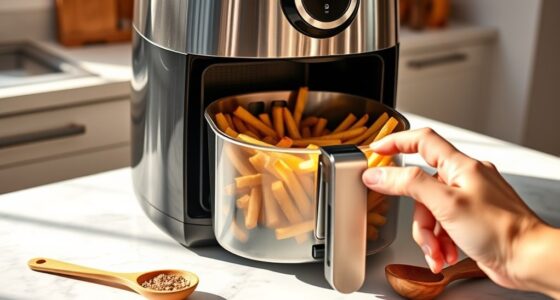
Choosing the right equipment is vital for safe deep frying. Use a heavy, deep pot or a dedicated deep fryer with high sides to contain splatters and prevent spills. Fill the pot with oil only up to about half its capacity to give room for bubbling and to reduce the risk of overflow. Always use oils with high smoke points, such as vegetable, canola, or peanut oil, because they withstand high temperatures without breaking down or producing harmful fumes. Avoid using water or other liquids to cool hot oil or to add ingredients; moisture causes violent splattering, which can cause burns. When adding food, do so gently to minimize splashes, and avoid overcrowding the pot, as this drops the oil temperature and can lead to uneven frying or dangerous splatters.
Kitchen safety also involves proper preparation and handling. Keep your work area clean and free of clutter to prevent accidents. Use long-handled tools or tongs to lower and retrieve food from the hot oil, protecting your hands and arms from splatters. Wear protective gear like oven mitts or aprons to shield against hot oil splashes. Always have a lid nearby to smother flames if a grease fire starts—never use water on a grease fire, as it intensifies the flames. After frying, let the oil cool completely before disposing of it or storing it for future use; never pour hot oil down the drain. Proper storage and disposal reduce risks of fire and environmental hazards. Additionally, understanding oil temperature and how it affects frying can significantly improve safety and food quality.
Top picks for "deep safely home"
Open Amazon search results for this keyword.
As an affiliate, we earn on qualifying purchases.
Frequently Asked Questions
Can I Reuse Frying Oil Safely?
Yes, you can reuse frying oil safely if you follow proper oil filtration and storage practices. After frying, let the oil cool, then strain it through a fine mesh or cheesecloth to remove food particles. Store it in an airtight container in a cool, dark place. Avoid reusing oil more than 3-4 times, as it degrades and can become unsafe. Always smell and visually inspect the oil before reuse.
What Temperature Should I Maintain for Different Foods?
Think of temperature control as the conductor of your frying symphony. For best results, maintain 350°F to 375°F, but adjust for specific foods: 350°F for delicate items like fish, 375°F for crispy fries, and 325°F for doughnuts to prevent over-browning. Following food-specific guidelines guarantees each dish cooks perfectly, avoiding burnt or undercooked results. Keep your thermometer handy and monitor temperatures constantly for safe, delicious frying.
How Do I Prevent Oil Splatters?
To prevent oil splatters, use a splatter guard over your frying pan or deep fryer. This simple tool acts as a barrier, catching oil droplets before they escape. Make sure your food is dry before adding it to hot oil, as moisture causes splattering. Maintain the correct temperature, and avoid overcrowding the pan. These oil splatter prevention tips help keep your cooking safe and mess-free.
Is It Safe to Deep Fry Indoors?
Yes, you can safely deep fry indoors if you guarantee proper indoor ventilation and keep smoke alarms functional. Use a deep, sturdy pot and avoid overcrowding the pan to minimize splatters. Always monitor the oil temperature carefully and never leave it unattended. Having a fire extinguisher nearby and ensuring your smoke alarms are working adds extra safety measures. Follow these tips, and indoor frying becomes much safer.
How Do I Dispose of Used Frying Oil Properly?
You should first filter your used frying oil through oil filtration to remove food particles, then pour it into a sturdy, sealed storage container. Make sure the container is leak-proof and clearly labeled as used oil. Store it in a cool, dry place away from heat sources. When disposal time comes, check local regulations for recycling options or designated disposal sites to guarantee safe, eco-friendly waste management.
Conclusion
Remember, safety is key when deep frying at home. Always use a thermometer to monitor oil temperature and never leave hot oil unattended. With the right equipment and proper precautions, you can enjoy crispy, delicious fried foods safely. Did you know that according to the National Fire Protection Association, most home fires caused by cooking are due to unattended frying? Stay vigilant, follow safety tips, and you’ll fry confidently without worry.