
If your blender isn’t blending properly, start by checking the motor for overheating or strange noises, which could indicate wear or damage. Verify the blades are securely aligned and tighten any loose parts. Avoid overloading the jar or using ingredients that are too thick or frozen, as these can strain the motor. Also, make sure the jar sits correctly on the base. For more tips to fix your blender, keep exploring these common troubleshooting steps.

Get kitchen staples and gadgets delivered free — and shop member deals
- Fast, free delivery on millions of items
- Access to Prime Big Deal Days deals on October 6–7
- Prime Video, Amazon Music and more included
Key Takeaways
- Check if the motor is overheating or making unusual noises, indicating potential wear or damage.
- Ensure blades are properly aligned and tightened to prevent wobbling and improve blending efficiency.
- Avoid overloading the jar; use appropriate ingredients and add liquids to facilitate smooth blending.
- Confirm the jar is correctly seated on the base and blades are not loose or damaged.
- Allow the motor to cool down if overheated; consider servicing or replacing if performance declines.
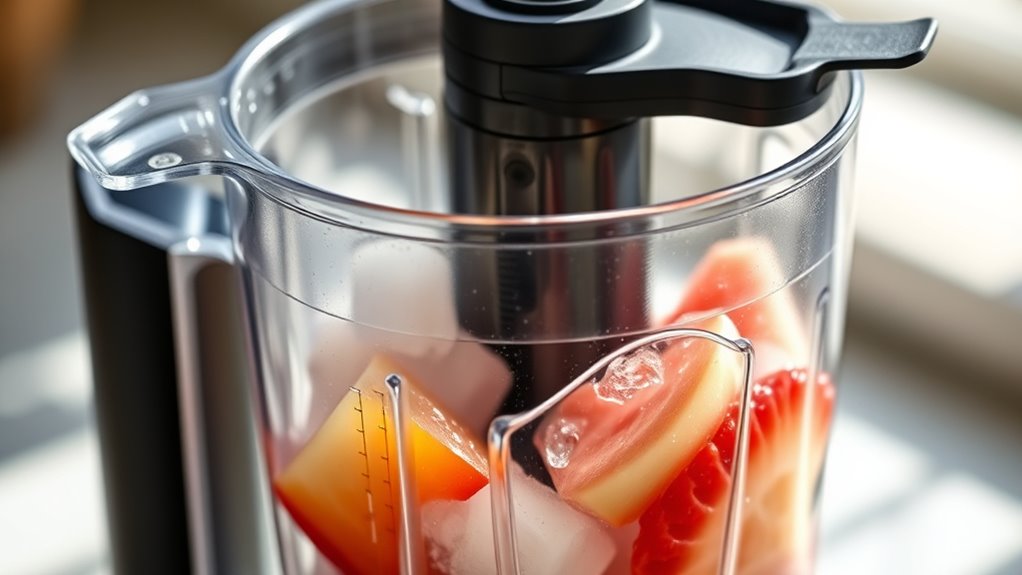
If your blender isn’t blending properly, it can be frustrating, but many issues are simple to fix. One common culprit is motor issues. Over time, motors can wear out or become overheated, causing the blender to stall or struggle with blending tasks. If you notice your blender humming but not spinning or making strange noises, the motor might be running into trouble. Sometimes, the motor’s internal components, like brushes or capacitors, wear down, hindering performance. In such cases, you might need to replace the motor or have it serviced if it’s under warranty. However, before jumping to that, check if the motor is overheating; giving it a break can sometimes restore its function.
Another frequent problem involves blade alignment. If the blades are misaligned or loose, your blender won’t blend properly. Misaligned blades can prevent the blades from rotating smoothly or evenly, leaving chunks of food unprocessed. To check this, unplug your blender and carefully examine the blades. If they wobble or don’t sit flush, they need adjustment or tightening. Over time, blades can become loose from frequent use or accidental impacts. Tightening screws or re-aligning the blades can often resolve this issue. Be cautious when handling blades—they are sharp. Properly aligned blades ensure even blending and reduce strain on the motor, which can extend the lifespan of your appliance.
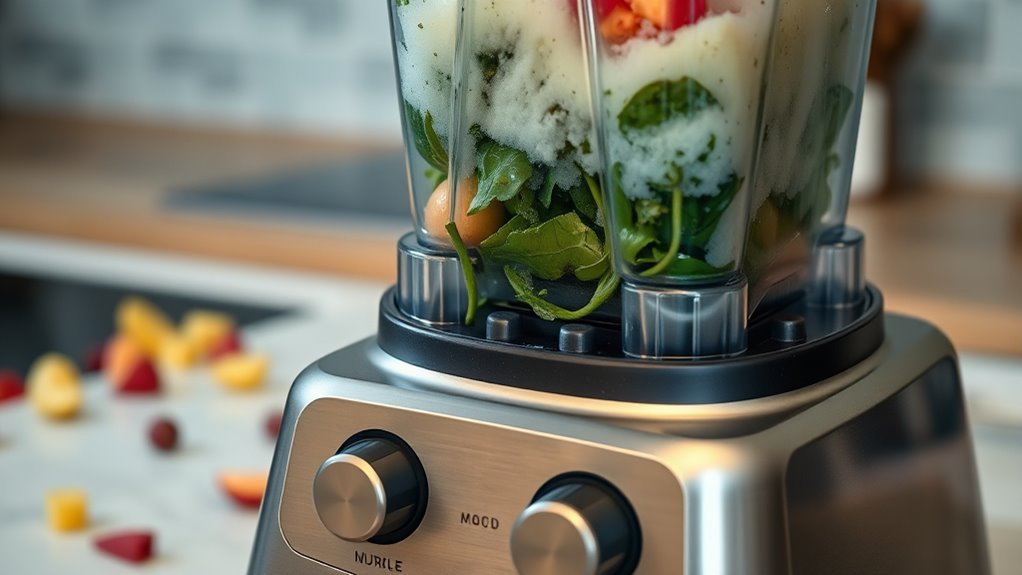
Sometimes, poor blending isn’t just about the blades or motor. It could stem from using the wrong ingredients or overloading the jar. Heavy or frozen items require longer blending times, and adding liquid can help ingredients move freely around the blades. If you’re blending thick smoothies or ice, make sure your blender is rated for such tasks. Otherwise, the motor might struggle, and blades may not turn as intended. Also, check that the jar is seated correctly on the base; an improperly placed jar can interfere with blade rotation and motor engagement.
As an affiliate, we earn on qualifying purchases.
Frequently Asked Questions
Can I Fix My Blender Myself, or Should I Replace It?
You can often fix your blender yourself with some DIY repair, especially if it’s a simple issue like a clogged blade or a loose connection. However, if the problem involves electrical components or internal parts, it’s safer to seek professional service. Attempting complex repairs on your own might cause further damage or void the warranty. Assess the issue carefully and decide whether a quick fix or professional help is the best choice.
How Often Should I Clean My Blender to Prevent Issues?
You should clean your blender after every use to keep it functioning well. Adopting a regular cleaning schedule prevents buildup of food particles and guarantees ideal blender maintenance. Simply disassemble the jar, wash all parts with warm soapy water, and dry thoroughly. For tough stains or residues, run a mixture of water and vinegar or baking soda through the blender. Consistent cleaning helps avoid issues and prolongs your blender’s lifespan.
What Safety Precautions Should I Take When Troubleshooting?
Before you start troubleshooting, you need to prioritize safety. Always unplug your blender first—electric shock is a real risk. Handle blades carefully to avoid injury, especially if they’re sharp or stuck. Wear gloves if necessary, and avoid water contact with electrical parts. Keep your hands clear of moving blades, and never force components apart. These precautions protect you from electric shock and blade injuries, ensuring a safe troubleshooting process.
Are There Specific Parts I Should Check First?
You should start by checking the blade assembly to make sure it’s securely attached and not damaged, as a loose or dull blade can hinder blending. Then, inspect the motor connection to verify it’s properly plugged in and functioning. If the motor connection is loose or faulty, your blender won’t operate correctly. Address these parts first to identify any obvious issues before moving on to other components.
How Long Does It Typically Take to Repair a Blender?
You might find that a blender repair takes anywhere from a few hours to a couple of days, depending on the issue. While troubleshooting tips can help you identify the problem quickly, some repairs, like replacing the motor or blades, may require more time. If you’re hands-on, expect to spend time troubleshooting first, then either fixing it yourself or waiting for a professional. Planning ahead keeps your kitchen running smoothly.
As an affiliate, we earn on qualifying purchases.
Conclusion
So, while your blender might seem like it’s failing, remember it’s often a simple fix hiding behind a stubborn blade or clogged motor. It’s frustrating when something so small disrupts your smooth creations, yet that very inconvenience reminds you of the power behind these machines. Sometimes, the obstacle is just a reminder to check the basics. With patience and a little troubleshooting, you’ll transform that uncooperative blender into your trusty kitchen ally once again.
blender overload protection switch
As an affiliate, we earn on qualifying purchases.
As an affiliate, we earn on qualifying purchases.
As an affiliate, we earn on qualifying purchases.
NFL season / tailgating Picks
team gear
As an affiliate, we earn on qualifying purchases.