
Your kitchen appliances often fail early because neglecting routine maintenance speeds up wear and tear. Failing to clean filters, coils, or ignore small issues pushes parts to their limits. Additionally, relying on cheap, low-quality appliances without proper care shortens their lifespan. Warranties won’t cover damage caused by neglect or poor choices. If you want to discover how to keep your appliances running longer, there’s more you should know.

Get kitchen staples and gadgets delivered free with Prime
- Fast, free delivery on millions of items
- Prime Video, Amazon Music and more included
- Member-only deals all year
Key Takeaways
- Neglecting routine maintenance accelerates wear and causes early appliance failures.
- Poor quality appliances are more prone to breakdowns regardless of maintenance.
- Ignoring early warning signs can lead to severe damage and costly repairs.
- Misunderstanding warranty coverage may prevent timely repairs or replacements.
- Overworking appliances due to lack of cleaning and filter replacements shortens their lifespan.
Many kitchen appliances seem to break down sooner than expected, leaving you frustrated and needing replacements sooner than you planned. It’s a common experience, and often, the root cause isn’t just bad luck. Instead, it’s linked to how well you maintain your appliances and whether you’re taking full advantage of warranty coverage. Appliance maintenance isn’t just about cleaning; it’s about regular checkups that keep your appliances running smoothly, preventing small issues from turning into costly repairs or early failures.
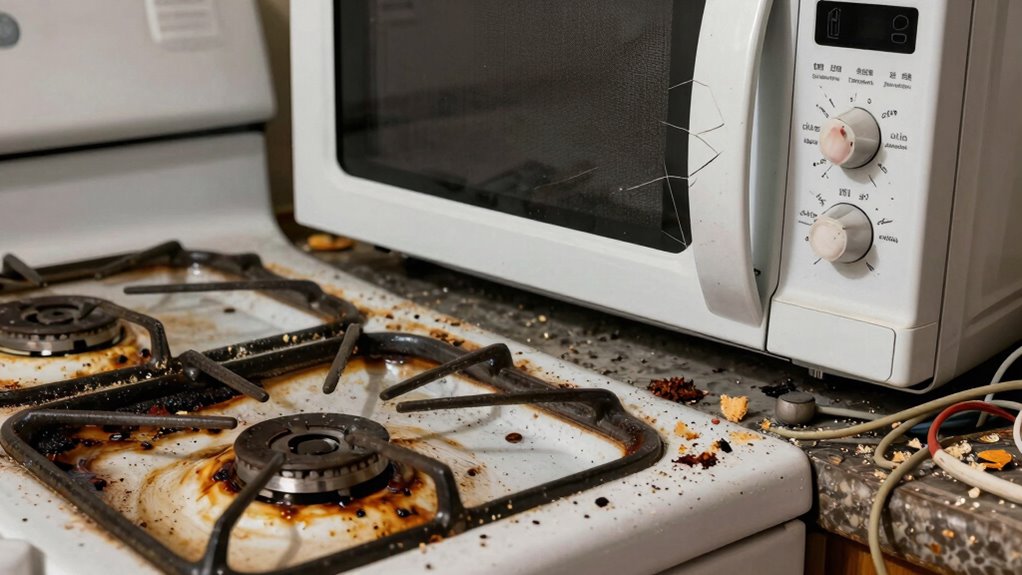
When you neglect routine maintenance, you’re more likely to see parts wear out prematurely. For example, failing to clean refrigerator coils or ignoring filter replacements can cause appliances to overwork, which accelerates their decline. Proper upkeep minimizes stress on components and extends their lifespan. Many people overlook these simple steps, assuming appliances will just last forever, but neglecting maintenance is a sure way to shorten their life and face early failures.
Neglecting routine maintenance like cleaning coils and replacing filters shortens appliance lifespan and causes early failures.
Warranty coverage plays a crucial role in protecting your investment, but it’s often misunderstood. Many folks assume a warranty covers everything, yet it typically only covers specific repairs due to manufacturing defects or major malfunctions within a certain period. If you’re not aware of what your warranty includes, you might miss out on free repairs or replacements when appliances break down early. Reading the fine print and understanding your warranty coverage allows you to act quickly when issues arise, saving you money and hassle.
Another mistake is waiting too long to address problems. Small issues like strange noises or inconsistent performance should never be ignored. Addressing these early on can prevent more significant damage, which might not be covered under warranty if it’s due to neglect. If you notice your dishwasher isn’t cleaning properly or your oven isn’t heating evenly, don’t delay calling in a technician. Early intervention often results in a cheaper fix and a longer appliance lifespan.
Also, it’s worth noting that cheap or poorly built appliances tend to fail sooner, regardless of maintenance or warranty coverage. Investing in quality appliances can make a noticeable difference in longevity, especially when combined with good maintenance habits. Remember, warranties won’t cover damage caused by misuse or neglect, so you need to be proactive about caring for your appliances.
In the end, understanding the importance of appliance maintenance and knowing your warranty rights can drastically reduce the chances of early appliance failure. Taking care of your appliances isn’t just about keeping them clean; it’s about ensuring they receive proper attention regularly and that you’re aware of your coverage options. This proactive approach keeps your kitchen running smoothly longer, saving you money and frustration in the long run.
refrigerator coil cleaning brush
As an affiliate, we earn on qualifying purchases.
As an affiliate, we earn on qualifying purchases.
Frequently Asked Questions
How Can I Tell if My Appliance Is About to Fail?
You can tell if your appliance is about to fail by paying attention to unusual noises, inconsistent performance, or strange smells. Regular appliance maintenance helps spot issues early, saving you money and hassle. Check your warranty tips—many appliances show early signs before failure, so keep an eye on these indicators. Promptly addressing minor problems can extend your appliance’s lifespan and prevent unexpected breakdowns.
Do Modern Appliances Have Longer Lifespans Than Older Models?
Yes, modern appliances tend to have longer lifespans than older models. Improved appliance design and advances in material durability contribute to this longevity. Manufacturers now focus on creating energy-efficient, reliable appliances with better components that resist wear and tear. By choosing newer models, you benefit from these innovations, which help prevent early failures. Regular maintenance also extends their lifespan, ensuring your appliances last longer and perform better over time.
Are There Specific Brands More Prone to Early Failure?
Some brands tend to show more of a tendency for early hiccups, mainly due to inconsistent brand reliability and limited warranty coverage. You might find that certain manufacturers cut corners, leading to more frequent issues. To avoid surprises, it’s wise to research brand reliability and choose appliances with solid warranty coverage. This approach helps guarantee your investment stays protected and minimizes the chances of premature appliance troubles.
How Does Frequency of Use Affect Appliance Longevity?
Frequent use shortens your appliance’s lifespan because it increases wear and tear, especially if the appliance has lower manufacturing quality. Higher energy consumption from constant operation can strain components, accelerating failure. To extend longevity, you should opt for appliances with better manufacturing quality and use them wisely—avoiding overuse and giving them rest periods. Proper maintenance also helps guarantee your appliances last longer despite frequent use.
Can I Repair Appliances Myself to Extend Their Lifespan?
Yes, you can repair appliances yourself to extend their lifespan. Start with DIY fixes for minor issues, like cleaning filters or replacing worn-out parts. Follow maintenance tips such as regular cleaning and checking for loose connections. However, avoid complex repairs unless you’re confident in your skills. Proper maintenance combined with simple repairs can keep your appliances running smoothly longer, saving you money and preventing early failure.
air conditioner filter replacement kit
As an affiliate, we earn on qualifying purchases.
As an affiliate, we earn on qualifying purchases.
Conclusion
So, next time your kitchen appliance quits on you sooner than expected, remember it’s not just bad luck. Often, it’s like a fragile leaf in a storm—easily torn if not handled with care or if neglected. Pay attention to maintenance, read the manuals, and don’t overload your appliances. Doing so can help extend their life, turning your kitchen into a well-oiled machine instead of a constant repair zone. Keep your appliances happy, and they’ll serve you longer.
As an affiliate, we earn on qualifying purchases.
oven heating element repair tool
As an affiliate, we earn on qualifying purchases.
As an affiliate, we earn on qualifying purchases.
Fall Picks
fall essentials
As an affiliate, we earn on qualifying purchases.