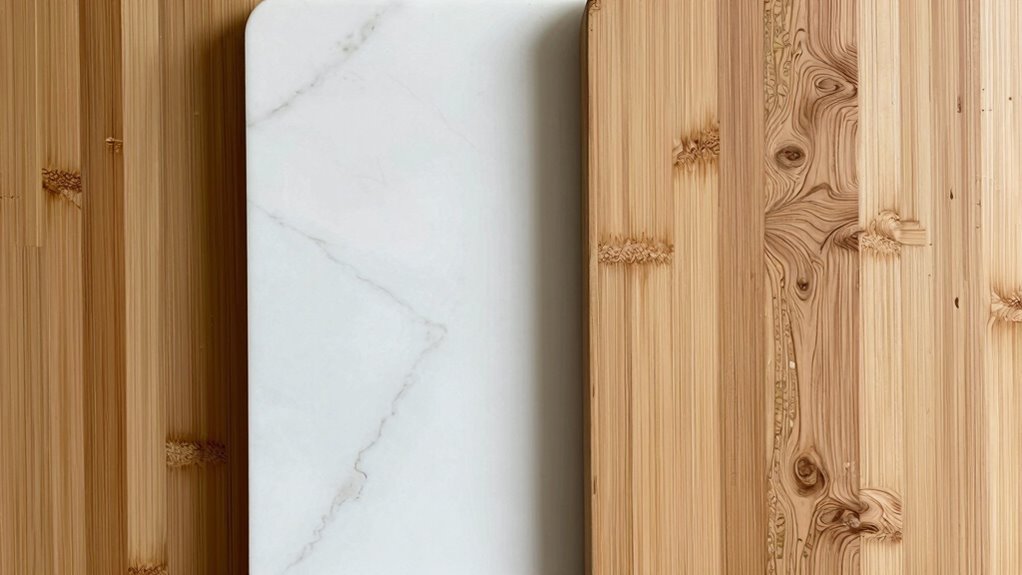

Your cutting board material impacts your kitchen experience by influencing knife sharpness, ease of cleaning, and safety. Softer materials like bamboo are gentle on knives and easier to maintain, while hard surfaces like glass and stone dull blades faster and can pose safety risks if broken. Hygiene is also affected—some materials are easier to sterilize but may harbor bacteria if damaged. Understanding these differences helps you make better choices, and there’s more to discover about how each material shapes your cooking journey.

Get kitchen staples and gadgets delivered free — and shop member deals
- Fast, free delivery on millions of items
- Access to Prime Big Deal Days deals on October 6–7
- Prime Video, Amazon Music and more included
Key Takeaways
- Different materials affect knife sharpness and ease of cleaning, impacting overall cutting comfort.
- Surface hardness influences safety, hygiene, and how often knives require sharpening or replacements.
- Material durability determines the board’s lifespan, safety, and maintenance needs.
- Eco-friendly options like bamboo support sustainability and reduce environmental impact.
- The choice of material shapes cleaning routines, safety practices, and the overall cooking experience.
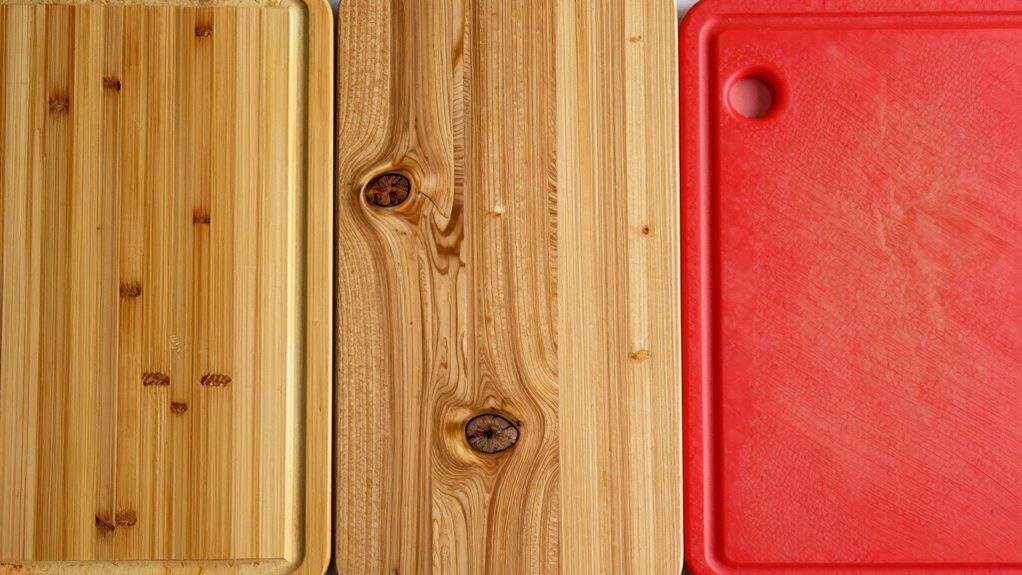
The material also impacts your overall cutting experience. Some surfaces, like bamboo, offer a balance—they’re relatively gentle on knives and easier to clean than some hardwoods, with lower maintenance requirements. Glass and stone boards, while highly hygienic and easy to sterilize, are incredibly hard and can dull your knives quickly. They also feel less forgiving under your knife’s edge, making cutting less comfortable and possibly affecting your precision. Additionally, some materials like glass and stone are more prone to breakage, which can be a consideration for safety and durability. Proper hygiene practices, such as regular cleaning and replacing worn boards, are essential to prevent bacterial buildup, especially given that some materials may develop deep cuts over time that harbor bacteria. Moreover, using natural materials like bamboo can also support sustainable backyard practices, aligning with eco-friendly principles. Being aware of material durability can help you select a cutting board that lasts longer and maintains safety standards. So, your choice of material shouldn’t just be about aesthetics; it should also align with how well you can maintain your knives and ensure proper hygiene practices.
Ultimately, the material of your cutting board shapes your entire culinary routine. It affects how often you need to sharpen or replace your knives, how thoroughly you clean and sanitize your surfaces, and how comfortable your cutting motions feel. Choosing the right material isn’t just about style—it’s about creating a safe, efficient, and enjoyable kitchen environment. By understanding these differences and considering indoor air quality and humidity, you can select a cutting board that complements your habits and keeps your kitchen hygienic and your knives sharp.
As an affiliate, we earn on qualifying purchases.
Frequently Asked Questions
How Do I Properly Sanitize Different Cutting Board Materials?
To properly sanitize different cutting board materials, you should clean them immediately after use with hot, soapy water. For plastic boards, occasionally run them through the dishwasher or use a bleach solution to eliminate bacteria. Wooden boards can be sanitized with vinegar or hydrogen peroxide, but avoid soaking. Maintain your knife maintenance by regularly sharpening knives, and store your boards properly using appropriate storage techniques to prevent cross-contamination.
Which Material Is Best for Cutting Raw Meat?
You’ll want a plastic cutting board for raw meat—think of it as your fortress for knife safety and material durability. It’s tough enough to withstand sharp knives, preventing slips, and easy to sanitize, eliminating bacteria villains. Wooden boards are charming but can harbor bacteria if not cleaned properly. So, plastic wins in the battle for safe, durable, and hygienic raw meat prep.
Are There Eco-Friendly Options for Cutting Board Materials?
Yes, there are eco-friendly options for cutting board materials. You can choose reclaimed wood, which repurposes old wood and reduces waste, or opt for bamboo, known for its rapid growth and sustainability. Both materials are durable, natural, and environmentally friendly, making them excellent choices for eco-conscious cooks. By selecting reclaimed wood or bamboo, you support sustainability and enjoy a functional, eco-friendly cutting surface.
How Long Does a Typical Cutting Board Last Based on Material?
A typical cutting board lasts anywhere from a few months to several years, depending on the material. Wooden boards often last longer with proper knife maintenance and regular oiling, while plastic boards may show cuts and wear faster. To extend your cutting board’s life, store it properly and avoid excessive moisture. Regularly sanitizing and inspecting it helps prevent bacteria buildup, ensuring safe and efficient use over time.
Can I Use the Same Cutting Board for All Food Types?
You can use the same cutting board for all food types, but it’s better to have separate ones for meats, vegetables, and bread to prevent cross-contamination. Choose a cutting board that complements your kitchen aesthetics and consider proper cutting board storage to keep it clean and accessible. Switching boards based on food type enhances safety, and storing them properly preserves their condition and your kitchen’s overall look.
glass cutting board with non-slip feet
As an affiliate, we earn on qualifying purchases.
As an affiliate, we earn on qualifying purchases.
Conclusion
Choosing the right cutting board material truly transforms your kitchen experience. Whether you prefer the gentle touch of wood or the durability of plastic, each offers unique benefits. Remember, “You are what you eat,” and that includes your tools—select wisely to enjoy safer, more enjoyable cooking. Investing in the right cutting board means more than just convenience; it’s about caring for your ingredients and yourself. So, trust your instincts and choose what feels right for your culinary journey.
plastic cutting board for raw meat
As an affiliate, we earn on qualifying purchases.
As an affiliate, we earn on qualifying purchases.
hard surface cutting board for professional kitchen
As an affiliate, we earn on qualifying purchases.
As an affiliate, we earn on qualifying purchases.
NFL season / tailgating Picks
team gear
As an affiliate, we earn on qualifying purchases.