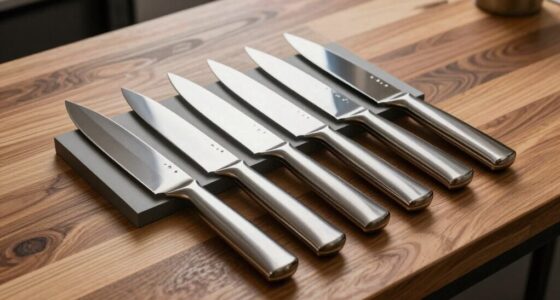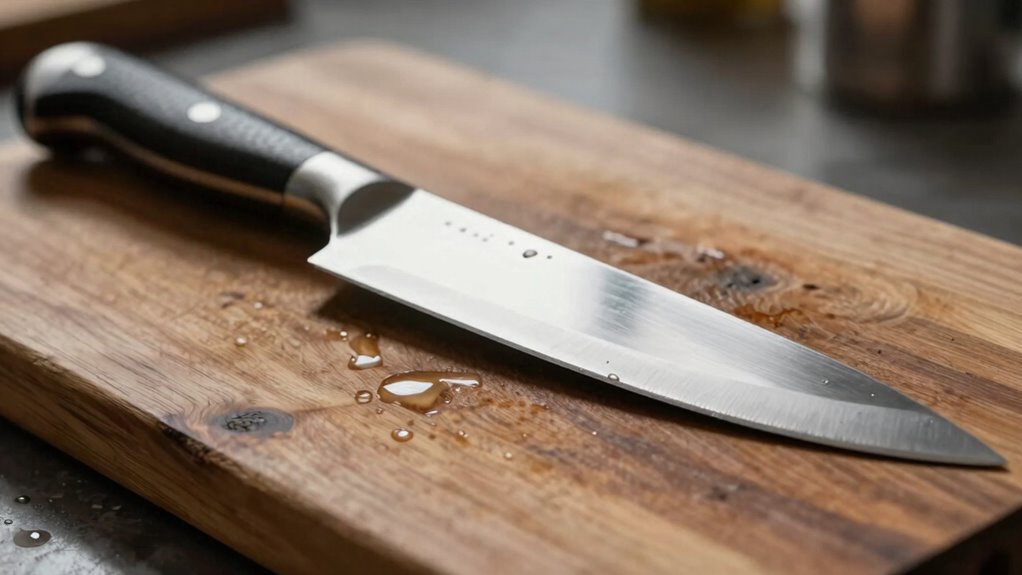

Good chef’s knives feel so different because their design, materials, and craftsmanship create a precise and responsive experience. The balance between the handle and blade, along with the quality of the steel, allows you to control your cuts easily and confidently. Well-designed handles and full-tang construction reduce fatigue, while premium materials maintain sharpness longer. All these elements work together to make food prep more efficient and enjoyable—if you want to discover what makes these knives so special, keep exploring.

Get kitchen staples and gadgets delivered free with Prime
- Fast, free delivery on millions of items
- Prime Video, Amazon Music and more included
- Member-only deals all year
Key Takeaways
- Superior handle design and materials provide a comfortable grip, enhancing control and reducing fatigue during use.
- High-quality steel and craftsmanship ensure a sharper, more responsive blade that glides effortlessly through ingredients.
- Full-tang construction and precise blade alignment improve balance, stability, and overall handling feel.
- The combination of materials and design elements creates a harmonious tool that responds intuitively to the user’s movements.
- Investment in quality craftsmanship and materials results in a knife that offers consistent performance and a noticeably different feel.

When you pick up a chef’s knife, you might notice it feels surprisingly different from other knives, even if it looks similar. That difference stems from more than just the weight or size; it’s about how the knife handles and the quality of its blade materials. Good chef’s knives are designed with precision, allowing you to maneuver with confidence and control. The grip, balance, and edge retention all contribute to how you handle the knife during your prep work. With proper knife handling, you’ll find that slicing, dicing, and chopping become more effortless and accurate. The way the knife responds to your movements isn’t just about technique—it’s about how well the blade aligns with your hand and cutting style.
A well-designed chef’s knife enhances control, precision, and comfort, transforming your cooking experience into a more effortless art.
The materials used in the blade play a significant role in this experience. High-quality steel, such as VG-10 or high-carbon stainless steel, offers excellent sharpness and durability. These blade materials resist corrosion and maintain their edge longer, reducing the need for frequent sharpening. The composition of the steel affects how the knife feels in your hand—stiffer steels provide a more solid, controlled cut, while softer steels might feel more forgiving but require more upkeep. When you handle a knife made from premium blade materials, you’ll notice that it glides effortlessly through ingredients, giving you a sense of precision that’s hard to replicate with lower-quality options. Additionally, the craftsmanship involved in creating these blades ensures a better overall performance, which is why many professional chefs prioritize high-quality blades in their kitchens. Proper blade alignment also ensures the knife’s balance and responsiveness, further enhancing the cutting experience. A well-crafted blade can also influence the cutting efficiency, making tasks quicker and less tiring. Recognizing the importance of blade materials and craftsmanship can help you select the right knife for your needs, ensuring a lasting investment in your culinary tools.
Another factor is how the blade is crafted. Many premium chef’s knives feature full-tang construction, where the metal extends through the handle, offering better balance and stability. This balance is essential for knife handling because it reduces fatigue and allows for more controlled, fluid motions. The way the handle is designed—whether it’s contoured, riveted, or made from a comfortable material—also influences how naturally the knife feels in your hand. When you combine a well-balanced knife with superior blade materials, you’re equipped to perform tasks more efficiently and with less strain. Proper blade craftsmanship ensures that every detail, from the grind to the finish, contributes to a harmonious cutting experience.
Ultimately, the difference in how good chef’s knives feel comes down to the harmony between the handle design, blade materials, and craftsmanship. These elements work together to create a tool that responds to your touch, making your cooking experience smoother and more enjoyable. When you’re using a high-quality knife, you’ll understand why these tools are worth investing in—they transform your approach to food prep, turning it into a more precise and satisfying process.
As an affiliate, we earn on qualifying purchases.
Frequently Asked Questions
How Does Blade Material Affect a Knife’s Feel?
Blade material impacts how a knife feels by influencing blade stiffness and edge retention. A stiffer blade, often made from high-carbon steel or harder alloys, offers more stability and reduces flexing during precise cuts. Better edge retention means the knife stays sharp longer, giving you consistent control. Softer materials may feel more forgiving but require more frequent sharpening, affecting your confidence and ease in handling.
Why Do Some Knives Feel Heavier Than Others?
In an era where even the most advanced gadgets seem to have a soul, you’ll notice some knives feel heavier because of their craftsmanship and materials. Heavier knives often feature a robust, balanced design, giving you better control. Knife craftsmanship influences weight distribution, while an ergonomic grip guarantees comfort during extended use. If a knife feels substantial, it’s likely built with high-quality materials and thoughtful design, making your chopping experience more precise and enjoyable.
How Does Handle Design Influence Knife Balance?
Handle design greatly influences knife balance by affecting weight distribution and your grip. An ergonomic grip guarantees comfort and control, allowing the weight to feel centered and well-balanced during use. When the handle is thoughtfully crafted, it reduces fatigue and improves precision. You’ll notice that a well-designed handle aligns with the blade’s weight, making cutting more effortless and enjoyable, ultimately enhancing your overall cooking experience.
Do Professional Knives Feel Different From Home-Use Knives?
Yes, professional knives do feel different from home-use ones. About 80% of chefs prefer high-quality knives because their superior craftsmanship and better balance enhance control. You notice this immediately when handling them, thanks to premium materials and precise knife aesthetics. Brand reputation also plays a role, as trusted brands guarantee durability and sharpness, making professional knives feel more refined and responsive, elevating your cooking experience beyond what typical home-use knives can offer.
Can Sharpening Change a Knife’s Overall Feel?
Sharpening definitely changes a knife’s overall feel, especially regarding cutting accuracy and grip stability. When you sharpen a knife properly, the blade becomes smoother and more responsive, making slicing easier and more precise. This improvement enhances your control, giving you a more confident grip and better cutting accuracy. Regular sharpening keeps your knife performing at its best, ensuring it feels sharp, stable, and comfortable every time you use it.
As an affiliate, we earn on qualifying purchases.
Conclusion
Once you hold a good chef’s knife, it’s like gripping a finely tuned instrument, balancing perfectly in your hand. The smooth, cool metal whispers through ingredients, slicing with effortless precision, as if it’s an extension of your own hand. Feel the weight settle comfortably, and every cut becomes a dance—fluid and confident. With each use, you begin to understand that a quality knife doesn’t just cut—it elevates your entire cooking experience, turning simple ingredients into art.
As an affiliate, we earn on qualifying purchases.
As an affiliate, we earn on qualifying purchases.
Halloween Picks
halloween
As an affiliate, we earn on qualifying purchases.