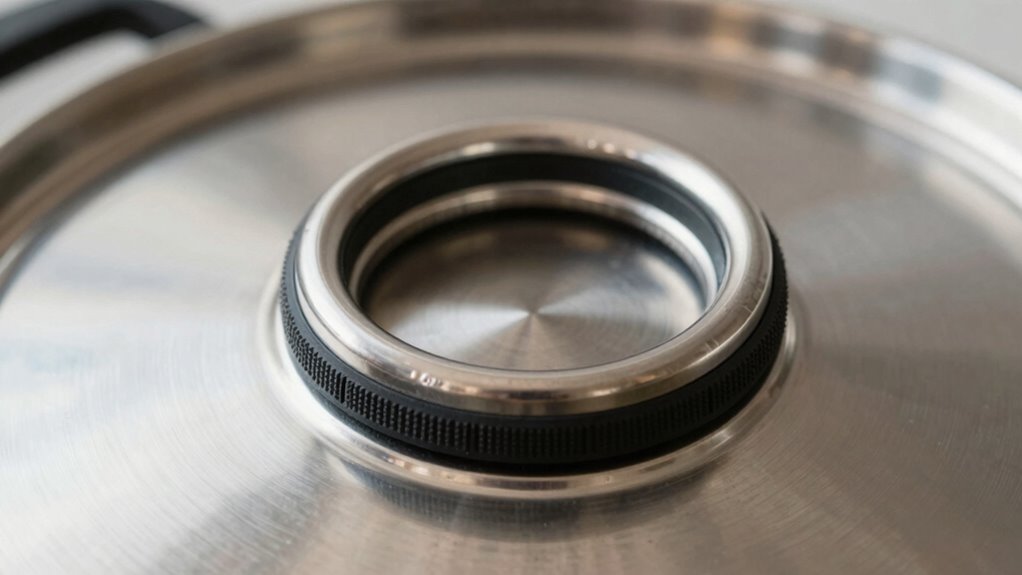

Your pressure cooker’s sealing ring is vital because it keeps an airtight environment, allowing pressure to build safely and efficiently. If it’s damaged or worn, steam can leak, leading to undercooked food or dangerous accidents. Regular inspection and proper maintenance guarantee your cooker performs well and stays safe. Keeping the seal in good condition is key to healthy, perfectly cooked meals—and understanding more about its importance can help you avoid safety hazards down the line.

Get kitchen staples and gadgets delivered free with Prime
- Fast, free delivery on millions of items
- Prime Video, Amazon Music and more included
- Member-only deals all year
Key Takeaways
- They maintain an airtight seal, enabling proper pressure buildup for safe and efficient cooking.
- Damaged rings can cause steam leaks, leading to unsafe pressure drops or lid blow-offs.
- Regular inspection and maintenance prevent safety hazards and ensure consistent cooking results.
- Proper material and durability of sealing rings enhance their lifespan and performance under high heat.
- A secure seal improves overall cooker safety, prevents accidents, and ensures perfectly cooked meals.
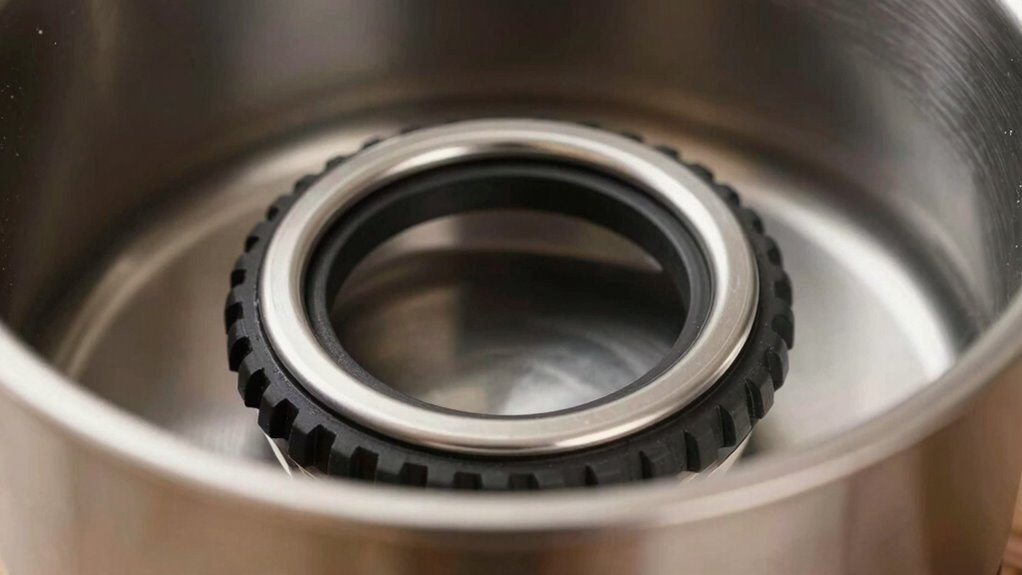
Have you ever wondered why your pressure cooker might not be sealing properly? It’s a common issue that can cause frustration and even compromise your cooking safety. The sealing ring is a critical component that ensures your pressure cooker functions correctly; without it, steam can escape, and the cooker won’t reach or maintain the necessary pressure. When the seal isn’t airtight, your meal could turn out undercooked or unevenly cooked, and in worst-case scenarios, it can pose safety hazards. That’s why understanding the importance of the sealing ring is essential for both effective cooking and safety.
A proper sealing ring is essential for safe, efficient pressure cooking and perfectly cooked meals.
The seal’s primary role is to create an airtight environment inside the cooker, which allows pressure to build up adequately. If the sealing ring is damaged, cracked, or deformed, it can’t do its job effectively. This directly affects cooking safety because an improper seal can lead to steam leaks that might cause the lid to blow off or pressure to drop suddenly. Not only does this compromise the integrity of your cooking process, but it also poses potential safety risks, especially if the cooker is under high pressure. Regularly inspecting your sealing ring for signs of wear and tear can help prevent these issues. Replacing a worn ring promptly keeps your cooker operating safely and efficiently. Additionally, choosing the right material for your sealing ring can enhance its longevity and performance, considering different materials are suited for various models and usage conditions. Proper material compatibility can also prevent premature degradation of the seal.
Seal durability is another crucial aspect to consider. Your sealing ring must withstand high temperatures and frequent use without losing its elasticity or becoming brittle. Over time, exposure to heat, cleaning agents, and food residues can degrade the material, making it less effective. A seal that’s lost its durability won’t provide a secure fit, leading to leaks and inconsistent pressure. This not only affects your cooking results but also increases the risk of accidents. To extend the life of your sealing ring, you should follow proper maintenance tips, like cleaning it carefully and storing your pressure cooker in a dry, cool place when not in use. Some rings are made from silicone, rubber, or other heat-resistant materials, and choosing the right type for your model can make a significant difference in seal durability. Additionally, understanding how to properly maintain your sealing ring and ensure it remains in good condition can prevent costly replacements and enhance safety. Regularly checking for wear and tear and following manufacturer guidelines can further improve the longevity of your sealing ring.
Ultimately, the quality and maintenance of your sealing ring directly impact your cooking safety and the overall performance of your pressure cooker. A well-maintained, durable sealing ring ensures your cooker performs optimally, keeps safety at the forefront, and keeps your meals perfectly cooked. Regular checks, timely replacements, and proper cleaning are simple steps that make a big difference. When your sealing ring works properly, you can trust your pressure cooker to operate safely and efficiently, giving you peace of mind with every use. Ensuring the maintenance practices are followed can significantly extend the lifespan of your sealing ring and improve your overall cooking experience.
pressure cooker sealing ring replacement
As an affiliate, we earn on qualifying purchases.
As an affiliate, we earn on qualifying purchases.
Frequently Asked Questions
How Often Should I Replace My Pressure Cooker Sealing Ring?
You should replace your pressure cooker sealing ring every 12 to 18 months or sooner if it shows signs of wear. The sealing ring lifespan varies depending on usage and cleaning habits. Regularly inspect for cracks, warping, or bad odors, and replace it promptly when these issues appear. Proper replacement frequency guarantees your cooker stays safe and maintains peak pressure, preventing leaks and ensuring efficient cooking.
Can Sealing Rings Be Used in Different Brands of Pressure Cookers?
Sealing rings can sometimes be used across different brands, but brand compatibility is essential. You might think they’re interchangeable, but material differences—like silicone or rubber—affect fit and safety. Always check if the ring is compatible with your specific pressure cooker brand. Using the wrong ring could lead to leaks or safety issues, so it’s safest to stick with manufacturer-approved options or verify compatibility before swapping rings between brands.
What Materials Are Best for Sealing Rings in High-Altitude Cooking?
For high-altitude cooking, you want sealing rings made from materials with excellent durability and heat resistance, like silicone or rubber blends. These materials withstand the increased pressure and temperature changes better, ensuring a secure seal. Avoid cheaper plastics or low-quality rubber, as they can degrade faster under high-altitude conditions. Investing in high-quality silicone rings helps maintain consistent cooking results and keeps your pressure cooker safe and reliable.
How Do I Know if My Sealing Ring Is Damaged or Worn Out?
You’ll know your sealing ring is damaged or worn out if it no longer creates a proper seal, causing steam to escape or pressure to fluctuate. Check for cracks, tears, or warping, and feel for any loss of flexibility. Regular seal replacement is essential, especially if the material durability has declined. Inspect it before each use, and replace it promptly to maintain safe, efficient pressure cooking.
Are There Cleaning Tips to Extend the Life of Sealing Rings?
To extend your sealing ring’s life, follow proper cleaning techniques by washing it with warm, soapy water after each use, and avoid abrasive scrubbers that can cause damage. Make sure to dry it thoroughly before storage. Store the sealing ring separately in a cool, dry place away from direct sunlight, and avoid stretching it. These storage tips and regular cleaning will help maintain its flexibility and sealing effectiveness longer.
As an affiliate, we earn on qualifying purchases.
Conclusion
Don’t overlook your pressure cooker’s sealing ring — it’s essential for safe, efficient cooking. Some might think it’s just a small part, but a worn or damaged ring can cause leaks or accidents. Replacing it is simple and affordable, so there’s no reason to risk your safety or mess up your meal. Keep your sealing ring in top shape, and you’ll enjoy delicious, worry-free pressure cooking every time!
pressure cooker sealing ring set
As an affiliate, we earn on qualifying purchases.
As an affiliate, we earn on qualifying purchases.
stainless steel pressure cooker seal
As an affiliate, we earn on qualifying purchases.
As an affiliate, we earn on qualifying purchases.
Halloween Picks
halloween
As an affiliate, we earn on qualifying purchases.