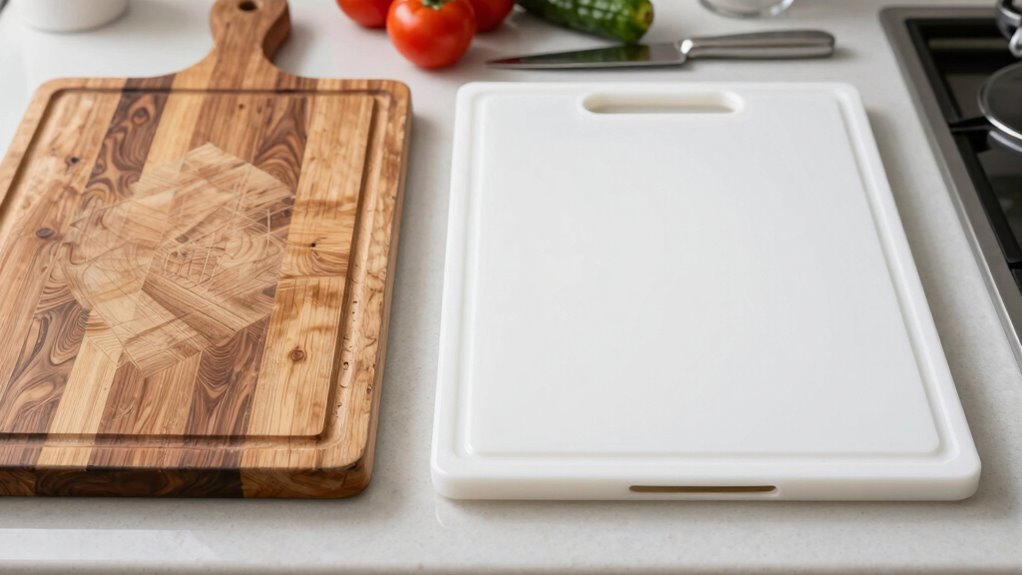

In busy kitchens, choosing between wood and plastic cutting boards depends on your priorities. Plastic boards are lightweight, moisture-resistant, and easy to sanitize, making them convenient for quick tasks, but they can develop deep grooves that trap bacteria and may need frequent replacement. Wooden boards are durable, naturally antimicrobial, and last longer with proper care, though they require regular oiling. To find the best fit for your needs, explore more about their strengths and maintenance tips.

Get kitchen staples and gadgets delivered free with Prime
- Fast, free delivery on millions of items
- Prime Video, Amazon Music and more included
- Member-only deals all year
Key Takeaways
- Plastic boards are lightweight, easy to sanitize, and ideal for quick, frequent use in busy kitchens.
- Wooden boards are durable and longer-lasting with proper maintenance, reducing replacement costs over time.
- Plastic boards can develop deep cuts that harbor bacteria, requiring frequent replacement for hygiene.
- Wooden boards’ natural antimicrobial properties help prevent bacterial growth, supporting kitchen safety.
- Both materials need regular cleaning; plastic boards are more moisture-resistant, making them suitable for high-volume environments.
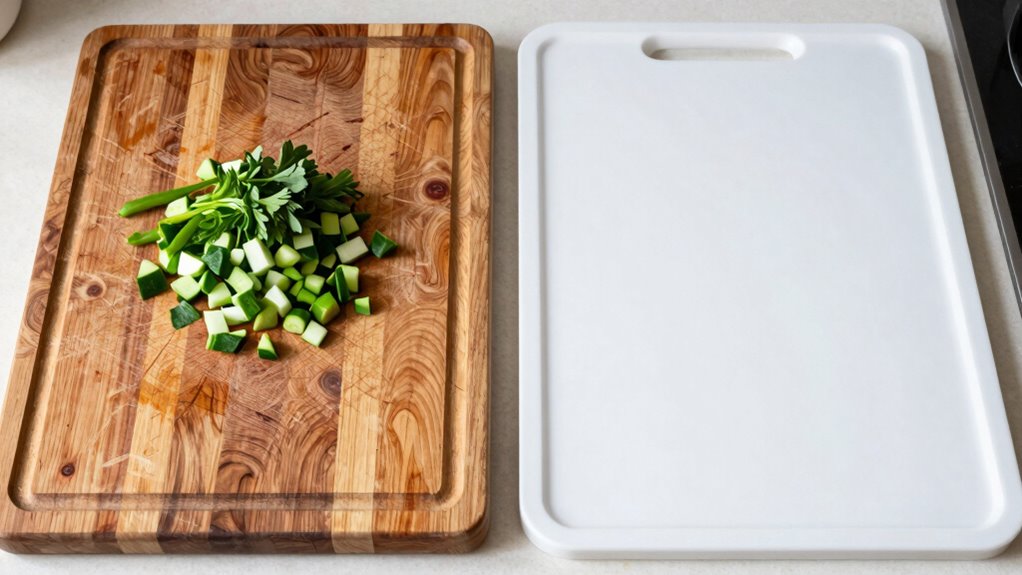
When it comes to choosing the right cutting board for a busy kitchen, the decision often boils down to wood or plastic, each offering distinct advantages and drawbacks. If you’re aiming for eco-friendly materials, wood is an excellent choice. Many wooden boards are made from sustainably harvested hardwoods like bamboo, which grow quickly and require fewer resources. Bamboo, in particular, is highly renewable, making it a sustainable option that reduces your environmental footprint. In contrast, plastic cutting boards are typically made from polypropylene or polyethylene, which are derived from petroleum. While some plastics are recyclable, many end up in landfills, contributing to environmental concerns. If eco-friendliness ranks high on your list, opting for wooden boards made from sustainable sources aligns better with eco-conscious practices.
Cost comparison also plays a crucial role in your decision. Generally, plastic cutting boards are more budget-friendly upfront. You can find basic plastic boards at a lower price point, making them appealing for quick, cost-effective solutions in a busy kitchen. However, the initial savings might be offset over time because plastic boards tend to wear out faster. They are prone to deep cuts and scratches, which can harbor bacteria and make cleaning less effective. Wooden boards, on the other hand, often come with a higher initial cost but tend to last longer when properly maintained. Their natural antimicrobial properties make them easier to sanitize, and they’re less likely to develop deep grooves that trap bacteria. Over the long run, investing in a quality wooden board might save you money by reducing the need for frequent replacements. Additionally, some high-quality wooden boards feature enhanced durability and antimicrobial benefits that can be especially advantageous in a busy kitchen. Regular maintenance requirements are essential for preserving the integrity of your wooden board, and understanding the proper cleaning techniques can help prevent bacterial growth and extend its lifespan.
Durability is another aspect to consider. In a busy kitchen, you need a cutting surface that can withstand constant use. Wooden boards are sturdy and can handle heavy chopping, but they require regular oiling to prevent cracking and warping. Plastic boards are lightweight and resistant to moisture, making them easy to sanitize after every use. They’re convenient for quick tasks and are less likely to crack under pressure. However, because they can develop deep cuts, bacteria can hide in the grooves, which means you may need to replace them more often than you’d replace a well-maintained wooden board. Additionally, some electric bike conversion kits feature durable and waterproof designs that could inspire similar considerations for choosing cutting boards that withstand moisture and frequent cleaning. Proper maintenance and selection of high-quality materials can extend the lifespan of your cutting board and ensure a safer, cleaner surface. It’s also worth noting that many modern kitchen tools are designed with antimicrobial features to support hygiene in busy environments, which can be an important factor in your decision-making process. When selecting a cutting board, considering moisture resistance can help ensure it remains durable even with frequent washing.
wooden cutting boards for kitchen
As an affiliate, we earn on qualifying purchases.
As an affiliate, we earn on qualifying purchases.
Frequently Asked Questions
Which Cutting Board Material Is More Eco-Friendly?
You’ll find that wood cutting boards are more eco-friendly because they come from renewable resources and often require less energy to produce. Plus, their durability means you can reuse them longer, reducing waste. If you choose plastic, verify it’s made from recyclable materials and follow proper recycling practices. Overall, wood’s natural composition and longer lifespan make it a better choice for environmentally conscious kitchens.
How Do Cutting Boards Affect Food Flavor Transfer?
Cutting boards can influence food flavor transfer through flavor absorption and taste transfer. Wood boards tend to absorb flavors over time, which can enhance or alter the taste of your foods, especially if you switch between raw meats and produce. Plastic boards are less likely to absorb flavors, making them easier to clean and less prone to taste transfer. For a cleaner taste, use separate boards for different food types or opt for plastic.
Are There Specific Cleaning Methods for Hybrid or Composite Boards?
For hybrid or composite boards, you should use hybrid maintenance and composite care techniques. Wash them with warm, soapy water after each use, and avoid harsh chemicals that could damage their surface. Occasionally, sanitize with a mixture of vinegar and water or a mild bleach solution. Dry thoroughly to prevent mold. Avoid soaking or putting them in the dishwasher, as excessive moisture can compromise their integrity.
Can Cutting Boards Be Safely Used for Both Raw and Cooked Foods?
Think of your cutting board as a battlefield—raw and cooked foods shouldn’t share the same space. Using it for both increases cross contamination risks, especially if the material isn’t durable enough to handle thorough cleaning. Plastic boards are often better here because they resist deep cuts where bacteria hide. Wood, with its porous surface, might harbor bacteria even after washing, making it less safe for dual use.
How Do Cutting Boards Impact Overall Kitchen Hygiene Standards?
Cutting boards considerably impact your kitchen hygiene standards by influencing hygiene maintenance and knife safety. Using separate boards for raw and cooked foods prevents cross-contamination, maintaining cleanliness. Wood boards naturally resist bacteria and are easier on knives, enhancing safety, while plastic boards are easy to sanitize in high heat. Properly cleaning and replacing boards regularly are essential to uphold hygiene standards, ensuring a safe and healthy cooking environment.
plastic cutting boards with antimicrobial properties
As an affiliate, we earn on qualifying purchases.
As an affiliate, we earn on qualifying purchases.
Conclusion
Choosing between wood and plastic cutting boards depends on your kitchen’s needs, but both have their merits. Wood offers durability and a natural antimicrobial edge, while plastic is easy to sanitize and lightweight. So, which material truly fits your busy kitchen’s rhythm? Think about how often you cook, clean, and prioritize hygiene. Ultimately, the best board is the one that keeps your food safe and your workflow smooth—what’s your top priority?
sustainable bamboo cutting board
As an affiliate, we earn on qualifying purchases.
As an affiliate, we earn on qualifying purchases.
As an affiliate, we earn on qualifying purchases.
NFL season / tailgating Picks
team gear
As an affiliate, we earn on qualifying purchases.