TL;DR

Get kitchen staples and gadgets delivered free with Prime
- Fast, free delivery on millions of items
- Prime Video, Amazon Music and more included
- Member-only deals all year
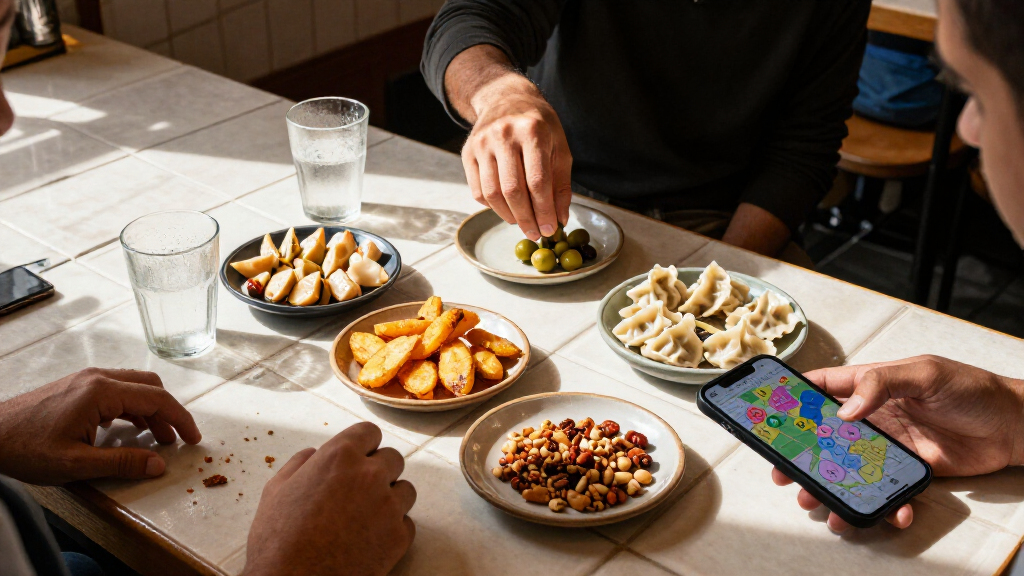
VinePair published a map-style guide to 15 regional bar snacks, linking familiar drinking foods to local culinary and bar traditions. The supplied report describes examples including Italian stuzzichini, British Scotch eggs and pork scratchings, German pretzels, and Spanish gildas and croquetas. The source material provided here does not include all 15 entries or details about how the map was compiled.
VinePair has published a map-style report on 15 regional bar snacks around the world, connecting foods served alongside drinks to local bar customs and culinary histories. The examples in the supplied report range from Italian aperitivo snacks to British pub food and small bites associated with Spain’s Basque Country.
The report describes stuzzichini as the small, usually savory foods served during Italy’s aperitivo hour. The tradition is associated with Turin and the 18th-century rise of vermouth, according to VinePair. Typical choices include taralli, olives, peanuts and potato chips, served with drinks such as Aperol Spritzes and Negronis.
For the United Kingdom, the article highlights Scotch eggs and pork scratchings. A Scotch egg is a boiled egg wrapped in sausage meat, coated in breadcrumbs and fried. The name notwithstanding, VinePair says most food historians believe English cooks invented it in the 18th century; the article also notes a theory linking it to Indian Nargisi kofta. Pork scratchings are fried pig skin, traditionally associated with inexpensive, filling food in 19th-century England.
VinePair’s European examples also include German pretzels and two Spanish tapas-bar snacks. The report traces pretzels’ history to the Middle Ages, while noting that the account of their invention by an Italian monk is attributed to some historians. Basque gildas combine an olive, a pickled hot pepper and an oil-cured anchovy on a skewer. The report says Bar Casa Vallés in San Sebastián introduced the combination in 1946. Spanish croquetas, meanwhile, are breaded and fried, with jamón among the traditional fillings.
How Bar Snacks Reflect Local Drinking
The guide frames bar snacks as more than convenient food: they reflect what people drink and how they gather. Italian stuzzichini accompany pre-dinner aperitivo, while rich fried foods such as Scotch eggs and pork scratchings suit the hearty pub fare described in the report. In Spain, salty, acidic gildas are served with drinks including Txakoli and vermouth.
Mapping these foods gives readers a way to recognize local customs when ordering at a bar, and to see how dishes move across borders. VinePair notes that croquetas began in France before becoming closely associated with Spanish tapas. The report also points to New York City bars where visitors can find snacks tied to different national traditions, though the supplied material does not document the full list of venues or all 15 mapped foods.
Products Worth Considering

Le Creuset Enameled Cast Iron Round Wide Dutch Oven, 3.5 qt, Sea Salt

Le Creuset Signature Deep Round Enameled Cast Iron Dutch Oven, 6.5 qt, Sea Salt

Cuisinart Advantage Nonstick Cookware Set, 11-Piece, Black
As an affiliate, we earn on qualifying purchases.
From Aperitivo to Tapas Bars
Many of the foods in the report have histories that reach well beyond modern bar menus. VinePair places the aperitivo custom in 18th-century Turin, describes Scotch eggs as an 18th-century English creation, and dates the introduction of gildas at Bar Casa Vallés to 1946. Pretzels, it says, were established in what is now Germany by the 1100s.
The article also distinguishes the roots of a dish from the place where it became popular. French cooks are credited with early croquettes made from scraps of meat, later incorporating béchamel; VinePair says the dish gained broader popularity after Spanish adoption in the 19th century. These histories are presented as the report’s account, and some origin stories remain theories rather than settled fact.
What the Supplied Report Leaves Out
The source material provided for this article contains only part of VinePair’s report. Although the title says it covers 15 regional snacks, the supplied text stops during its discussion of croquetas and does not identify the remaining entries. It also does not provide the map’s underlying data, selection criteria, publication date or links to supporting historical sources.
Some origin accounts are explicitly qualified: VinePair says most food historians attribute Scotch eggs to English cooks, while the proposed connection to Nargisi kofta is a theory. The pretzel’s association with an Italian monk is likewise described as a belief held by some historians. The available material does not resolve those questions.
The Full Map and Its Sources
The next step for readers seeking the complete set is to consult VinePair’s original report, which contains the map and the full selection of 15 snacks. The supplied source gives no indication of a follow-up publication, corrections or additional reporting, so no further development can be confirmed here.
Until the full article is available for review, the entries and historical details covered here should be understood as the portion documented in the provided source material, rather than a complete account of every snack on the map.
Key Questions
What did VinePair publish?
VinePair published a map-style report about 15 regional bar snacks, pairing foods with the drinking cultures and histories associated with them.
Which snacks are described in the available source?
The supplied text covers Italian stuzzichini, British Scotch eggs and pork scratchings, German pretzels, and Spanish gildas and croquetas. It does not include the full list of 15.
Where did gildas originate?
VinePair says gildas come from Spain’s Basque Country and that San Sebastián’s Bar Casa Vallés introduced the olive, pickled pepper and anchovy skewer in 1946.
Are the origins of these snacks certain?
Not all are settled. The report presents some histories as qualified accounts or theories, including the proposed Indian influence on Scotch eggs and the story that an Italian monk invented the pretzel shape.
Source: vinepair.com