
🔍 Read the full analysis: Barolo Vs Barbaresco: Same Grape, Different Souls on Mad Tasting

Get kitchen staples and gadgets delivered free with Prime
- Fast, free delivery on millions of items
- Prime Video, Amazon Music and more included
- Member-only deals all year
TL;DR
Barolo and Barbaresco are neighboring Langhe appellations made from Nebbiolo, but their minimum aging rules differ: 38 months for Barolo and 26 for Barbaresco. Those rules help set expectations; they do not guarantee a particular taste, since site, producer, vintage and bottle age also shape each wine.
Barolo and Barbaresco, two neighboring wine appellations in Piedmont’s Langhe, are both made from Nebbiolo, but have different minimum aging requirements and cover distinct growing zones. A comparison from Mad Tasting says those differences can guide expectations, while stressing that producer, vineyard, vintage and bottle age can matter just as much as the name on the label.
Under the rules summarized by Mad Tasting, Barolo must age for at least 38 months, including 18 months in wood. Barbaresco must age for at least 26 months, including nine months in wood. These are minimum requirements, not a promise that every bottle will taste a particular way or be ready to drink at the same point.
Both wines can show rose, red cherry, herbs, tar and earthy notes, with leather, dried flowers and spice developing as they age. The source describes the common contrast of Barolo as firmer and more brooding and Barbaresco as more lifted and aromatic as a starting point, not a rule. A Barolo made in a restrained style may feel graceful, while a Barbaresco from a particular site may have firm tannins and age well.
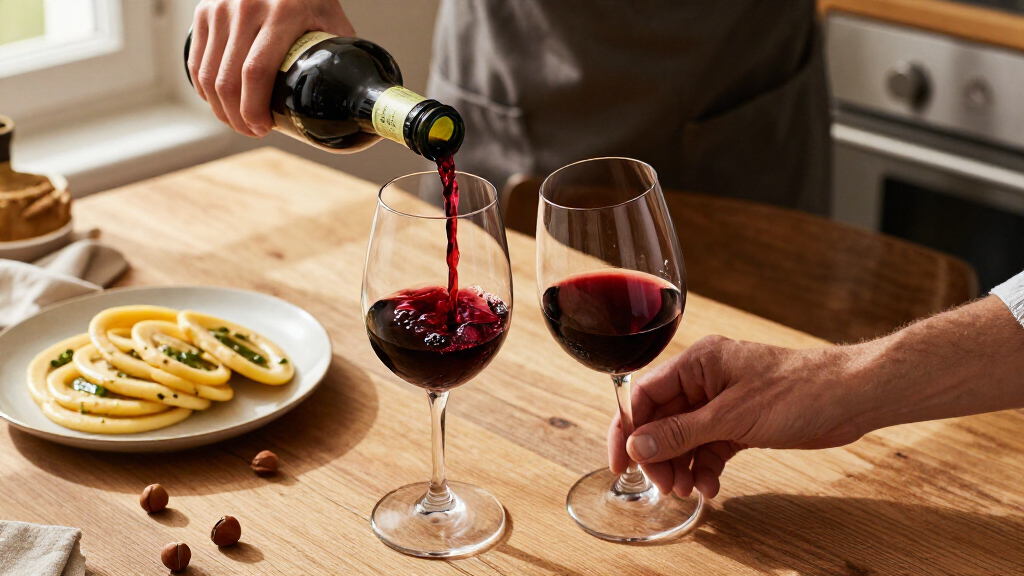
For a practical comparison, Mad Tasting suggests tasting bottles from the same producer and vintage side by side. That holds two variables more nearly constant, but does not make the test exact: the wines may come from different vineyards and involve different cellar choices. Serving them at a similar temperature and giving them some air can help reveal differences in aroma and texture.
How Aging Rules Shape Expectations
The different aging minimums offer a concrete way for shoppers to distinguish the appellations, but they should not be mistaken for a complete tasting guide. More required aging does not establish that a wine is better, nor does it determine how firm, aromatic or approachable an individual bottle will be. The rules describe a minimum time before release under the relevant appellation requirements; the source does not claim that they predict a bottle’s precise development.
That distinction matters when choosing wine for a meal or buying bottles to keep. Nebbiolo’s high tannin and acidity can make a wine feel tightly structured on its own, while that grip may work well alongside rich, protein-rich food. A more open, aromatic bottle may be easier to enjoy without a substantial meal, though it can still have enough structure to age. These are tasting possibilities, not fixed differences between the two names.
For readers comparing labels, the useful takeaway is to treat appellation as one piece of evidence. A commune or vineyard name, the producer’s approach and the vintage can refine expectations. Tasting more than one bottle from a place can help reveal recurring preferences, but a single wine cannot stand for its entire appellation.
As an affiliate, we earn on qualifying purchases.
Two Langhe Zones, One Grape
Barolo and Barbaresco both lie in the Langhe hills of Piedmont in northwest Italy and use Nebbiolo. The source describes Barolo as the larger zone, encompassing communes including Barolo, La Morra, Castiglione Falletto, Serralunga d’Alba and Monforte d’Alba. Barbaresco is more compact, centered on the villages of Barbaresco, Neive and Treiso, as well as part of Alba.
Neither area is uniform. Slope, elevation, aspect, soil and local weather can differ from site to site, even within neighboring vineyards. Those conditions influence ripeness and freshness; decisions in the cellar, including extraction, also affect the wine’s texture. The source therefore cautions against reading the size of an appellation as a measure of a wine’s power or complexity.
The source notes that Nebbiolo’s name is often linked to nebbia, the Italian word for fog, but says the precise origin of the name remains debated. That detail is background rather than a settled explanation. For comparing the wines, the more practical starting point is the shared grape and the variation created by the specific site and producer.
““Power and finesse” is a useful starting point, not a promise of what is in the glass.”
— Mad Tasting
As an affiliate, we earn on qualifying purchases.
What the Label Cannot Predict
The comparison does not provide named producers, vintages, prices or tasting results from particular bottles. It also does not identify a new rule change or a dated event; the aging periods are presented as the appellations’ requirements. Readers should not infer a universal flavor profile from the general contrast between Barolo and Barbaresco.
How much a bottle’s character comes from its vineyard, vintage, producer or cellar practice cannot be settled by appellation alone. The source also gives no single measure for terms such as “larger zone” or for how widely particular styles occur. Specific bottle comparisons remain necessary, and even a same-producer, same-vintage tasting cannot isolate appellation perfectly if the wines come from different sites or are made differently.
As an affiliate, we earn on qualifying purchases.
Compare Bottles at the Table
The source points readers toward a side-by-side tasting rather than a fixed ranking. If available, choose Barolo and Barbaresco from the same producer and vintage, serve them at similar temperatures and allow a little air. Compare aroma as well as tannin, acidity and how each wine feels with food.
There is no further announcement or next regulatory milestone identified in the material. For consumers, the next useful step is to check the producer, vintage and place names on the labels, then compare more than one example before drawing a conclusion about either appellation.
As an affiliate, we earn on qualifying purchases.
Key Questions
Are Barolo and Barbaresco made from the same grape?
Yes. Both appellations are made from Nebbiolo, a high-acid, high-tannin grape grown in the Langhe of Piedmont.
How do their minimum aging requirements differ?
The source gives minimum aging periods of 38 months for Barolo, including 18 months in wood, and 26 months for Barbaresco, including nine months in wood.
Does Barolo always taste more powerful than Barbaresco?
No. The broad reputation of firmer Barolo and more lifted Barbaresco can be a starting point, but producer, site, vintage and age can change the character of either wine.
What is a useful way to compare the two?
Taste bottles from the same producer and vintage side by side, at a similar temperature and with some air. The comparison can make differences easier to notice, although vineyard sources and cellar choices may still differ.
Source: Mad Tasting
NFL season / tailgating Picks
team gear
As an affiliate, we earn on qualifying purchases.