
At high altitudes, lower air pressure causes your appliances and recipes to work differently. Water boils sooner, and baked goods may not set properly, so you need to adjust temperatures and cooking times. You might also reduce leavening agents to prevent collapsing or over-rising. Using covered pots helps retain moisture, and adding extra liquid can counteract faster evaporation. If you keep these tips in mind, you’ll be able to master cooking at higher elevations. Keep going to discover more helpful tricks.

Get kitchen staples and gadgets delivered free with Prime
- Fast, free delivery on millions of items
- Prime Video, Amazon Music and more included
- Member-only deals all year
Key Takeaways
- Elevation lowers atmospheric pressure, causing water to boil at lower temperatures, affecting cooking times and methods.
- Baking at high altitude requires adjusting oven temperature, reducing leavening agents, and increasing liquid to prevent overexpansion and dryness.
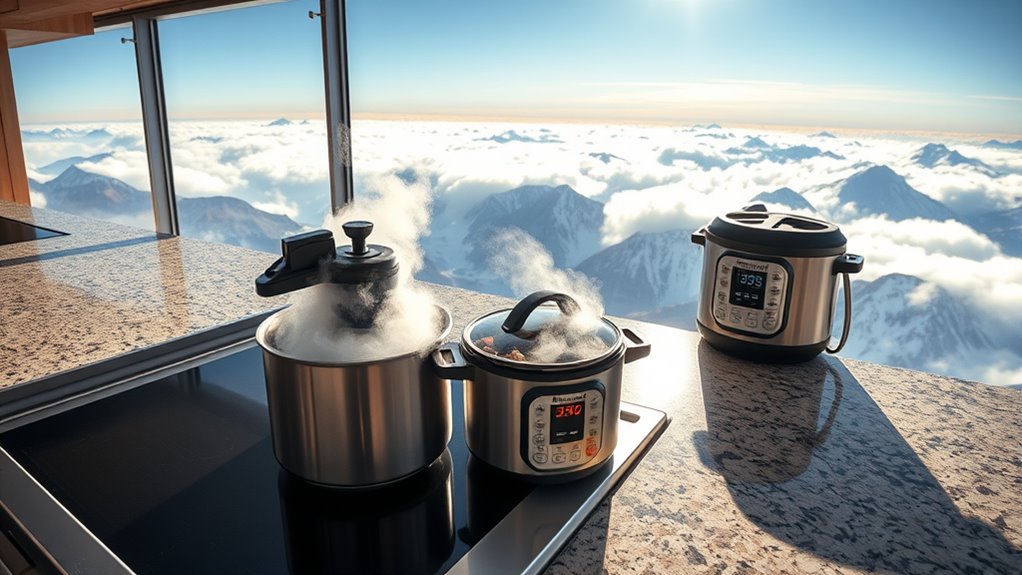
- Appliances like pressure cookers may operate differently; they often need adjustments for altitude to maintain proper pressure.
- Longer cooking times and covered pots help compensate for faster evaporation and lower boiling points at higher elevations.
- Recipes and appliances need modifications to ensure proper texture, moisture, and safety when cooking at high altitude.
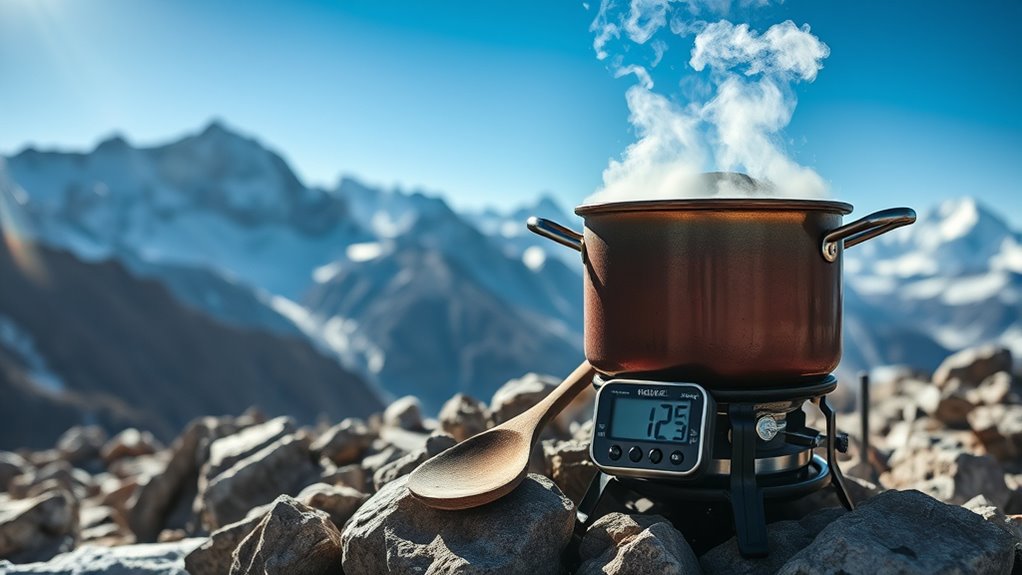
Have you ever wondered why your favorite recipes turn out differently at high altitudes? The answer lies in how elevation affects cooking and baking processes. As you climb higher, the air becomes thinner, which means the atmospheric pressure decreases. This change impacts how ingredients behave, especially in baking, where precise reactions are essential. To adapt, you need to understand pressure adjustments and baking modifications that can help you achieve better results.
At higher elevations, the lower pressure causes water to boil at a lower temperature. This means your baked goods might not set properly or might dry out faster. To counter this, you should increase the boiling point by making pressure adjustments in your recipes. For example, adding a little extra liquid can compensate for evaporation, and increasing oven temperature slightly—about 15 to 25°F—can help baked products cook thoroughly. You might also need to reduce baking time to prevent overbaking or burning. These baking modifications guarantee your treats don’t come out undercooked or overly dry.
At higher elevations, lower pressure causes water to boil sooner, requiring adjustments to baking temperature, liquids, and cooking time for best results.
When it comes to leavening, pressure adjustments are essential. Gases from baking powder or baking soda expand more rapidly at higher altitudes, which can cause your baked goods to rise too quickly and then collapse. To prevent this, you might want to reduce the amount of leavening agents in your recipes. Alternatively, you can adjust by adding a touch more acid or using less baking powder. These baking modifications help maintain the proper structure and texture of your baked items.
Cooking times for other dishes also change at high altitude because liquids evaporate faster, and heat transfer is less efficient. You may need to increase cooking times or use covered pots to trap moisture. Since boiling points are lower, boiling or simmering times might need to be extended to fully cook meats and vegetables. Adjusting pressure and temperature in your cooking methods guarantees that your dishes turn out tender and flavorful despite the elevation.
As an affiliate, we earn on qualifying purchases.
Frequently Asked Questions
How Does Altitude Impact Baking Times for Bread and Cakes?
Altitude effects your baking times by causing bread and cakes to cook faster due to lower air pressure. You should make baking adjustments by increasing oven temperature slightly and reducing baking time to prevent over-baking. Keep an eye on your baked goods, as they might need less time than recipes suggest. These altitude effects require you to experiment to find the perfect balance for consistent results.
Are There Specific Cookware Materials Better Suited for High Altitude?
Think of your cookware as a conductor in a symphony—some materials pass heat more seamlessly. For high altitude, choose cookware with excellent heat conductivity like copper or aluminum, which evenly distribute heat and adapt to thinner air. These materials help maintain consistent cooking temperatures, preventing undercooking or overcooking. So, select your cookware wisely, and let its conductive qualities harmonize with the mountain air for perfect results.
How Can I Adjust Pressure Cooker Settings for Higher Elevations?
You should increase your pressure cooker’s cooking time and adjust pressure settings based on your elevation. For higher elevations, add more cooking time and consider slightly increasing the pressure, but always follow your manufacturer’s safety precautions. Make pressure adjustments carefully, guaranteeing the cooker’s vent and seals are in good condition. This helps prevent accidents and ensures your food cooks properly at higher altitudes.
Do High Altitudes Affect Fermentation Processes in Baking?
Yes, high altitudes affect fermentation processes in baking. You’ll notice yeast activity slows down because the lower air pressure reduces carbon dioxide retention, which can delay fermentation rate. To adjust, you might need to increase yeast slightly or shorten proofing times. Keep an eye on your dough, as it may take longer to rise, but with these tweaks, you’ll achieve good results despite the altitude.
What Are the Safety Considerations for Using Appliances at High Elevation?
At high elevations, your appliances face a fire hazard if you’re not careful, so always keep an eye on them. Regular appliance maintenance is essential to prevent malfunctions caused by altitude-related stress. Use proper ventilation and avoid overloading circuits. Always follow safety guidelines, stay vigilant, and keep fire extinguishers nearby. With these precautions, you’ll guarantee safe, smooth operation while cooking at high altitude, avoiding disaster!
baking adjustments for high elevation
As an affiliate, we earn on qualifying purchases.
As an affiliate, we earn on qualifying purchases.
Conclusion
So, next time you’re cooking at high altitude, remember that elevation really does change everything. While some believe adjusting recipes isn’t necessary, science shows that lower air pressure affects boiling points and ingredient behavior. By understanding these effects, you can tweak your methods for better results. Don’t just rely on tradition—trust science to help you conquer high altitude cooking challenges and enjoy perfect dishes every time.
high altitude cooking thermometer
As an affiliate, we earn on qualifying purchases.
As an affiliate, we earn on qualifying purchases.
pressure cooker for high altitude
As an affiliate, we earn on qualifying purchases.
As an affiliate, we earn on qualifying purchases.
Halloween Picks
halloween
As an affiliate, we earn on qualifying purchases.