TL;DR
A source article draws on advice from London design and catering professionals on serving canapés and other party food. Their recommendations include using collected vintage silver, matching serving vessels to each dish, leaving room for guests and bringing hot items out in smaller batches.
A holiday entertaining report has gathered advice from London-based design and catering professionals on how to serve canapés so the food remains central to a party table. The experts recommend choosing serving pieces around each dish and how guests will eat it, with hot canapés served in smaller batches and cold items arranged on larger platters.

Get kitchen staples and gadgets delivered free with Prime
- Fast, free delivery on millions of items
- Prime Video, Amazon Music and more included
- Member-only deals all year
The report’s central point is that food presentation should be planned alongside table styling, rather than treated as a finishing touch. Charu Gandhi, founder and director of London interior design studio Elicyon, says food and design are increasingly connected in the way people style tables and entertain. That shift, the article argues, gives hosts a reason to foreground the menu rather than let decorations dominate.
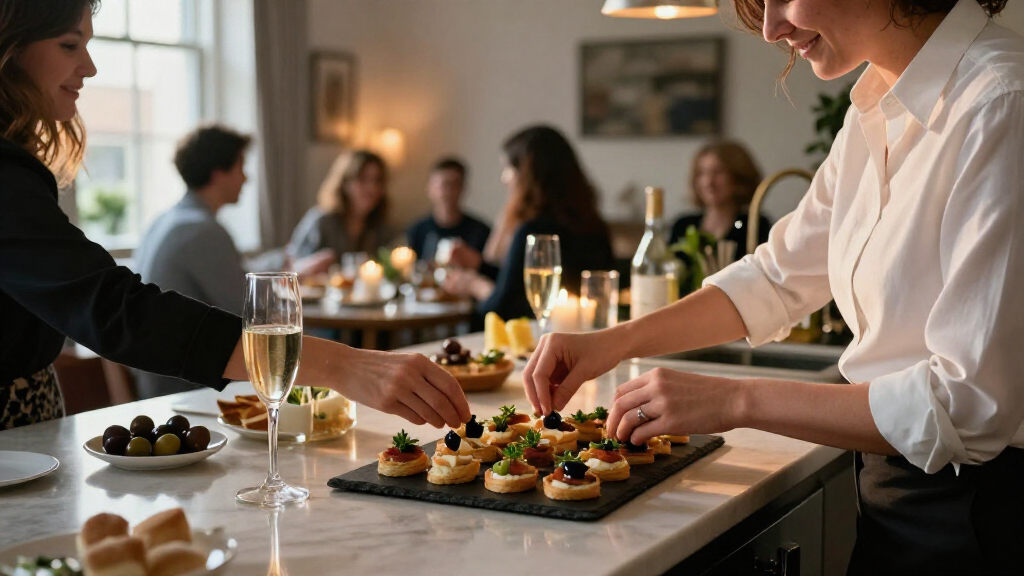
Charlie Karlson, founder and creative director of UK events and catering company Opus 11, recommends vintage silver trays, small bowls and unusual serving dishes. Their reflective surfaces contrast with the color and texture of food, while pieces with signs of wear can add character. Karlson says a collection does not need to match: vintage silver can sit alongside handmade ceramics and objects gathered during travel.
Dani Tucker, event stylist and founder of The Social Kitchen, advises selecting dishes according to both appearance and use. Shallow platters can display colorful food, while deeper bowls suit generous sides; small bowls keep sauces and seasoning close to hand. For a seated meal, sharing platters can encourage guests to pass food and talk. At a larger gathering, a separate drinks or dessert station may free table space and give guests another place to gather.
Serve Canapés with the food in mind
London design and catering professionals recommend planning serving pieces, guest access and timing alongside the table styling.
Match the vessel to the dish
Choose pieces for both how food looks and how guests will serve it.
Shallow platters
Showcase colorful food and give cold canapés room on larger platters.
Bowls and sharing dishes
Use deeper bowls for generous sides and small bowls for sauces and seasoning.
Mix serving pieces
Vintage silver can sit alongside handmade ceramics and collected objects.
Keep the table easy to use
Presentation should help guests reach, serve and enjoy the food.
- Leave space around dishes.
- Use sharing platters to invite guests to pass food and talk.
- Consider a separate drinks or dessert station.
- Free up space and create another place to gather.
Plan the serving rhythm
The report pairs platter choice with how each canapé is served.
Place them on larger platters.
Serve smaller batches over the course of the gathering.
Follow established handling guidance; the report gives no holding times or temperatures.
Making Food Work on the Table
The advice addresses a practical tension at parties: a display can look polished but still make food hard to reach, serve or eat. Planning for guest movement and access can help hosts avoid crowded tables and keep the meal flowing, while the choice of servingware can make the food itself part of the room’s design.
Timing matters as well as presentation. Karlson says cold canapés can be arranged on larger platters, while hot items are better brought out in smaller batches. That approach can help keep a spread manageable over a long evening, though the supplied article does not provide food-safety temperatures or storage instructions. Hosts still need to follow appropriate food-safety guidance for the ingredients and conditions at their event.
The recommendations are useful beyond holiday parties: they offer a way to think through how guests interact with food at any gathering. The source presents expert preferences and styling suggestions, not controlled evidence that one arrangement improves an event or keeps food safe.
Products Worth Considering

Le Creuset Heritage Stoneware Rectangular Baking Dish Set, 3-Piece, Marseille

Cuisinart Tabletop Propane Patio Heater, 11,000 BTU, Gray

Cuisinart 7-in-1 Air Fryer Toaster Oven, 1800W, TOA-55
As an affiliate, we earn on qualifying purchases.
From Table Styling to Foodscaping
The source frames its advice around the idea of “foodscaping”: considering the food, how it is served and how guests interact with it as part of the overall table design. It contrasts that approach with tables dominated by decorative details such as florals and elaborate table settings.
The discussion focuses on holiday entertaining and reports that vintage silver and chrome have featured in interior design conversations during the year. Karlson says Opus 11, which he founded in 2018 with his husband Joshua, works on events for fashion brands and private clients. Tucker’s contribution comes from her work as an event stylist and the founder of The Social Kitchen. The supplied material does not identify the original article’s publication date, so the advice cannot be tied to a more specific current trend timeline.
“I think we’re seeing a much more expressive relationship between food and design.”
— Charu Gandhi, founder and director of Elicyon
What the Serving Advice Leaves Open
The supplied material does not name the original article’s publication date, list a particular event or venue, or establish that the recommendations are shared by caterers across London. They are attributed views from the professionals quoted, not universal rules.
It also gives no detailed guidance on safe holding times or temperatures for hot and cold canapés. The suggestion to serve hot food in smaller batches is a presentation and service recommendation; it should not be read as a substitute for food-safety instructions. The source does not specify which canapés were discussed or how long any dishes may safely remain out.
How Hosts Can Apply the Tips
The report offers no announced event, follow-up study or next publication date. For hosts planning a gathering, its practical next step is to map out the menu and serving plan together: decide which dishes need to be eaten hot, choose vessels that suit their shape and texture, and leave enough space for guests to reach and serve themselves.
Hosts can also decide whether the table should carry the full spread or whether drinks and desserts belong at a separate station. Mixing vintage and contemporary pieces is presented as a stylistic option, not a requirement. Any food served should still be stored and handled according to established food-safety guidance, which the supplied article does not detail.
Key Questions
What does the report recommend for serving hot canapés?
Opus 11 founder Charlie Karlson says hot canapés are best brought out in smaller batches. The article does not give specific holding times or temperatures.
Which serving pieces suit cold canapés?
Karlson says cold canapés work well on larger platters. The report also recommends choosing servingware that suits the food and gives guests room to serve themselves.
Do all the serving dishes need to match?
No. Karlson says he prefers a mix of pieces, including vintage silver and handmade ceramics, rather than a perfectly matched set.
How can hosts make a canapé table easier to use?
Dani Tucker recommends planning for the food from the start, leaving space around dishes, and using small bowls for sauces and seasoning. For larger gatherings, a separate drinks or dessert station can reduce crowding at the main table.
Source: livingetc.com