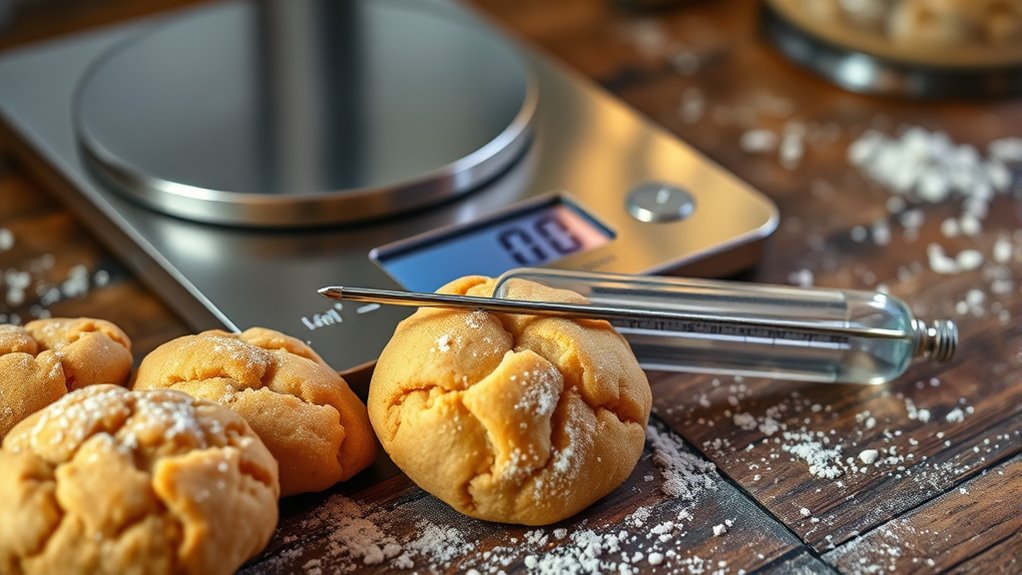

Using precise tools like thermometers and scales in baking is vital because they guarantee you measure ingredients accurately and monitor temperatures effectively. Small differences in ingredient amounts or heat can change textures, flavors, and appearance, making your baked goods inconsistent or fail. By controlling these variables, you create reliable results every time. If you want to understand how these tools impact your baking success, keep exploring the science behind these essential instruments.
Key Takeaways
- Precise tools ensure accurate ingredient measurements, leading to consistent and reproducible baking results.
- Thermometers monitor oven and dough temperatures, optimizing chemical reactions like gluten development and caramelization.
- Small measurement differences significantly impact texture, flavor, and appearance of baked goods.
- Accurate tools help troubleshoot issues and make precise adjustments for desired outcomes.
- Using reliable thermometers and scales transforms baking from guesswork into a precise scientific process.
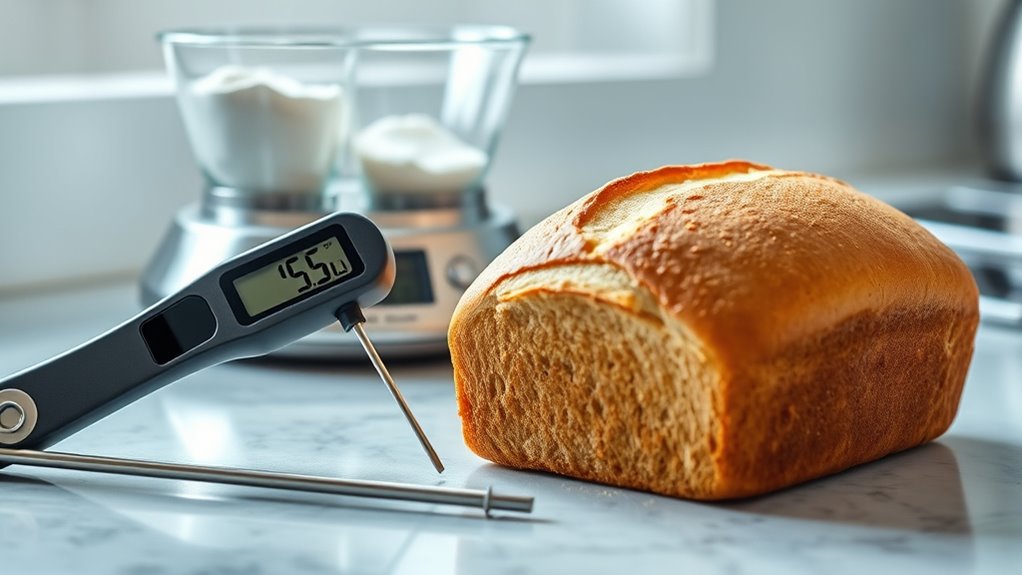
Have you ever wondered what makes a perfect baked good rise, stay moist, or turn golden brown? The answer lies in understanding the science behind baking, especially how ingredient interactions and temperature control work together. Precise tools like thermometers and scales are essential because they help you manage these factors effectively. When baking, small variations can lead to big differences in the final product, so knowing exactly what’s happening inside your oven makes all the difference.
Ingredient interactions are at the heart of great baking. For example, when you combine flour, eggs, sugar, and fat, they create complex chemical reactions that define texture, flavor, and appearance. Proper temperature control ensures these reactions happen at just the right moments. Too high or too low a temperature can disrupt the balance, causing your baked goods to be dense, burnt, or undercooked. That’s why using a reliable oven thermometer helps you maintain consistent heat, ensuring your dough or batter reaches the right internal temperature. This precision helps activate gluten development for structure, caramelization for color, and Maillard reactions for flavor—each essential to a successful bake.
Understanding ingredient interactions and precise temperature control is key to perfect baking results.
Using a scale instead of measuring cups also improves ingredient interactions by providing accuracy. Slight differences in ingredient amounts can alter how your baked goods react during baking. For instance, too much sugar can cause over-browning or a sticky crumb, while too little flour might prevent proper rise. When you weigh ingredients, you’re controlling these variables, making it easier to replicate successful results and troubleshoot issues. Combining accurate measurements with consistent temperature control gives you a clear picture of how your ingredients behave, which is vital for mastering baking techniques.
Temperature control doesn’t just impact the oven’s heat; it also affects how ingredients interact during the process. For example, butter melts at a specific temperature, affecting the spread and rise of cookies. If it’s too warm, the dough may become greasy; too cold, and the dough won’t spread properly. Similarly, proofing bread at the right temperature ensures yeast activation and carbon dioxide production, which leads to a good rise. Using a thermometer to monitor your oven and dough temperature helps you fine-tune these interactions, resulting in baked goods that are evenly cooked, moist, and flavorful. Additionally, understanding the importance of projector contrast ratios can be compared to controlling temperature in baking, as both significantly influence the final visual quality and depth of the product.
In the end, mastering ingredient interactions through precise temperature control transforms baking from guesswork into a science. Tools like thermometers and scales aren’t just for accuracy—they’re your partners in creating consistently excellent baked goods. When you understand how ingredients respond to temperature and measure everything carefully, you gain control over the baking process. This knowledge allows you to troubleshoot problems, improve recipes, and consistently produce treats that look, taste, and feel perfect every time.
Top picks for "science precise tool"
Open Amazon search results for this keyword.
As an affiliate, we earn on qualifying purchases.
Frequently Asked Questions
How Do Different Oven Types Affect Baking Precision?
Different oven types affect baking precision because their calibration and heat distribution vary. For example, convection ovens circulate heat evenly, leading to more consistent results, while traditional ovens may have hot spots. You should regularly calibrate your oven and understand its heat distribution to guarantee accurate baking. This way, you can adjust recipes or baking times, making sure your baked goods turn out perfectly every time.
What Are Common Mistakes When Using Baking Thermometers?
A common mistake is neglecting temperature calibration, which can lead to inaccurate readings. Always check your thermometer’s accuracy regularly and calibrate it if needed. Also, avoid improper thermometer placement; for instance, don’t let the probe touch the pan or oven walls, as this can give false readings. Instead, place it in the center of the food or oven, ensuring you get an accurate temperature for perfect baking results.
Can Digital Scales Vary in Accuracy Over Time?
They say “a chain is only as strong as its weakest link,” and digital scales can vary in accuracy over time due to measurement drift. To keep them reliable, you should regularly check and calibrate your scale, especially if you notice inconsistent results. Frequent calibration ensures your measurements remain precise, preventing costly baking mistakes. Over time, scales can lose accuracy, so stay vigilant and maintain your tools for perfect baked goods every time.
How Does Altitude Influence Baking Measurements?
Altitude influences your baking measurements because higher elevations cause air pressure to drop, affecting how ingredients behave. You need to make altitude adjustments, like reducing leavening agents and increasing liquids, to achieve accurate baking results. Without proper altitude adjustment, your baking measurements might be off, leading to flat or misshapen baked goods. Always consider altitude when following a recipe to ensure your baked creations turn out just right.
Are There Specific Tools for Gluten-Free Baking Accuracy?
Think of gluten-free baking like exploring a new city—you need specialized tools for accuracy. Yes, there are specific gluten-free measuring cups and spoons designed for precise ingredient amounts, ensuring gluten-free ingredient accuracy. Using these specialized gluten-free tools helps you avoid common pitfalls, like dense or crumbly textures. They’re essential for maintaining consistency and achieving the perfect bake, just like a reliable map guides you through unfamiliar streets.
Conclusion
Remember, precision is key in baking. Using the right tools like thermometers and scales guarantees your results are consistent and flawless. When you measure accurately, you avoid surprises and achieve that perfect texture and flavor every time. As the saying goes, “Measure twice, cut once.” So, invest in good tools and trust the science behind baking — it’s the secret to sweet success. Happy baking!