🔍 Read the full analysis: Umbrichelli Alla Norcina: Sausage, Cream, And Black Truffle on Mad Tasting

Get kitchen staples and gadgets delivered free with Prime
- Fast, free delivery on millions of items
- Prime Video, Amazon Music and more included
- Member-only deals all year
TL;DR
Mad Tasting has published a cooking guide to Umbrichelli alla Norcina, an Umbrian pasta dish made with thick strands and pork sausage, sometimes finished with cream and black truffle. The guide recommends browning the sausage, using cream modestly and adding fresh truffle at the end; it also stresses that cream is common in some versions but not a fixed requirement.
Mad Tasting has published a guide to making Umbrichelli alla Norcina with pork sausage, cream and black truffle, a version of the Umbrian pasta dish that the source says varies from kitchen to kitchen. Its main cooking advice is to brown the sausage well, keep the cream modest and add fresh truffle at the end so its aroma remains prominent.
The guide describes Umbrichelli alla Norcina as a dish associated with Norcia and the surrounding Valnerina area of Umbria. Its core ingredients are thick pasta strands and fresh pork sausage. Cream and black truffle appear in many versions, but the source cautions against treating them as mandatory or presenting one combination as the sole traditional recipe. Some cooks use wine, onion, garlic or hard cheese; others keep the sauce simpler.
For a home meal serving four, the guide suggests starting with about 12 ounces (340 grams) of sausage and half a cup of cream for one pound of pasta. It presents those quantities as practical starting points, not regional rules. Sausage seasoning can affect how much salt or cheese is needed, so the guide advises tasting the sauce before adding either.
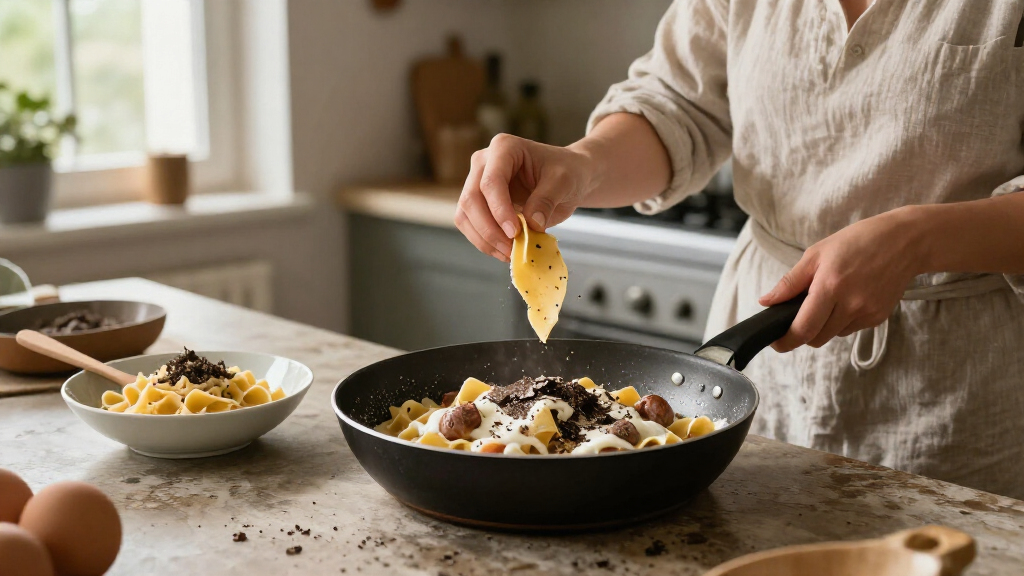
The method is to cook crumbled sausage in a wide pan until browned, optionally deglaze with a splash of white wine, and then stir in cream over low heat. Toss the cooked pasta with the sausage and a little reserved starchy pasta water until the sauce coats the strands. The pan should come off the heat before fresh truffle is added or shaved over the finished dish. The guide says that adding it earlier may diminish its delicate aroma.
Umbrian table · A cook’s field guide
Umbrichelli alla Norcina
Sausage, cream, and black truffle meet in one recognizable version of a dish shaped by Norcia and the Valnerina. The key is balance: brown the sausage, keep cream modest, and finish with truffle off the heat.
Tradition with room to vary
“Alla Norcina” points toward a place and a food culture, not one universally fixed ingredient list. Cream and truffle belong to some familiar versions; they are not required in every kitchen.
Sturdy pasta
Umbrichelli are thick, long strands, often hand-rolled and commonly made without egg. Their substantial texture holds a savory sausage sauce.
Sausage from Norcia
The name is associated with Norcia, known for pork butchery and cured meats. The Italian word norcino can refer to a pork butcher.
Truffle, used lightly
Black truffle adds a delicate aroma. Its season, character, and price vary; ask a reputable seller what is available.
Rooted in Norcia, made to suit the cook
Mountain ingredients and pork products inform the dish’s character. Individual choices still depend on the pasta, sausage, and truffle at hand.
If umbrichelli are hard to find, choose pici for a similar hearty strand, or a sturdy short pasta.
Some cooks add wine, onion, garlic, or hard cheese; others keep the sauce simple.
The guide mentions Tuber melanosporum and Tuber aestivum; seasons, aromas, and prices differ.
Preserved products vary. Truffle oil is not equivalent to fresh truffle, and can dominate if used too freely.
Build flavor, then finish gently
A balanced sauce clings to the strands. Reserved pasta water helps bring sausage and cream together without leaving a heavy pool beneath the pasta.
Start with sausage
Crumble it into a wide pan and cook until well browned. A splash of white wine to loosen browned bits is optional.
Add cream modestly
Stir in cream over low heat. Taste before adding salt or cheese, since sausage seasoning varies.
Toss with pasta water
Reserve water before draining. Toss pasta with the sauce and add a little water at a time until it coats.
Shave truffle last
Remove the pan from the heat, then add or shave fresh truffle over the dish to preserve its aroma.
About 12 oz (340 g) sausage and ½ cup cream for 1 lb of pasta. These are practical amounts, not a regional rule.
Sausage brings savory depth; a little cream softens it. Too much cream can obscure truffle’s delicate aroma.
Let each ingredient be heard
Think of the proportions as a cook’s guide, not a measured regional standard. Sausage leads; cream supports; truffle is a fragrant finish.
Questions at the table
Mad Tasting presents a cooking guide, not a definitive regional standard or a current truffle market update.
Does Norcina sauce require cream?
No. Cream is common in some versions, but recipes vary and it is not presented as mandatory.
When should truffle go in?
At the end, after the pan is off the heat, to help retain its delicate aroma.
What can replace umbrichelli?
Pici offers a similarly hearty strand; sturdy short pasta is another option.
Can truffle oil replace fresh truffle?
It may be used if you enjoy its flavor, but it is not equivalent to fresh truffle. Start sparingly and taste.
Balancing Norcia’s Sausage and Truffle
The guide’s practical point is that this dish depends on balance rather than a heavy sauce. Sausage provides the savory base, while cream can soften its sharper edges; too much cream may obscure the truffle. Pasta water helps bind the ingredients into a sauce that clings to the pasta instead of pooling beneath it.
For readers cooking the dish, the distinction between a regional dish and a single fixed recipe matters. The guide presents cream-and-truffle Norcina as one recognizable approach, not a definitive standard. Naming the version being served can acknowledge that recipes differ while still giving diners a clear idea of what is on the plate.
The ingredient advice also addresses cost and availability. Fresh truffles can differ in aroma, season and price, and the source recommends asking a reputable seller what is available. It notes that preserved products vary and that truffle oil is not equivalent to fresh truffle; strong-flavored products can dominate the dish.
Products Worth Considering

Cuisinart Chef's Classic 7-Piece Stainless Steel Cookware Set

Breville Smart Grinder Pro Coffee Grinder, Brushed Stainless Steel

Cuisinart Stainless Steel Bread Maker, 16 Programs, 2 lb Capacity
As an affiliate, we earn on qualifying purchases.
A Dish Rooted in Norcia
The name “alla Norcina” points to Norcia, a town associated in the source with pork butchery and cured meats. The Italian word “norcino” can refer to a pork butcher. The guide connects the dish’s sausage-based character to the food traditions of Norcia and the surrounding Valnerina, where pork products and mountain ingredients are part of the local food landscape.
Umbrichelli are thick, long strands, often hand-rolled and commonly made without egg, though the source says recipes differ. Their sturdy texture suits a substantial sausage sauce. If umbrichelli are unavailable, the guide suggests pici as a similar thick strand or a sturdy short pasta as an alternative.
The source associates Tuber melanosporum and Tuber aestivum with Norcia, while noting that their seasons, aromas and prices differ. It does not give a fixed buying date or price. For cooks without fresh truffle, it suggests that a small amount of preserved product may be used if desired, with careful tasting.
“The exact combination varies.”
— Mad Tasting
Recipe Variations and Ingredient Availability
The guide does not identify a single official or definitive recipe, and it says ingredients vary between cooks. It does not establish which version is most common, how widely cream is used, or whether a particular local preparation is considered more traditional than another.
Fresh truffle availability and price depend on the product and season; the source gives no current market figures or fixed season dates. It also does not provide a publication date, so the guide’s availability advice should not be read as a current price or supply update. The suggested measurements are starting points for home cooking, not standards endorsed by a regional authority.
Cooking and Serving the Dish
The next step for readers following the guide is to choose a pasta and sausage, then adjust the sauce to the ingredients on hand. Cooks can use umbrichelli where available, or substitute another sturdy pasta. They should reserve pasta water before draining, add it gradually while tossing, and finish with truffle only after taking the pan off the heat.
Wine is optional in the recipe: a small splash can loosen the browned bits in the pan, but the guide also allows cooks to omit it. If serving wine with the meal, it should be for adults and handled responsibly. The source does not announce a product launch, event or further publication; the development is a cooking guide rather than a news update about the dish’s production or availability.
Key Questions
What is Umbrichelli alla Norcina?
It is an Umbrian pasta dish associated with Norcia and the Valnerina, typically made with thick strands and fresh pork sausage. Some versions also include cream and black truffle.
Does Norcina sauce have to include cream?
No. Mad Tasting says recipes vary; cream is common in some versions but is not presented as a required ingredient. Other preparations may use wine or keep the sauce simpler.
When should truffle be added?
The guide recommends adding or shaving fresh truffle at the end, after removing the pan from the heat, to help preserve its delicate aroma.
What pasta can replace umbrichelli?
The source suggests pici for a similarly hearty strand, or a sturdy short pasta. The aim is to choose pasta substantial enough to hold the sausage sauce.
Can truffle oil replace fresh truffle?
It can be used if a cook likes its flavor, but the guide says truffle oil is not equivalent to fresh truffle and may dominate the dish. It recommends tasting carefully and using a small amount.
Source: Mad Tasting