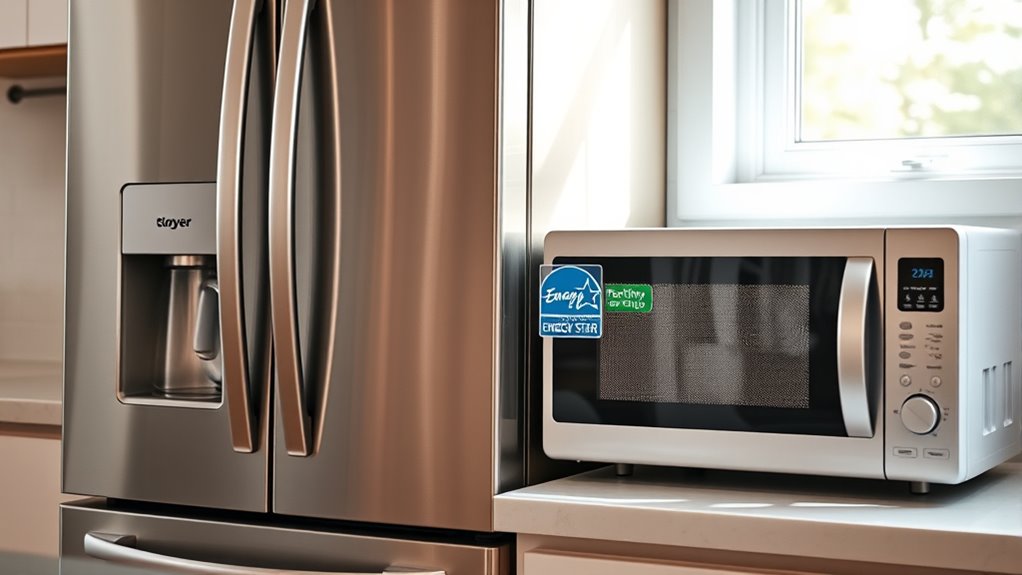

Understanding kitchen appliance ratings like Energy Star helps you choose more efficient models that save money and protect the environment. These ratings indicate how well appliances use energy, water, and other resources, reflecting standards for sustainability. Certified appliances generally last longer, perform better, and produce fewer emissions, making them smarter long-term investments. If you want to learn how these ratings can guide your choices and benefit your eco-friendly goals, keep exploring the details.
Key Takeaways
- Energy Star ratings identify appliances that meet strict energy efficiency guidelines, helping consumers choose eco-friendly options.
- Ratings evaluate factors like energy consumption, water usage, and emissions to provide a comprehensive environmental impact.
- Certified appliances tend to consume less power, reduce utility bills, and lower greenhouse gas emissions.
- Standardized testing methods ensure the reliability and consistency of appliance ratings across brands.
- Higher-rated appliances often feature advanced technology, durability, and environmentally conscious manufacturing practices.

When shopping for kitchen appliances, understanding their ratings can seem overwhelming, but it’s essential for making informed decisions. Ratings like Energy Star help you identify appliances that are designed to use less energy without sacrificing performance. By paying attention to these labels, you can choose appliances that not only save you money on utility bills but also reduce your environmental impact. Energy-efficient appliances consume less power, which means fewer greenhouse gas emissions from power plants, making your kitchen more eco-friendly. When you opt for appliances with high energy efficiency ratings, you’re actively contributing to a healthier planet while enjoying the benefits of modern technology.
Choosing energy-efficient appliances reduces costs and environmental impact while supporting sustainable living.
It’s important to recognize that appliance ratings go beyond just energy savings. They also reflect the environmental impact of your choices. Appliances with better ratings typically meet strict standards for reducing resource consumption, lowering emissions, and minimizing waste during manufacturing and disposal. For example, a refrigerator with a high efficiency rating not only costs less to operate but also often features environmentally conscious materials and design. Understanding these ratings helps you see the broader impact of your purchase decisions, encouraging you to select products that align with sustainable living principles.
Moreover, appliance ratings can guide you in choosing products that last longer and perform better over time. Energy-efficient models are often built with advanced technology that improves durability and functionality. This means you’re less likely to replace appliances frequently, which further decreases environmental waste. When you read the labels carefully, you’ll notice that appliances with higher efficiency often come with better warranties or energy-saving features, making them a smart investment in the long run.
Additionally, many ratings systems provide information about the appliance’s water usage, emissions, and other eco-related factors. This exhaustive insight allows you to evaluate how your choices affect not just your wallet but also the environment. By selecting appliances with superior ratings, you’re making a conscious effort to reduce your carbon footprint and support manufacturers committed to sustainable practices. Furthermore, standardized testing methods ensure that these ratings are consistent and reliable, giving you confidence in your purchasing decisions.

Kenmore 30" Top Mount Refrigerator with Freezer – Adjustable Shelving, Humidity-Controlled Crispers, LED Lighting, ENERGY STAR Certified, Garage Ready, 18.1 cu. ft. Capacity – White
Spacious Yet Compact: This 30-inch, white refrigerator offers 18.1 cu. ft. of standard-depth storage space, giving you plenty…
As an affiliate, we earn on qualifying purchases.
As an affiliate, we earn on qualifying purchases.
Frequently Asked Questions
How Do I Compare Appliance Ratings Across Different Brands?
To compare appliance ratings across brands, start by looking at energy efficiency labels like Energy Star, which highlight performance and savings. Check brand reputation for reliability and customer reviews. Also, consider retailer incentives, like discounts or extended warranties, which can influence value. By combining these factors, you can make an informed choice, ensuring you get a high-rated appliance that fits your budget and lasts longer.
What Are the Long-Term Savings of Choosing High-Efficiency Appliances?
Choosing high-efficiency appliances saves you money over time through lower energy costs, leading to significant cost savings. These appliances use less power, which also reduces your environmental impact by decreasing your carbon footprint. Although they might cost more upfront, the long-term savings from reduced utility bills and the positive environmental effects make them a smart investment. You’ll enjoy both financial benefits and a greener home with high-efficiency appliances.
Are Energy Star Ratings Mandatory for All Kitchen Appliances?
Energy Star ratings aren’t mandatory for all kitchen appliances, but many manufacturers aim for them to boost appeal. When you select appliances with these ratings, you benefit from efficient energy use and often better appliance installation options. Plus, they typically come with warranty coverage that assures long-term savings and peace of mind. While not required, choosing Energy Star-rated appliances can help you save money and reduce your environmental impact over time.
How Often Are Appliance Ratings Updated or Revised?
Appliance ratings are typically updated every 1 to 3 years, depending on the rating program. The revision process involves testing new models, reviewing industry standards, and ensuring compliance with energy efficiency goals. Manufacturers submit updated data, and agencies like Energy Star review these to decide if ratings need revision. Staying informed about rating update frequency helps you choose the most efficient appliances, as ratings can change with newer, better models.
Do Ratings Consider Appliance Durability and Maintenance Costs?
Ratings primarily focus on efficiency and energy consumption, so they don’t directly consider appliance durability or maintenance costs. However, they can influence your choice by highlighting appliances with longer appliance lifespans and lower maintenance expenses. When shopping, look beyond ratings to reviews and warranties, ensuring you select appliances that are reliable and cost-effective over time, saving you money on repairs and replacements in the long run.

COMFEE’ Countertop Dishwasher, Energy Star Portable Dishwasher, 6 Place Settings & 8 Washing Programs, Speed, Baby-Care, ECO& Glass, Dish Washer for Dorm, RV& Apartment, Black
6 Place Setting- A perfect size (H17.2″×W21.6″×D19.7″) for 2-3 people, COMFEE’ compact dishwasher is suitable for dorms, RVs,…
As an affiliate, we earn on qualifying purchases.
As an affiliate, we earn on qualifying purchases.
Conclusion
By paying attention to appliance ratings like Energy Star, you can save money and reduce your environmental impact. Did you know that Energy Star certified appliances use on average 20-30% less energy than standard models? That’s a huge difference over time! So, next time you shop for kitchen appliances, look for those ratings—they’re your best guide to making smarter, more efficient choices that benefit both your wallet and the planet.

Aheroi Natural Dish Sponge, 18 Count FSC Certified Plant-Based Biodegradable Kitchen Sponges for Dishes, Compostable Eco Friendly Sponges, Organic Cleaning Sponge Dish Scrubber Products for Household
Natural & Sustainable Composition: Crafted from renewable wood cellulose and coconut fibres and recyclable materials, Aheroi biodegradable sponges…
As an affiliate, we earn on qualifying purchases.
As an affiliate, we earn on qualifying purchases.

Chefman Electric Kettle, 1.8L 1500W, Hot Water Boiler, Removable Lid for Easy Cleaning, Auto Shut Off, Boil-Dry Protection, Stainless Steel Filter, BPA Free, Borosilicate Glass Electric Tea Kettle
Fast Boiling: Experience rapid boiling with this 1500W electric kettle. Get hot water in just 3 minutes, perfect…
As an affiliate, we earn on qualifying purchases.
As an affiliate, we earn on qualifying purchases.