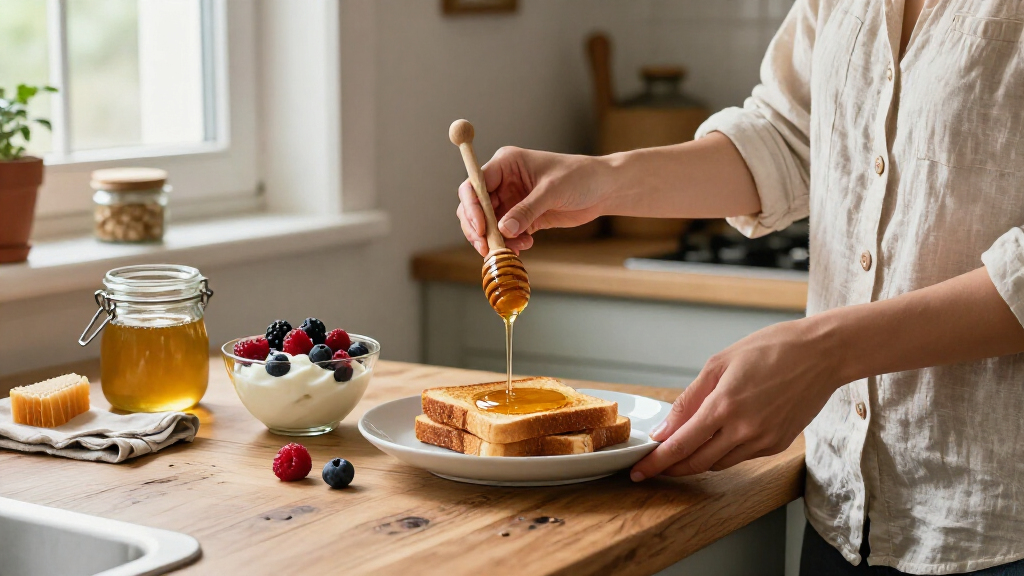

The best honey products balance flavor, format, and intended use, and my best overall pick is Nature Nate’s 100% Pure Raw & Unfiltered Honey, 32 oz for its practical squeeze-bottle format and versatile everyday role. For a specialty option, Manuka Health UMF 13+ MGO 400+ offers a more clearly differentiated Manuka profile, while Nate’s Honey Minis are easier to portion and carry. The main tradeoffs are convenience versus less-processed styles, everyday value versus specialty honey, and squeeze bottles versus jars or single-serve packets. I’ve compared all 14 options by format, honey style, usability, and fit for different routines. Read on for the full breakdown and help matching a pick to how you use honey.

Get kitchen staples and gadgets delivered free with Prime
- Fast, free delivery on millions of items
- Prime Video, Amazon Music and more included
- Member-only deals all year
Key Takeaways
- Everyday versatility favors a larger squeeze bottle: Nature Nate’s 32 oz format suits frequent use, while the 16 oz versions take up less pantry space.
- Manuka products serve a different buying purpose: Manuka Health’s UMF 13+ MGO 400+ stands apart as the high-marker specialty choice, while lower-MGO options offer a gentler entry into the category.
- Portability changes the best pick: Nate’s Honey Minis and Honey Jar Variety Pack Honey Sticks are easier to take along than jars, but individual portions create more packaging.
- Texture matters as much as flavor: OneRoot’s creamed wildflower honey offers a spreadable alternative to liquid honey, though it won’t suit someone seeking a pourable sweetener.
- Raw, organic, and conventional labels are not interchangeable: Nature Nate’s raw options, its organic version, and Sue Bee’s Grade A honey meet different preferences; buyers should choose based on sourcing and use rather than assuming one label means better for every recipe.
| The Honey Jar Variety Pack Honey Sticks, 20 Count |  | Best for Tea and On-the-Go Portions | Count: 20 sticks | Honey type: Pure clover honey | Honey per stick: 5 grams | VIEW LATEST PRICE | See Our Full Breakdown |
| Nate’s Honey Minis, Raw and Unfiltered Honey Packets, 0.49 oz, 20 Count |  | Best Raw Honey for Portable Drizzling | Brand: Nate’s | Product type: Raw and unfiltered honey | Packet count: 20 | VIEW LATEST PRICE | See Our Full Breakdown |
| OneRoot 100% Canadian Raw Wildflower Honey, Creamed, 1 kg |  | Best Creamed Honey for Spreading | Origin: Canada | Honey type: Wildflower | Processing: Raw, unfiltered, unheated | VIEW LATEST PRICE | See Our Full Breakdown |
| Manukora Raw Manuka Honey MGO 50+, New Zealand, 250 g |  | Best Traceable Manuka for Everyday Foods | Type: Raw, multifloral Manuka honey | Origin: New Zealand | Net weight: 250 g | VIEW LATEST PRICE | See Our Full Breakdown |
| Wedderspoon Organic Manuka Honey Drops, Lemon & Bee Propolis, 20 Count |  | Best Manuka Honey for Travel | Count: 20 drops | Ingredients: Organic Manuka honey, lemon, and bee propolis | Origin: New Zealand | VIEW LATEST PRICE | See Our Full Breakdown |
| Manuka Health UMF 13+ MGO 400+ Manuka Honey, 250 g |  | Best for Potency Verification | Brand: Manuka Health | Honey type: Manuka | MGO level: 400+ | VIEW LATEST PRICE | See Our Full Breakdown |
| Golden Pure Honey, 12 oz |  | Best Simple Pantry Pick | Weight: 12 oz | Grade: US Grade A | Packaging: Bottle | VIEW LATEST PRICE | See Our Full Breakdown |
| Nature Nate’s 100% Pure Raw & Unfiltered Honey, 32 oz Squeeze Bottle |  | Best for High-Use Households | Size: 32 oz | Ingredients: Honey | Processing: Raw and unfiltered; gently warmed for pourability | VIEW LATEST PRICE | See Our Full Breakdown |
| Nature Nate’s 100% Pure Raw & Unfiltered Honey, 16 oz Squeeze Bottle |  | Best Compact Everyday Squeeze Bottle | Brand: Nature Nate’s | Ingredients: Honey | Size: 16 oz | VIEW LATEST PRICE | See Our Full Breakdown |
| Manuka Doctor Raw Manuka Honey MGO 30+, Squeezy Bottle, 10.58 oz |  | Best for Easy-Dispensing Manuka | Type: Raw multifloral Manuka honey | Origin: New Zealand | MGO level: 30+ | VIEW LATEST PRICE | See Our Full Breakdown |
| Wedderspoon Raw Manuka Honey, 150+ MGO, 8.8 oz |  | Best for a Creamy Manuka Honey | Jar size: 8.8 oz | Origin: New Zealand | Honey type: Raw Manuka honey | VIEW LATEST PRICE | See Our Full Breakdown |
| Pure Southern Honey Raw Unfiltered Honey, 1 lb |  | Best for Regional Floral Character | Weight: 1 lb | Origin: Southeast Georgia, USA | Processing: Raw, unfiltered, and unheated | VIEW LATEST PRICE | See Our Full Breakdown |
| Nature Nate’s Organic Raw & Unfiltered Honey, 16 oz |  | Best Certified Organic Pantry Pick | Size: 16 oz | Type: Organic, raw, and unfiltered | Certification: USDA-certified organic | VIEW LATEST PRICE | See Our Full Breakdown |
| Sue Bee Pure Premium Grade A Honey, 24 oz |  | Best for a Larger Everyday Supply | Net weight: 24 oz | Pack size: 1 | Grade: U.S. Grade A | VIEW LATEST PRICE | See Our Full Breakdown |
| honey product | Origin |
|---|---|
| The Honey Jar Variety Pack Hon | — |
| Nate’s Honey Minis | — |
| OneRoot 100% Canadian Raw Wild | Canada |
| Manukora Raw Manuka Honey MGO | New Zealand |
| Wedderspoon Organic Manuka Hon | New Zealand |
| Manuka Health UMF 13+ MGO 400+ | New Zealand |
| Golden Pure Honey | — |
| Nature Nate’s 100% Pure Raw & | — |
| Nature Nate’s 100% Pure Raw & | — |
| Manuka Doctor Raw Manuka Honey | New Zealand |
| Wedderspoon Raw Manuka Honey | New Zealand |
| Pure Southern Honey Raw Unfilt | Southeast Georgia, USA |
| Nature Nate’s Organic Raw & Un | — |
| Sue Bee Pure Premium Grade A H | United States |
More Details on Our Top Picks
The Honey Jar Variety Pack Honey Sticks, 20 Count
Pre-portioned convenience is the main reason to choose these clover honey sticks: each BPA-free straw holds 5 grams, enough to sweeten a drink or offer a small snack without opening a jar. The easy-open format is simpler to carry than Nate’s Honey Minis, which require tearing packets, though both are designed for single servings. Compared with OneRoot’s 1 kg creamed wildflower honey, these sticks favor portability over a spreadable, pantry-sized supply. The honey is made in Ogden, Utah, and has no added sugar or coloring. The tradeoff is portion size: 5 grams may be too little for recipes or a generously sweetened beverage, and crystallized honey may need warming before it flows.
Pros:- Easy-open individual straws are convenient for travel and drinks
- Pure clover honey with no added sugar or coloring
- Each stick provides a defined 5-gram portion
- Made in Ogden, Utah
Cons:- A 5-gram stick may not provide enough honey for larger drinks or recipes
- Honey may crystallize and need warming to reliquify
Best for: Commuters, hikers, and tea drinkers who want small, individually portioned honey servings without carrying a jar.
Not ideal for: Home cooks who use honey by the tablespoon or buyers looking for a large, spreadable everyday supply.
- Count:20 sticks
- Honey type:Pure clover honey
- Honey per stick:5 grams
- Calories per stick:15
- Packaging:BPA-free, easy-open straws
- Made in:Ogden, Utah, USA
- Added sugar:None
- Added coloring:None
Our verdict“Choose these sticks for tidy, portable portions; choose a jar such as OneRoot’s if you want honey for regular cooking and spreading.”
Nate’s Honey Minis, Raw and Unfiltered Honey Packets, 0.49 oz, 20 Count
Raw, unfiltered honey in larger single servings gives Nate’s Honey Minis a different use case from The Honey Jar’s 5-gram sticks: each packet holds 0.49 oz, making it more practical for topping food or adding a fuller dose to a drink. The honey is never pasteurized and contains no additives or preservatives, while the tear-and-squeeze packet keeps a jar out of a lunch bag or travel kit. Compared with the honey sticks, these packets offer more honey per serving but are less convenient to open and can be messier once torn. They also suit flexible use better than Wedderspoon’s finished Manuka drops, which are ready to eat but are not liquid honey for recipes. Crystallization may require gentle warming.
Pros:- 100% pure raw and unfiltered honey
- Never pasteurized and contains no additives or preservatives
- 0.49-ounce packets suit drizzling as well as drinks
- Portable individual portions avoid carrying a jar
Cons:- Packets must be torn open, which can be less tidy than easy-open honey sticks
- Honey may crystallize and require gentle warming
Best for: People who pack breakfasts, snacks, or travel meals and want raw honey in portions large enough to drizzle over food.
Not ideal for: Buyers who prioritize one-handed, easy-open dispensing or need a bulk jar for frequent baking.
- Brand:Nate’s
- Product type:Raw and unfiltered honey
- Packet count:20
- Honey per packet:0.49 oz
- Ingredients:100% pure honey
- Additives or preservatives:None
- Pasteurized:No
Our verdict“Pick these packets when you want portable raw honey in a more generous portion than The Honey Jar’s sticks.”
OneRoot 100% Canadian Raw Wildflower Honey, Creamed, 1 kg
Smooth, spreadable texture sets OneRoot apart from the liquid packets and sticks in this roundup. Its 1 kg container supplies a substantial amount of Canadian wildflower honey for toast, baking, or regular kitchen use, while the creamed consistency makes it easier to spread than liquid honey. The product is described as raw, unfiltered, and unheated, with no pesticides or additives. That makes it a more pantry-oriented choice than Nate’s Honey Minis, which are built for portable drizzling, and more texture-focused than Manukora’s creamy but smaller 250 g Manuka jar. OneRoot’s larger format is less suited to a small household that uses honey occasionally, and the description does not provide details such as a floral blend profile or a specific container type.
Pros:- Creamed texture is smooth and spreadable
- Raw, unfiltered, and unheated
- Made with Canadian wildflower honey
- Large 1 kg format suits frequent kitchen use
Cons:- Large quantity may be inconvenient for occasional users or limited storage
- Creamed consistency is less suited to buyers who specifically want pourable honey
Best for: Households that use honey regularly on toast, in recipes, or anywhere a thick, spreadable texture is useful.
Not ideal for: Occasional honey users or people who need single-serve portions and an easy-to-carry format.
- Origin:Canada
- Honey type:Wildflower
- Processing:Raw, unfiltered, unheated
- Texture:Creamed
- Weight:1 kg (2.2 lbs)
- Pesticides:Described as having none
- Additives:None
Our verdict“Choose OneRoot for a large supply of spreadable wildflower honey, rather than the portable portions offered by Nate’s Honey Minis.”
Manukora Raw Manuka Honey MGO 50+, New Zealand, 250 g
Source and purity information via QR code gives Manukora a transparency feature that distinguishes it from OneRoot’s creamed wildflower honey and the portioned clover sticks. This is raw, multifloral Manuka honey from New Zealand, with an MGO rating of 50+ and a creamy texture with caramel notes. Its 250 g jar is suited to spoonfuls or small additions to tea, yogurt, oatmeal, and smoothies, rather than the larger everyday supply offered by OneRoot. The product also claims non-GMO status, B Corp certification, and freedom from glyphosate residue. The key limitation is its MGO 50+ rating: shoppers specifically seeking a higher-rated Manuka option may prefer a stronger-rated product elsewhere in the roundup. The jar’s size also makes it less suited to high-volume cooking.
Pros:- QR code links to source and purity information
- Raw, multifloral Manuka honey from New Zealand
- Creamy texture and caramel notes suit several foods and drinks
- Non-GMO and B Corp certified; described as glyphosate residue free
Cons:- MGO 50+ may not meet the preference of shoppers seeking a higher-rated Manuka honey
- At 250 g, the jar offers less volume than OneRoot’s 1 kg honey
Best for: Shoppers who want New Zealand Manuka with QR-linked source and purity information for occasional use in drinks and foods.
Not ideal for: Buyers seeking a higher MGO rating or a large, lower-fuss supply of everyday cooking honey.
- Type:Raw, multifloral Manuka honey
- Origin:New Zealand
- Net weight:250 g
- Certifications and claims:Non-GMO, B Corp certified, glyphosate residue free
- Traceability:QR code links to source and purity information
- Texture:Smooth and creamy
- Flavor notes:Caramel
Our verdict“Choose Manukora for traceable, creamy Manuka in a modest jar, but look elsewhere if a higher MGO rating is your priority.”
Wedderspoon Organic Manuka Honey Drops, Lemon & Bee Propolis, 20 Count
Ready-to-carry drops make this a more convenient choice for work bags and travel than Manukora’s 250 g jar, which needs a spoon or another way to portion it. Wedderspoon combines organic Manuka honey, lemon, and bee propolis in individually wrapped pieces handcrafted in small batches in New Zealand. The solid format means there is no honey to squeeze or drizzle, so it works best as a portable sweet rather than a flexible cooking ingredient. Compared with The Honey Jar’s clover sticks, these drops are a finished, flavored product rather than a serving of plain liquid honey. The supplied details do not state the amount of Manuka honey per drop or an MGO rating, which limits comparison for shoppers choosing by potency or honey content.
Pros:- Individually wrapped for carrying and sharing
- Made with organic Manuka honey, lemon, and bee propolis
- Handcrafted in small batches
- Made in New Zealand
Cons:- Solid drops cannot be drizzled or measured into recipes like Manukora’s jarred honey
- The supplied product details do not state an MGO rating or honey quantity per drop
Best for: Travelers and office workers who want individually wrapped Manuka honey drops with lemon and bee propolis.
Not ideal for: Shoppers who need pourable honey for drinks and recipes or want a stated MGO rating and honey quantity per serving.
- Count:20 drops
- Ingredients:Organic Manuka honey, lemon, and bee propolis
- Origin:New Zealand
- Packaging:Individually wrapped
- Production:Handcrafted in small batches
Our verdict“Choose these drops for individually wrapped Manuka convenience, but choose Manukora if you want liquid honey with stated MGO information.”
Manuka Health UMF 13+ MGO 400+ Manuka Honey, 250 g
For buyers who want manuka honey with clearly documented potency, UMF certification and MGO 400+ give this jar a stronger verification story than the everyday squeeze-bottle honeys in this lineup. Manuka Health also describes its honey as raw and unpasteurized, with triple-testing and a QR code that links to origin and quality details. The 250 g jar is a smaller, more focused purchase than Nature Nate’s 32 oz bottle, which suits occasional use or buyers who want a distinct honey for specific recipes and other uses. Its creamy texture and earthy sweetness will not suit every palate, and the small quantity offers less flexibility for routine sweetening. Choose it for traceability and a stated potency level, not as a like-for-like replacement for mild table honey.
Pros:- UMF-certified with a stated MGO level of 400+
- Raw and unpasteurized processing
- QR code provides access to origin and quality credentials
- Creamy texture and earthy sweetness offer a distinctive alternative to standard honey
Cons:- The 250 g jar is a relatively small format for frequent household use
- Earthy, rich flavor may be less versatile than milder honey
- The premium, potency-focused profile is more than casual sweetener users may need
Best for: Buyers seeking New Zealand manuka honey with UMF certification, stated MGO potency, and QR-linked traceability.
Not ideal for: Households that use honey daily in large quantities or prefer mild, budget-friendly honey for general sweetening.
- Brand:Manuka Health
- Honey type:Manuka
- MGO level:400+
- Net weight:250 g (8.8 oz)
- Processing:Raw and unpasteurized
- Origin:New Zealand
- Certification:UMF-certified
- Traceability:QR code links to origin, potency, and quality credentials
Our verdict“Choose this jar if verified manuka potency and traceability matter more to you than an everyday large-format honey.”
Golden Pure Honey, 12 oz
Golden Pure Honey is the straightforward choice here: a 12 oz bottle of US Grade A honey for tea, beverages, and baking, without a specialty Manuka profile or a raw-and-unfiltered positioning. That simplicity makes it easier to slot into ordinary recipes than Manuka Health UMF 13+ MGO 400+, whose earthy flavor and potency credentials serve a more specific buyer. The tradeoff is that the supplied details do not identify floral source, processing style, or a squeeze-bottle design, so shoppers seeking traceability or extra handling detail should look elsewhere. Its color and flavor can vary naturally, and it may darken or crystallize with time; crystallization does not make it unsafe. I’d pick it for basic kitchen use, not for a distinctive honey tasting experience.
Pros:- US Grade A designation
- Suitable for beverages and baking
- 12 oz bottle is a practical pantry format
- Naturally crystallized honey remains safe to consume
Cons:- Color and flavor may vary
- May darken or crystallize during storage
- Product details do not specify floral source or processing style
Best for: Cooks who want a familiar Grade A honey for tea, beverages, and baking without seeking specialty sourcing or processing claims.
Not ideal for: Shoppers looking for raw, unfiltered honey, a named floral source, or documented Manuka potency and traceability.
- Weight:12 oz
- Grade:US Grade A
- Packaging:Bottle
- Suggested uses:Tea, beverages, and baking
- Natural variation:Color and flavor may vary
- Storage changes:May darken or crystallize over time
Our verdict“Pick Golden Pure for ordinary sweetening and baking if specialty sourcing and raw-honey details are not priorities.”
Nature Nate’s 100% Pure Raw & Unfiltered Honey, 32 oz Squeeze Bottle
The 32 oz squeeze bottle makes this the practical pick for households that reach for honey across breakfast, drinks, and baking. Its ingredient list is simply honey, and the product is described as raw and unfiltered, with gentle warming for pourability and natural pollen retained. Compared with the 16 oz Nature Nate’s bottle, this larger format means fewer restocks for regular users, though it takes up more pantry space and may be excessive for occasional honey eaters. It also offers a more general-purpose profile than Manuka Doctor Raw Manuka Honey, whose darker, thicker character is less suited to buyers seeking a familiar everyday sweetener. The “raw” description comes with a processing caveat: it is gently warmed. Like other honey, it contains naturally occurring sugars.
Pros:- Large 32 oz size suits frequent household use
- Single-ingredient honey with no additives or preservatives
- Unfiltered processing retains natural pollen
- Squeeze bottle is convenient for drizzling into foods and drinks
Cons:- Larger bottle takes more storage space than the 16 oz version
- Gently warmed for pourability rather than left entirely unwarmed
- Contains naturally occurring sugars
Best for: Families and frequent cooks who use honey in breakfast foods, beverages, and baking and want a squeeze bottle.
Not ideal for: Occasional users, small households with limited storage, or shoppers seeking a honey with no warming in its processing.
- Size:32 oz
- Ingredients:Honey
- Processing:Raw and unfiltered; gently warmed for pourability
- Packaging:Squeeze bottle
- Additives:None
- Preservatives:None
Our verdict“Choose the 32 oz bottle if your household uses honey often and values an unfiltered, single-ingredient option in squeeze packaging.”
Nature Nate’s 100% Pure Raw & Unfiltered Honey, 16 oz Squeeze Bottle
This 16 oz Nature Nate’s bottle keeps the same basic appeal as its 32 oz counterpart—one ingredient, unfiltered honey, and an easy-to-use squeeze format—but takes up less pantry space. That makes it a better fit for smaller households or buyers who use honey regularly without wanting a large bottle on hand. The product is gently warmed for pourability, while remaining unfiltered with pollen intact; shoppers who want honey that has not been warmed should look elsewhere. Compared with Golden Pure Honey, it provides more processing detail and a squeeze bottle, while Golden Pure carries a US Grade A designation. The 16 oz size is a middle ground rather than a specialty choice: it works across drinks and food, but does not offer the larger supply of the 32 oz version.
Pros:- Single ingredient with no additives or preservatives
- Unfiltered with natural pollen intact
- Squeeze bottle suits drinks, breakfast foods, and baking
- Smaller format is easier to store than the 32 oz version
Cons:- Gently warmed for pourability
- Offers less honey per bottle than the 32 oz Nature Nate’s option
- No specific floral source is listed
Best for: Small households and regular honey users who want an unfiltered squeeze bottle without the footprint of a 32 oz size.
Not ideal for: High-volume households that would prefer the larger Nature Nate’s bottle, or shoppers avoiding gently warmed honey.
- Brand:Nature Nate’s
- Ingredients:Honey
- Size:16 oz
- Packaging:Squeeze bottle
- Processing:Raw and unfiltered; gently warmed for pourability
- Additives and preservatives:None
Our verdict“Choose this size for everyday versatility and compact storage; opt for the 32 oz bottle if you use honey in larger quantities.”
Manuka Doctor Raw Manuka Honey MGO 30+, Squeezy Bottle, 10.58 oz
Manuka Doctor combines a New Zealand multifloral Manuka honey profile with a no-drip squeeze bottle, making it the most convenience-led Manuka option in this group. It is sourced, harvested, packed, and tested in New Zealand, and is identified as non-GMO. Compared with the smaller Manuka Health UMF 13+ MGO 400+ jar, this 10.58 oz bottle offers a larger quantity and simpler dispensing, but its listed MGO 30+ is a much lower potency level and it does not include the UMF certification and QR traceability described for Manuka Health. The honey is darker, thicker, and richer than regular honey, which may be welcome in some uses but less convenient for buyers who want a mild, thin sweetener. Choose it for easy dispensing, not maximum stated potency.
Pros:- Sourced, harvested, packed, and tested in New Zealand
- No-drip squeeze bottle helps control dispensing
- Raw multifloral Manuka honey
- Non-GMO
Cons:- MGO 30+ is lower than Manuka Health UMF 13+ MGO 400+
- Darker, thicker, richer character may not suit buyers seeking mild honey
- Product details do not list UMF certification or QR traceability
Best for: Manuka honey buyers who want a New Zealand-sourced product in a no-drip bottle for adding to drinks and meals.
Not ideal for: Shoppers prioritizing a higher stated MGO level, UMF certification, QR-linked traceability, or a mild, fluid honey.
- Type:Raw multifloral Manuka honey
- Origin:New Zealand
- MGO level:30+
- Net weight:10.58 oz
- Packaging:No-drip squeeze bottle
- Non-GMO:Yes
Our verdict“Choose Manuka Doctor for convenient dispensing and New Zealand Manuka sourcing, but pick Manuka Health if higher stated MGO potency is your priority.”
Wedderspoon Raw Manuka Honey, 150+ MGO, 8.8 oz
Smooth texture and a bold, naturally sweet flavor give this New Zealand Manuka honey an edge for shoppers who want a honey that works both by the spoonful and in everyday recipes. Its 150+ MGO designation distinguishes it from general raw honeys such as Pure Southern Honey, which offers regional floral character rather than a Manuka-specific option. The creamy consistency also makes Wedderspoon easier to spread than a thinner honey, while the 8.8-ounce jar is less of a pantry staple than the larger Sue Bee Pure Premium Grade A Honey. I’d choose it for its texture and Manuka identity, not as a bulk sweetener: the smaller jar may run short for frequent baking, and the product information does not specify whether it is certified organic or unfiltered.
Pros:- Smooth, creamy texture suits spreading as well as stirring into food and drinks
- Made with honey from bees foraging on wild Manuka blossoms in New Zealand
- 150+ MGO designation sets it apart from general floral-source honeys
- Versatile for tea, coffee, smoothies, yogurt, and baking
Cons:- Smaller 8.8-ounce jar is less suited to high-volume household use than Sue Bee’s 24-ounce option
- More specialized than a straightforward everyday honey such as Nature Nate’s Organic Raw & Unfiltered Honey
- Organic, unfiltered, and pasteurization details are not provided
Best for: Manuka honey shoppers who want a creamy texture for toast, yogurt, drinks, and occasional baking.
Not ideal for: Households seeking a large everyday sweetener or specifically requiring organic or unfiltered certification, since the jar is 8.8 ounces and those claims are not listed.
- Jar size:8.8 oz
- Origin:New Zealand
- Honey type:Raw Manuka honey
- Texture:Smooth and creamy
- Flavor:Bold and naturally sweet
- Suggested uses:Tea, coffee, smoothies, yogurt, baking, spreading, and drizzling
Our verdict“Choose this jar if creamy texture and New Zealand Manuka honey matter more to you than bulk quantity or everyday value.”
Pure Southern Honey Raw Unfiltered Honey, 1 lb
Specific Southeast Georgia floral sources make this a more place-focused choice than the broad, single-ingredient profile of Nature Nate’s Organic Raw & Unfiltered Honey. Gallberry, Tupelo, Blackgum, and Palmetto contribute the product’s regional identity, while raw, unfiltered, and unheated processing will appeal to buyers who prefer honey with minimal processing. Its glass jar and hand-bottled U.S. production add a small-batch feel, but the one-pound format is less generous than the 24-ounce Sue Bee jar for frequent cooking. The tradeoff is that the description does not give a detailed flavor profile or pour-style container, so shoppers looking for a predictable taste or especially convenient dispensing may prefer a more everyday option.
Pros:- Raw, unfiltered, and unheated processing
- Identifies four Southeast Georgia floral sources
- Hand-bottled in the United States by a family-owned business
- Honey-only product with no additives
Cons:- One-pound jar holds less than Sue Bee’s 24-ounce format
- Glass jar may be less convenient to dispense than a squeeze bottle
- The provided description does not specify a detailed flavor profile
Best for: Honey buyers who value U.S. regional floral sourcing, minimally processed honey, and a glass jar for pantry use.
Not ideal for: Frequent bakers or cooks who want a larger supply or a squeeze-style container, since this comes in a one-pound glass jar.
- Weight:1 lb
- Origin:Southeast Georgia, USA
- Processing:Raw, unfiltered, and unheated
- Floral sources:Gallberry, Tupelo, Blackgum, and Palmetto
- Container:Glass jar
- Additives:None
- Bottling:Hand-bottled by a family-owned business
Our verdict“Pick Pure Southern Honey if regional sourcing and unheated, unfiltered processing are higher priorities than a large or easy-pour container.”
Nature Nate’s Organic Raw & Unfiltered Honey, 16 oz
USDA-certified organic status is the clearest reason to choose this jar over conventional everyday options such as Sue Bee Pure Premium Grade A Honey. Nature Nate’s keeps the ingredient list simple—honey only—and is raw, unfiltered, and never pasteurized, which suits shoppers seeking a less processed pantry sweetener. The 16-ounce size is a practical middle ground: larger than Wedderspoon’s 8.8-ounce Manuka jar, but not as much honey as Sue Bee’s 24-ounce container. It can sweeten drinks and breakfast foods or go into baking, although buyers seeking a distinctive regional or Manuka profile will find other products in this roundup more specific. This is a versatile, everyday pick, but the provided details do not identify its floral source or describe its texture.
Pros:- USDA-certified organic
- Honey is the only ingredient, with no additives or preservatives
- Raw, unfiltered, and never pasteurized
- Suitable for drinks, oatmeal, granola, and baked goods
Cons:- At 16 ounces, it offers less volume than Sue Bee’s 24-ounce jar
- No floral source or distinct flavor profile is specified
- Less specialized than Wedderspoon Raw Manuka Honey for buyers seeking Manuka
Best for: Organic-minded households wanting one raw, unfiltered honey for drinks, oatmeal, granola, and home baking.
Not ideal for: Shoppers seeking a named floral origin, a Manuka honey designation, or a larger supply for frequent high-volume cooking.
- Size:16 oz
- Type:Organic, raw, and unfiltered
- Certification:USDA-certified organic
- Ingredients:Honey
- Pasteurization:Never pasteurized
- Additives and preservatives:None
- Suggested uses:Drinks, oatmeal, granola, and baked goods
Our verdict“Choose Nature Nate’s if organic certification and minimal processing are your priorities for a versatile, medium-size pantry jar.”
Sue Bee Pure Premium Grade A Honey, 24 oz
A 24-ounce jar and broad kitchen usefulness make Sue Bee the practical pick for households that use honey often in baking, barbecue, and everyday sweetening. Its larger format provides more than Nature Nate’s Organic Raw & Unfiltered Honey, while its gentle filtering removes hive debris and helps prevent granulation—a useful difference for shoppers who favor a clear, easy-to-use honey over an unfiltered one. Sue Bee is a single-ingredient U.S. honey gathered by independent beekeepers and graded for clarity, flavor, moisture, and color. The tradeoff is that Grade A clarity and filtering won’t suit buyers specifically seeking raw, unfiltered honey or organic certification. It also offers less floral-source detail than Pure Southern Honey.
Pros:- 24-ounce net weight suits more frequent household use than the smaller jars in this group
- Single-ingredient honey with no other ingredients listed
- Gently filtered to remove hive debris and help prevent granulation
- U.S. Grade A honey is evaluated for clarity, flavor, moisture, and color
Cons:- Gently filtered rather than raw and unfiltered like Nature Nate’s Organic Raw & Unfiltered Honey
- Organic certification is not listed
- Does not identify specific floral sources like Pure Southern Honey
Best for: Families and regular home cooks who want a larger, filtered honey jar for baking, barbecue, and general sweetening.
Not ideal for: Shoppers who specifically want raw, unfiltered or organic honey, or who prioritize a named regional floral source.
- Net weight:24 oz
- Pack size:1
- Grade:U.S. Grade A
- Origin:United States
- Ingredient:Honey
- Processing:Gently filtered
- Filtering purpose:Removes hive debris and helps prevent granulation
- Grading factors:Clarity, flavor, moisture, and color
Our verdict“Choose Sue Bee for a larger, gently filtered all-purpose honey, but skip it if raw processing or a named floral origin is a must.”

How We Picked
I compared these 14 products on honey style, format, everyday usability, and intended buyer. The lineup ranges from portable sticks and packets to squeeze bottles and jars, as well as creamed wildflower honey, raw and unfiltered options, organic honey, and Manuka products with stated potency markers. I gave preference to options with a clear role, useful packaging, and a strong fit for the way a buyer is likely to use them, while noting when a specialty feature narrows their appeal.
The order reflects versatility first, then specialization. A straightforward everyday honey ranks ahead of a niche option for most households, while higher-MGO Manuka, portable portions, or creamed texture earn their place for specific needs. I also weighed tradeoffs such as larger containers taking more storage space, packets generating more packaging, and specialty styles being less suited to routine sweetening. The ranking is based on the product details provided, not hands-on tasting or testing.
| honey product | Origin |
|---|---|
| The Honey Jar Variety Pack Hon | — |
| Nate’s Honey Minis | — |
| OneRoot 100% Canadian Raw Wild | Canada |
| Manukora Raw Manuka Honey MGO | New Zealand |
| Wedderspoon Organic Manuka Hon | New Zealand |
| Manuka Health UMF 13+ MGO 400+ | New Zealand |
| Golden Pure Honey | — |
| Nature Nate’s 100% Pure Raw & | — |
| Nature Nate’s 100% Pure Raw & | — |
| Manuka Doctor Raw Manuka Honey | New Zealand |
| Wedderspoon Raw Manuka Honey | New Zealand |
| Pure Southern Honey Raw Unfilt | Southeast Georgia, USA |
| Nature Nate’s Organic Raw & Un | — |
| Sue Bee Pure Premium Grade A H | United States |
Factors to Consider When Choosing Best Honey Products
Before choosing among the best honey products, decide how honey fits into your routine. Format, texture, and labeling can matter more than a product’s specialty claims when you’re deciding what to put in tea, spread on toast, pack for travel, or keep on hand for recipes.
Match the Package to How You Use Honey
Think about where the container will live and how often you reach for it. A squeeze bottle is handy for drizzling and portioning, while a jar can be easier to scoop or serve at the table. Packets and sticks are made for portability, but their single portions add packaging and may be awkward if you use honey often at home. A large container can reduce the need to restock, yet it takes more pantry space and may be cumbersome for occasional use. Choose a format around your routine rather than assuming a bigger package is automatically more practical.
Know What Raw, Unfiltered, and Organic Labels Tell You
Raw and unfiltered describe processing and filtration choices, while organic refers to production standards; these labels answer different questions. They do not, by themselves, guarantee a flavor you will prefer or make a honey the right match for every recipe. If you prioritize a particular sourcing or processing approach, check that the product explicitly carries the label you want. Avoid treating “raw,” “pure,” and “organic” as interchangeable terms. For everyday use, a conventional honey may still be the more practical fit if those distinctions are not part of your priorities.
Choose Liquid or Creamed Texture for the Job
Liquid honey is easy to stir into drinks and drizzle over food, making it a flexible choice for cooking and table use. Creamed honey has a thicker, spreadable consistency that can be convenient on bread but does not pour or mix in quite the same way. Texture can also affect how easily you portion the honey and clean the container opening. If you want one jar for several uses, liquid is often the more adaptable format. Choose creamed honey when spreadability is the point, not as a direct substitute for every liquid-honey use.
Treat Manuka as a Specialty Category
Manuka products are distinct from everyday table honey, and their MGO or UMF markers help distinguish products within that category. A higher stated marker may be relevant to shoppers who specifically want a higher-potency Manuka product, but it does not make that jar the most versatile choice for routine sweetening. Compare the marker, container size, and intended use rather than choosing by number alone. Lower-marker options can be a more approachable way to try the category, while a higher-marker product is better suited to buyers who have a clear reason to seek that specification. Do not assume Manuka honey can replace medical care or treatment.
Balance Portion Control Against Packaging
Packets and honey sticks make serving sizes easy to manage and can travel more neatly than a jar. That convenience can matter for packed lunches, outings, or a shared pantry where spills are unwelcome. The tradeoff is that individual wrappers create more waste than a refillable household container. If you use honey daily at home, a squeeze bottle or jar is likely the simpler routine; if you need occasional portions away from home, portable packs may earn their space. Consider whether portability solves a real problem before buying a multipack.
Decide How Much Flavor and Variety You Want
Honey can vary in flavor and texture, so a product chosen for a distinctive style may not suit every dish or drink. A straightforward honey is generally easier to use across recipes, while wildflower, creamed, or Manuka options have a more specific identity. If you are unsure what you like, start with a modest container or a variety format rather than committing to a large amount of a specialty style. For baking, a strong flavor can affect the finished result, so consider whether you want the honey to stand out or simply add sweetness. Keep a versatile option on hand if you want one product to cover the widest range of uses.
Frequently Asked Questions
Which of these honey products makes the most sense for everyday cooking and drinks?
For broad household use, a liquid squeeze bottle is usually the easiest format to measure, drizzle, and stir into drinks. Nature Nate’s raw and unfiltered options give buyers a choice of container size, while Sue Bee offers a conventional Grade A alternative. If you bake often, consider whether a distinctive Manuka or creamed honey flavor suits the recipe before using it as your only honey. Choose based on the flavor and processing preferences you want, not just the package label.
Should I choose a higher-MGO Manuka honey for everyday use?
Not necessarily. The MGO and UMF markers help identify specialty Manuka products, but a higher marker does not make one the best everyday sweetener for every buyer. If your goal is simply to sweeten tea or food, a regular raw or conventional honey may be more suited to that routine. A higher-marker option makes more sense when that specific Manuka specification is your priority. Treat honey as food, not as a substitute for professional medical advice or care.
Are single-serve honey sticks or packets worth choosing over a bottle?
They can be worthwhile if you need portable, pre-portioned honey for travel, lunches, or occasional use away from home. Packets and sticks are less convenient for frequent kitchen use, where opening individual portions creates extra steps and packaging. A squeeze bottle is usually easier to keep within reach for regular meals and drinks. Consider how often you will carry honey before choosing a portable multipack over a household container.
What is the practical difference between raw and organic honey?
Raw describes processing, while organic refers to production standards, so the terms are not equivalent. A product can meet one preference without the other, and neither label alone tells you whether you will prefer its flavor or texture. In this lineup, Nature Nate’s has both raw and unfiltered options and a separate organic option, making it useful to compare the label that matters most to you. Read the product description for the specific claim rather than inferring one from another.
Is creamed honey a good replacement for liquid honey?
Creamed honey is a good fit when you want a thick, spreadable texture, especially for toast or similar foods. It is less convenient when you need honey to pour, drizzle, or dissolve quickly into a drink. If you want a single all-purpose container, liquid honey is generally more adaptable across kitchen tasks. Choose creamed honey for its texture, and keep liquid honey available if you also rely on honey for mixing or measured pours.
Conclusion
For most households, my best overall pick is Nature Nate’s 32 oz Raw & Unfiltered squeeze bottle because its familiar format and versatile style suit frequent use. For best value in everyday convenience, compare the 16 oz and 32 oz Nature Nate’s bottles against how much honey you actually use and how much storage room you have; the larger bottle suits regular use, while the smaller one is easier to manage. My best premium choice is Manuka Health UMF 13+ MGO 400+ for buyers seeking a clearly marked specialty Manuka product. Beginners may prefer Nate’s Honey Minis for easy portions or a straightforward Nature Nate’s bottle before exploring specialty styles. For specific needs, choose OneRoot for a spreadable creamed texture, the Honey Jar Variety Pack or Wedderspoon Drops for portable portions, and a lower-MGO Manuka option if you want to try that category without starting at the highest marker. The right pick depends on whether you value daily versatility, specialty honey, or portability most.