
Editorial update log
November 20, 2026:
Deal update: RoundupForge price history now flags ASIN B09Y91CSXD on amazon.com as below its typical tracked range. RF labels the deal as all_time_low.
Exact pricing remains intentionally gated through the live Grimfaste price module in the article.
Choosing between the Victorinox Fibrox Pro and the Wüsthof Classic is a common dilemma for home cooks upgrading their gear. One is a legendary budget workhorse often recommended by professional chefs, while the other is a heritage German brand symbolizing premium kitchen equipment. The core tension here is not just about price, but about what you value in a tool: immediate performance and replaceability versus long-term durability and refined handling.

Get kitchen staples and gadgets delivered free with Prime
- Fast, free delivery on millions of items
- Prime Video, Amazon Music and more included
- Member-only deals all year

Japanese Chef Knife 8-Inch Handcrafted with Damascus VG10 Steel
- ✔ Blade steel: Japanese VG10 core with 67-layer Damascus cladding
- ✔ Blade length: 8 inches
- ✔ Edge: Plain, hand-sharpened to a stated 12°

SHAN ZU 8-Inch Japanese Damascus Chef Knife
- ✔ Blade steel: 10Cr15Mov alloy steel with Damascus construction
- ✔ Blade length: 8 inches
- ✔ Blade thickness: 2.2 mm

HOSHANHO 8-inch Japanese High Carbon Steel Chef Knife with Ergonomic Pakkawood Handle
- ✔ Blade steel: High-carbon stainless steel
- ✔ Blade length: 8 inches
- ✔ Hardness: 60 HRC
The Victorinox Fibrox typically costs around $40 to $50, whereas the Wüsthof Classic ranges from $100 to $150. This price gap is substantial, but the performance gap is narrower than the price tag suggests. The Victorinox is incredibly sharp out of the box and features a rubberized handle that grips well even when wet. The Wüsthof uses a thicker, heavier blade with a full tang construction that feels more substantial and balanced in the hand. It also holds its edge longer, meaning less frequent sharpening.
If you are a beginner who might damage a knife or simply wants the best bang for your buck, the Victorinox is hard to beat. If you are an enthusiast who values the tactile experience of a well-balanced tool and plans to maintain your knives for decades, the Wüsthof offers a more satisfying daily driver experience. This guide breaks down exactly where the money goes and which knife aligns with your cooking habits.
At a Glance
| Criteria | Victorinox Fibrox Pro Chef Knife | Wüsthof Classic Chef Knife | Winner |
|---|---|---|---|
| Price | $40-$50 | $100-$150 | A |
| Edge Retention | Moderate; requires frequent honing | High; holds edge longer | B |
| Sharpness Out of Box | Excellent; very sharp | Good; needs initial honing | A |
| Handle Comfort | Good; rubberized grip, slightly bulky | Excellent; ergonomic, full tang | B |
| Weight and Balance | Lighter; front-heavy feel | Heavier; well-balanced heel | Depends |
| Durability | Good; softer steel dents easier | Superior; harder steel resists wear | B |
| Maintenance Frequency | High; needs weekly honing | Moderate; less frequent sharpening | B |
Japanese Chef Knife 8-Inch Handcrafted with Damascus VG10 Steel
Atumuryou’s VG10 core and stated 12° hand-sharpened edge give this knife the clearest precision-focused profile in the group. Its 67-layer Damascus cladding is a visual and protective construction detail, while the more consequential choice for buyers is the hard VG10 core. At 62 HRC, it is designed to hold a keen edge, but that hardness also calls for controlled technique: avoid twisting the blade in dense food, striking bones, or using a rough cutting surface.Compared with the SHAN ZU, this model is the more compelling pick if we value a finely sharpened edge and a handle designed to reduce wrist fatigue over the SHAN ZU’s G10 grip and stated 260 g weight. Its stabilized wood-and-resin handle also offers a warmer look, though G10 is the more straightforward material if low-maintenance care is the priority. Against the HOSHANHO, the Atumuryou emphasizes a harder steel and more acute edge; the HOSHANHO’s 60 HRC specification suggests a less demanding everyday alternative for cooks who do not want to handle a harder blade as carefully.The limitation is its fixed 8-inch size, which may feel unwieldy for very small boards or detail work. The product description also provides no knife weight, so buyers who want a known heft should consider the SHAN ZU or HOSHANHO instead. We rank it first for its combination of cutting-focused specifications and balanced handle, not simply for its layered appearance.
Pros:
- VG10 core with 62 HRC hardness is specified for lasting sharpness.
- Hand-sharpened 12° edge favors fine, controlled slicing.
- Stabilized wood-and-resin handle is described as comfortable and slip-resistant.
- Balanced design is intended to reduce wrist fatigue.
Cons:
- Hard steel can chip if twisted or used roughly and requires attentive sharpening.
- Only offered in an 8-inch size.
- No weight is provided in the supplied specifications.
Best for: Home cooks or professionals who want a keen, precise 8-inch knife and are comfortable maintaining a hard Japanese-style edge.
Not ideal for: Cooks seeking a low-maintenance, forgiving blade, a shorter knife, or a clearly specified weight before buying.
Bottom line: We rank the Atumuryou first for its precise VG10 edge and balanced grip, provided we are willing to care for a hard blade.
“We rank the Atumuryou first for its precise VG10 edge and balanced grip, provided we are willing to care for a hard blade.”
SHAN ZU 8-Inch Japanese Damascus Chef Knife
The SHAN ZU’s strongest practical distinction is its G10 glass-fiber handle, a durable grip material that does not ask for the same moisture-conscious care as wood. Under the layered exterior is a 10Cr15Mov Damascus steel core rated at 62 HRC, with a 2.2 mm blade thickness. That combination is aimed at sharp, controlled kitchen work, while the forged 67-layer construction adds wear- and rust-resistance claims. The layered appearance is appealing, but buyers should judge it primarily by the steel, edge care, and handling.Compared with the Atumuryou, the SHAN ZU gives us a known weight and a more maintenance-friendly handle, but its 260 g heft may be less appealing for extended chopping. The Atumuryou is the stronger choice for cooks prioritizing a stated 12° edge; SHAN ZU does not specify an edge angle in the provided details. Against the HOSHANHO, SHAN ZU has a lighter listed weight—260 g versus 350 g—but a harder 62 HRC rating, which may make sharpening less approachable for casual users.This is a strong fit for cooks who value grip durability and a substantial, top-balanced feel. It is not the easiest recommendation for someone who wants a featherweight knife or a blade that can be treated casually. The 12-month warranty is useful context, but it does not remove the need to protect a hard edge from twisting, bones, and poor storage.
Pros:
- 10Cr15Mov steel core is rated at 62 HRC.
- Forged 67-layer construction is specified for wear and rust resistance.
- G10 handle offers a durable, secure-grip alternative to wood.
- Top-balanced design is intended to support control.
Cons:
- At 260 g, it may tire some users during long prep sessions.
- Hardness can make sharpening more challenging for casual users.
- No edge angle is listed in the supplied specifications.
Best for: Cooks who want an 8-inch Damascus-style knife with a durable G10 handle and appreciate a substantial, controlled feel.
Not ideal for: Anyone prone to hand fatigue, seeking an especially light knife, or wanting the simplest sharpening experience.
Bottom line: We recommend the SHAN ZU for cooks who value a durable G10 grip and substantial handling more than minimum weight or easy sharpening.
“We recommend the SHAN ZU for cooks who value a durable G10 grip and substantial handling more than minimum weight or easy sharpening.”
HOSHANHO 8-inch Japanese High Carbon Steel Chef Knife with Ergonomic Pakkawood Handle
HOSHANHO makes the most approachable case for regular kitchen prep: its 60 HRC high-carbon stainless steel blade is paired with a stated 13° edge on each side. That remains a keen geometry, but the hardness is lower than the 62 HRC Atumuryou and SHAN ZU, making this the less extreme specification set of the three. The sloped bolster supports a pinch grip, so cooks who hold a knife close to the blade may find the handle layout especially relevant.Compared with the Atumuryou, the HOSHANHO gives up the VG10 core and sharper stated 12° edge in favor of a more moderate hardness and an explicit edge angle. It is the more practical direction for cooks who want a capable everyday knife without centering the purchase on premium steel details. Against the SHAN ZU, its 350 g listed weight is a substantial drawback: it is heavier than the SHAN ZU’s 260 g, despite the HOSHANHO’s lower hardness. We would not choose it for extended prep if weight is a major concern.The pakkawood handle brings a traditional look and a secure pinch-grip shape, but it needs to be dried after washing. There is also no protective sheath included, so storage requires a block, magnetic strip, or other safe solution. The description’s claim that the 8-inch length may not suit left-handed users is not supported by a stated asymmetric edge specification; left-handed buyers should confirm edge geometry with the seller rather than assume the knife is unsuitable.
Pros:
- 60 HRC high-carbon stainless steel balances sharpness with a less extreme hardness rating.
- Stated 13° edge on each side supports precise cutting.
- Sloped bolster is designed for a secure pinch grip.
- Pakkawood handle provides a traditional feel and appearance.
Cons:
- Listed weight of 350 g is the heaviest among these three knives.
- Pakkawood should be dried carefully to limit moisture damage.
- No protective sheath is included.
Best for: Everyday home cooks who want a sharp 8-inch stainless blade, a pinch-grip-friendly bolster, and a traditional handle.
Not ideal for: Cooks who prioritize low weight, need a compact blade, or want a knife with included blade protection and minimal handle care.
Bottom line: We see the HOSHANHO as the everyday-minded option, but its 350 g weight means it is not the comfortable choice for every cook.
“We see the HOSHANHO as the everyday-minded option, but its 350 g weight means it is not the comfortable choice for every cook.”
As an Amazon Associate we earn from qualifying purchases.
Key Differences
The most significant difference lies in the steel composition and its impact on maintenance. Wüsthof uses high-carbon stainless steel that is harder and more brittle than the softer steel found in Victorinox. Harder steel holds an edge longer but is more prone to chipping if abused. Victorinox uses softer steel that is more forgiving and easier to sharpen, but it dulls faster. For a user who sharpens their knives regularly, this difference is minimal. For someone who wants a “set it and forget it” tool, Wüsthof wins.
Another major factor is the handle design and overall balance. The Victorinox Fibrox handle is made of a rubberized plastic that offers superior grip, especially with wet or oily hands. However, it lacks the premium feel and ergonomic refinement of the Wüsthof handle. Wüsthof’s full tang construction, where the metal extends through the handle, provides better balance and a heavier, more authoritative feel. This makes the Wüsthof feel like a precision instrument, while the Victorinox feels like a utilitarian tool.
Finally, the price-to-performance ratio heavily favors Victorinox for the average user. While Wüsthof is objectively a better-built knife with longer edge retention, the Victorinox performs 90% of the job for 30% of the price. If you cook daily and care about the ritual of knife maintenance, the premium is justified. If you cook occasionally or are building a starter kit, the extra cost for Wüsthof yields diminishing returns.
Detailed Comparison
Edge Retention (Wüsthof Classic Chef Knife wins — major)
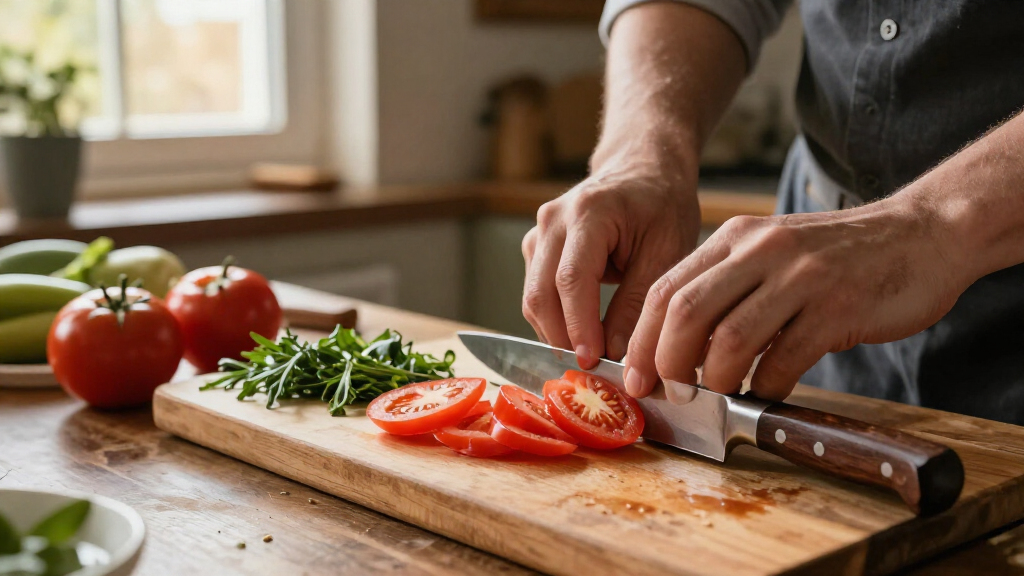
Wüsthof clearly wins here. Its harder steel keeps the edge intact for weeks or even months of regular use. Victorinox dulls relatively quickly, often requiring honing after a few days of heavy prep. In practice, this means the Wüsthof stays precise for longer tasks like slicing tomatoes or herbs. The Victorinox might start to drag slightly after intensive use, requiring more frequent attention. If you dislike sharpening, Wüsthof saves you time. If you enjoy the process, Victorinox is fine.
Victorinox takes the lead here. It comes out of the box razor sharp, ready to slice through paper immediately. Wüsthof knives are sharp but often have a slight burr or require a quick hone on a steel to reach peak performance. For a new user, the Victorinox provides instant gratification. The difference is minor for experienced users who hone their knives before first use, but significant for those who do not.
Handle Comfort and Ergonomics (Wüsthof Classic Chef Knife wins — moderate)
Wüsthof wins on comfort for most hand sizes. Its handle is shaped to fit the palm naturally, reducing fatigue during long prep sessions. The full tang adds weight to the handle, balancing the blade. Victorinox’s handle is functional and grippy but can feel bulky and less refined. Some users find the rubber texture too sticky or the shape too generic. For professional use involving hours of chopping, Wüsthof is the superior choice for ergonomics.
Weight and Balance (moderate difference)
This is subjective. Wüsthof is heavier and has a balance point closer to the bolster, giving it a solid, authoritative feel. Victorinox is lighter and tends to be slightly front-heavy. Lighter knives reduce wrist strain for quick, repetitive motions. Heavier knives provide momentum for cutting through dense items like squash or meat bones. If you prefer a light, nimble tool, Victorinox feels better. If you prefer a tool that does the work for you, Wüsthof feels better.
Durability and Forgiveness (Victorinox Fibrox Pro Chef Knife wins — moderate)
Victorinox is more forgiving of misuse. If you accidentally drop it or hit a bone, the softer steel is less likely to chip. It may dent or roll the edge, but this is easy to fix with a sharpener. Wüsthof is tougher in terms of edge retention but more brittle. It can chip if subjected to hard impacts. For rough home kitchens where knives might be thrown in a drawer or used on hard surfaces, Victorinox is the safer bet. Wüsthof demands more care.
Price and Value (Victorinox Fibrox Pro Chef Knife wins — major)
Victorinox is the undisputed king of value. You get professional-grade performance for a fraction of the cost. Wüsthof is a premium product with a premium price tag. You are paying for the brand heritage, superior materials, and longer lifespan. For a beginner, the Victorinox is a no-brainer. For a serious cook, the Wüsthof is an investment. The value proposition shifts based on how much you value the tactile experience and longevity.
Victorinox Fibrox Pro Chef Knife: Pros and Cons
Pros:
- Exceptionally low price point
- Comes razor sharp out of the box
- Soft steel is easy to sharpen and resists chipping
- Rubberized handle provides excellent grip
- Lightweight reduces wrist fatigue
Cons:
- Edge dulls faster than premium knives
- Handle feels less premium and can be bulky
- Softer steel dents more easily
- Lacks the balanced feel of high-end knives
Wüsthof Classic Chef Knife: Pros and Cons
Pros:
- Superior edge retention for longer periods
- Excellent ergonomic handle design
- Full tang construction offers great balance
- Premium build quality and finish
- Holds value better over time
Cons:
- Significantly more expensive
- Harder steel is more prone to chipping
- Heavier weight may cause fatigue for some
- Requires more careful maintenance and storage
Who Should Choose What
Choose Victorinox Fibrox Pro Chef Knife if:
- You are on a tight budget and want the best performance per dollar
- You are a beginner who might accidentally damage a knife
- You prefer a lighter knife for quick, repetitive chopping
- You do not mind sharpening your knives frequently
Choose Wüsthof Classic Chef Knife if:
- You are an experienced cook who values balance and ergonomics
- You want a knife that holds its edge for weeks without maintenance
- You prefer a heavier, more substantial tool in your hand
- You are willing to invest in a lifetime kitchen tool
Skip both if: You cook very rarely and use pre-cut ingredients, or you prefer Japanese-style thin-blade knives for precision slicing.
Value for Money
Paying more for the Wüsthof is worth it only if you actually use your knife daily and care about the nuances of its performance. The extra $100 buys you better balance, a more comfortable handle, and less frequent sharpening. If you cook three times a week, these benefits enhance your experience. If you cook once a month, the Victorinox performs identically for practical purposes. The Victorinox is the better value for the vast majority of home cooks. It removes the barrier to entry and provides professional results without the premium tax. The Wüsthof is a luxury good in the knife world; you pay for the feel and the brand, not just the cutting ability.
Final Verdict
For most readers, the Victorinox Fibrox Pro is the right choice. It delivers 90% of the performance of high-end knives at 30% of the price. It is sharp, durable, and forgiving. Choose it if you want a reliable workhorse that won’t break the bank. Choose the Wüsthof Classic if you are a serious enthusiast who values the tactile experience of a balanced, premium tool and is willing to maintain it properly. The Wüsthof is a better knife, but the Victorinox is the better buy.
Frequently Asked Questions
Do I need to buy a sharpening kit with the Victorinox?
Yes, because the Victorinox dulls faster than premium knives. A simple pull-through sharpener or a honing steel is recommended to keep it in top shape. The Wüsthof also needs maintenance, but less frequently.
Is the Wüsthof worth the extra cost for a beginner?
Generally, no. Beginners often lack the technique to maintain a premium knife and may damage it. Starting with the Victorinox allows you to learn knife skills without the fear of ruining an expensive tool. You can always upgrade later.
Which knife is better for cutting meat?
Wüsthof is better for meat due to its weight and edge retention. The heavier blade helps slice through muscle fibers cleanly. Victorinox works fine for occasional meat prep but may struggle with tougher cuts or require more force.
Can I put these knives in the dishwasher?
Neither should go in the dishwasher. Heat and harsh detergents dull the edge and can damage the handle materials. Both require hand washing and immediate drying to prevent corrosion and maintain sharpness.