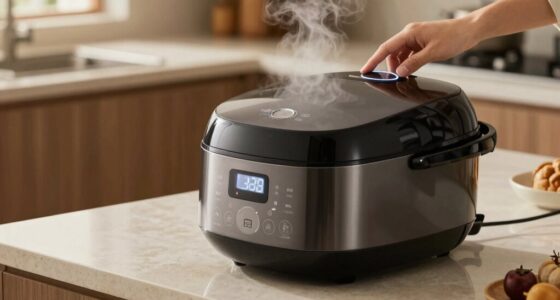
No, it’s not safe to pressure cook without liquid because the liquid generates steam that builds pressure and prevents overheating or damage. Without enough liquid, your cooker may overheat, malfunction, or even pose a safety risk like explosions. Always add at least a cup of water or broth as recommended, and follow proper safety procedures to manage pressure. Keep exploring to understand how proper liquid levels keep your cooking safe and effective.

Get kitchen staples and gadgets delivered free — and shop member deals
- Fast, free delivery on millions of items
- Access to Prime Big Deal Days deals on October 6–7
- Prime Video, Amazon Music and more included
Key Takeaways
- Liquid creates steam to build pressure; without it, the cooker cannot operate safely.
- Cooking without liquid risks overheating, damage, and potential safety hazards or explosions.
- Always include at least one cup of liquid to ensure proper steam generation.
- Never open a pressure cooker while still under pressure; use proper release methods.
- Follow the manufacturer’s instructions to prevent safety issues and appliance malfunction.
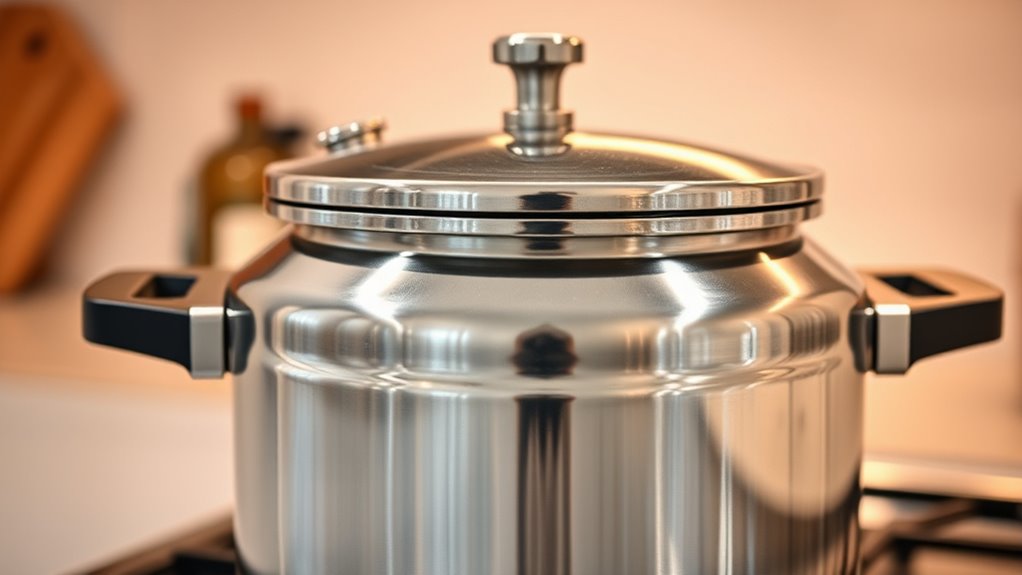
Have you ever wondered how a pressure cooker speeds up meal preparation while preserving flavors and nutrients? The secret lies in its ability to trap steam and build pressure inside the sealed chamber. When you use a pressure cooker, you typically add some liquid to generate steam. This steam creates pressure, which raises the boiling point of water, allowing foods to cook faster. But what happens if you skip adding liquid? Is it safe to pressure cook without liquid? The answer is a clear no. Without enough liquid, your pressure cooker can become dangerous. It relies on the presence of moisture to produce steam; without it, the cooker can overheat or malfunction, leading to potential safety hazards.
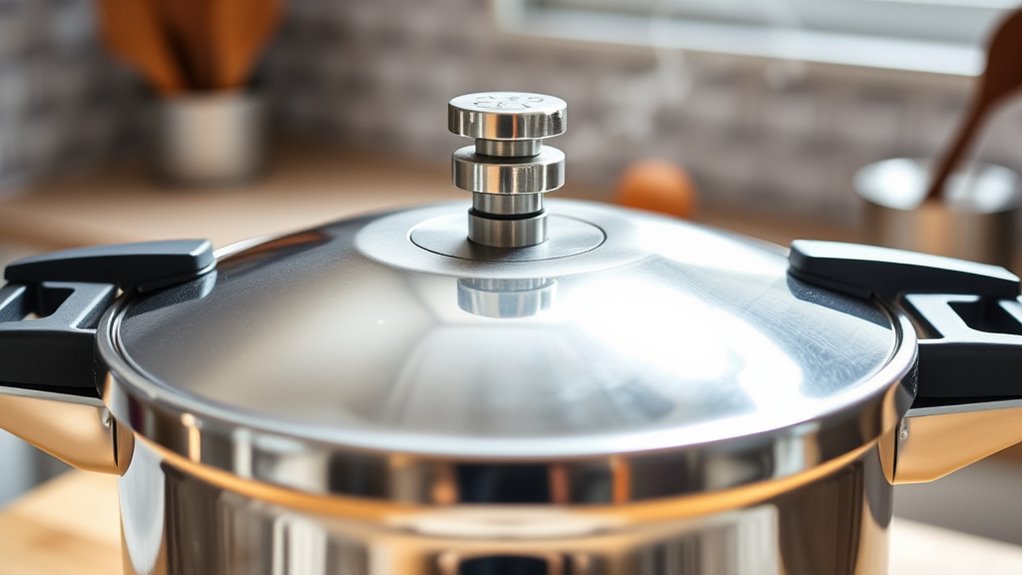
One of the most critical safety precautions involves managing the steam release process properly. When your food is cooked, you need to release the built-up pressure safely before opening the lid. Many pressure cookers come with a steam release valve or pressure indicator that tells you when it’s safe to open the lid. If you don’t follow the correct steam release procedures, you risk sudden pressure drops or even explosive release of hot steam, which can cause burns or injuries. Always read your cooker’s manual to understand the specific steam release method it recommends. For safety, never force the lid open while the cooker is still under pressure. Let the pressure naturally subside or use the designated quick-release method, depending on what the recipe and your cooker require. Proper pressure management is essential for safe operation.
Adding the proper amount of liquid isn’t just about safety; it’s also about ensuring your food cooks evenly and thoroughly. Without enough moisture, the food can stick to the bottom, burn, or cook unevenly. Furthermore, the lack of steam can cause the cooker to overheat, which might trigger safety mechanisms to shut it down or, worse, damage the appliance. To keep everything running smoothly, always ensure there’s enough liquid at the outset—generally, at least one cup of water or broth for most standard models. Avoid using too little or cooking dry foods without added liquids, as it can compromise safety and your meal’s quality.
pressure cooker safety release valve
As an affiliate, we earn on qualifying purchases.
As an affiliate, we earn on qualifying purchases.
Frequently Asked Questions
Can You Pressure Cook Dry Beans Without Soaking First?
Yes, you can pressure cook dry beans without soaking first, but soaking helps meet the soaking requirements for better bean texture. If you skip soaking, expect longer cooking times and potentially unevenly cooked beans. To improve texture, consider rinsing beans and adding enough liquid. Keep in mind that unsoaked beans may be firmer and take more time to cook, so adjust your pressure cooking time accordingly.
How Long Can Food Stay Under Pressure Without Liquid?
You shouldn’t let food stay under pressure too long without liquid, as pressure buildup relies on steam release to prevent accidents. Typically, food can only remain under pressure for a few minutes without risking overheating or damage to the cooker. If you silence the steam release prematurely, it may lead to unsafe conditions or food spoilage. Always verify adequate liquid to maintain safe pressure and proper steam release during cooking.
Does Pressure Cooking Without Liquid Affect Flavor?
Pressure cooking without liquid can negatively impact flavor retention and taste enhancement. Without enough liquid, your food may not cook evenly, leading to dull or bland flavors. You might also miss out on the depth of taste that steam and moisture provide during cooking. To preserve the best flavor and guarantee proper taste enhancement, always add sufficient liquid, which helps lock in flavors and enrich the overall dish.
Are There Recipes Safe to Cook Without Added Liquids?
Think of your pressure cooker as a storm waiting to happen—without the right ingredients, chaos reigns. Some recipes, like stews or braised dishes, can work with alternative cooking methods using liquid substitution options like broth or water. However, most recipes aren’t safe to cook without added liquids, because they prevent burning and ensure proper pressure buildup. Always check recipe guidelines before skipping liquids to keep your kitchen safe and delicious.
How Does the Type of Pressure Cooker Influence Safety Without Liquid?
Your pressure cooker’s materials and safety features greatly influence safety when cooking with minimal or no liquid. For example, electric models with advanced safety features like automatic shutoff or pressure release valves help prevent accidents. Sturdy materials like stainless steel are more reliable under pressure, reducing risk. Always follow manufacturer guidelines, and verify your cooker’s safety features are intact, so you can confidently cook without excess liquid.
best pressure cooker with steam release
As an affiliate, we earn on qualifying purchases.
As an affiliate, we earn on qualifying purchases.
Conclusion
Remember, a little liquid can go a long way in your pressure cooker’s dance. While it might seem like you can skip it, a gentle splash helps everything flow smoothly, preventing unintended surprises. Trust the rhythm of proper moisture, and your dishes will turn out just right—tender, flavorful, and safe. Keep the balance, and enjoy the harmony of your cooking adventures. After all, some things are best left to gentle guidance and a splash of liquid.
pressure cooker liquid measuring cup
As an affiliate, we earn on qualifying purchases.
As an affiliate, we earn on qualifying purchases.
pressure cooker safety accessories
As an affiliate, we earn on qualifying purchases.
As an affiliate, we earn on qualifying purchases.
Halloween Picks
halloween
As an affiliate, we earn on qualifying purchases.