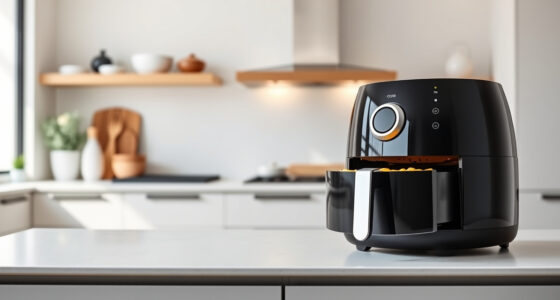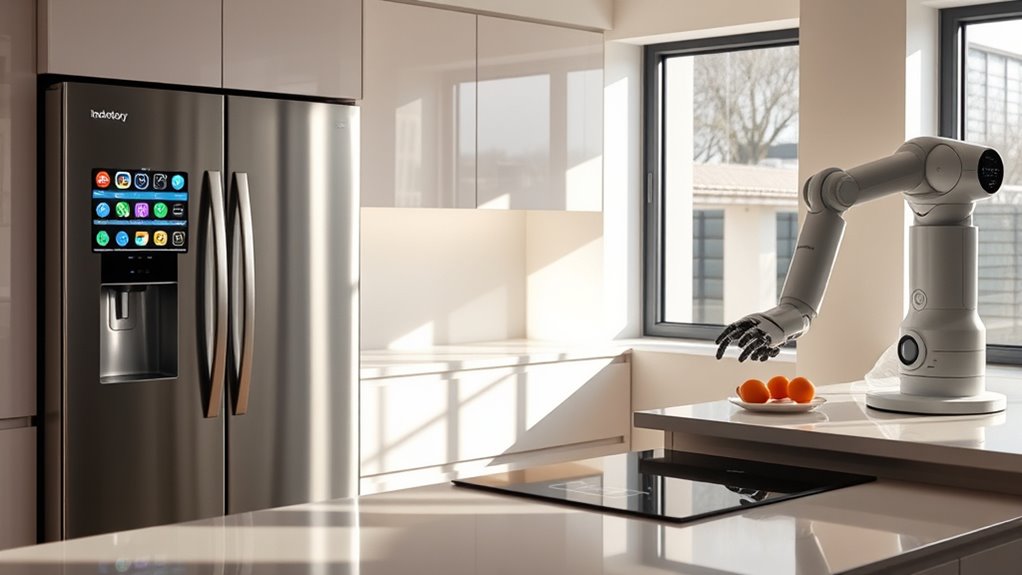

In modern smart kitchens, appliances now respond to your voice commands, letting you preheat, set timers, or check status hands-free. They communicate with each other to coordinate cooking processes and suggest recipes based on what’s in your fridge. You can monitor and control devices remotely through apps, and they adapt their energy use to save costs. Want to see how these innovations can transform your cooking experience? Keep exploring for more insights.
Key Takeaways
- Voice-controlled operation allows hands-free commands for preheating, timers, and adjustments, enhancing convenience and safety.
- Appliances now optimize energy use based on learned habits and off-peak hours, reducing costs and environmental impact.
- Interconnected systems enable appliances to communicate and automate tasks, like recipe suggestions based on fridge contents.
- Remote monitoring apps provide real-time status updates and control over appliances from anywhere.
- Continuous technological advances make smart appliances more intuitive, reliable, and capable of complex, integrated functions.
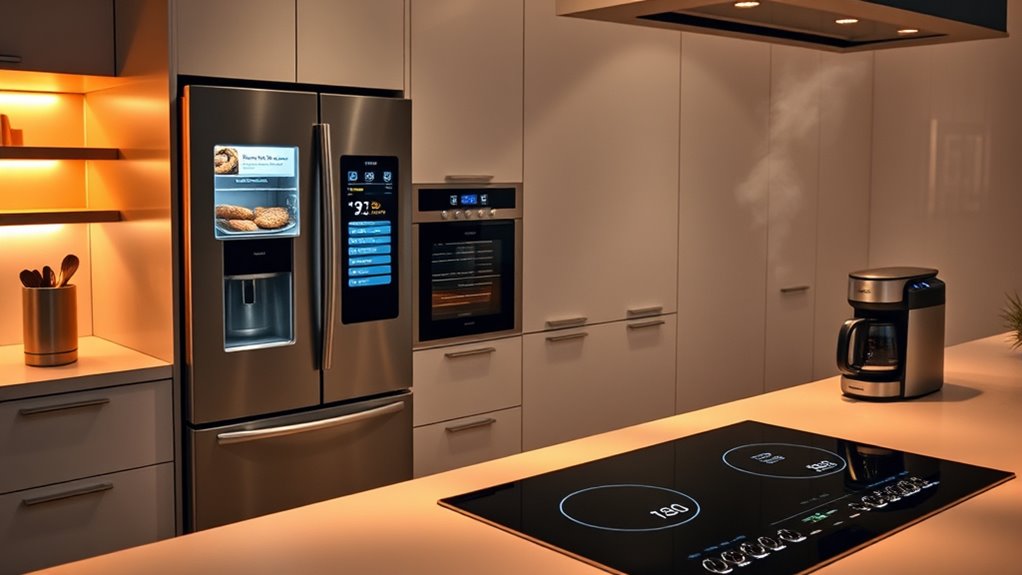
Smart kitchens are transforming the way you cook and manage your home by introducing appliances with advanced capabilities. One of the most noticeable changes is how you interact with your devices. Voice control has become a game-changer, allowing you to operate appliances hands-free. Instead of fumbling with buttons or touchscreens, you can simply speak commands to your smart oven, refrigerator, or dishwasher. Want to preheat the oven? Just say, “Hey, oven, preheat to 375 degrees,” and it responds instantly. This hands-free approach not only makes cooking more convenient but also safer, as you can control appliances without risking spills or burns. Voice control also enables you to set timers, adjust temperatures, and check appliance status without interrupting your workflow, making your kitchen experience more seamless. Device interaction technology is continually improving, making these features more intuitive and reliable.
Beyond convenience, smart appliances are designed with energy efficiency at their core. These devices continually learn your habits and optimize their operation to save power. For example, a smart refrigerator can monitor its contents and suggest ways to reduce waste, like reminding you of expiration dates or suggesting recipes based on what’s inside. Many appliances adapt their energy consumption based on your usage patterns, running only when necessary or during off-peak hours to lower utility bills. This focus on energy efficiency helps you reduce your carbon footprint and contributes to lower household expenses.
Furthermore, smart kitchens often feature interconnected appliances that communicate with each other to streamline your cooking process. For instance, your smart oven might sync with your refrigerator to suggest recipes based on available ingredients and automatically set the cooking time and temperature. These integrations minimize guesswork and help you cook more efficiently. Plus, many smart appliances come with mobile apps, so you can monitor or control them remotely. Imagine starting your oven on your way home or checking if the dishwasher finished its cycle—these features give you unprecedented control over your kitchen.
As an affiliate, we earn on qualifying purchases.
Frequently Asked Questions
How Secure Are Smart Kitchen Appliances From Hacking?
Smart kitchen appliances’ security varies, but cybersecurity concerns and privacy implications are real. You could be vulnerable if you don’t update firmware regularly or use weak passwords. Manufacturers improve security, but hackers still find ways in. To stay safe, you should enable two-factor authentication, keep devices updated, and be mindful of what data you share. Ultimately, smart appliances can be secure if you actively manage their cybersecurity settings.
Can Smart Appliances Be Integrated With Existing Home Systems?
Think of your smart appliances as puzzle pieces fitting seamlessly into your home’s ecosystem. Yes, they can be integrated with existing systems using voice control and remote access, making your kitchen smarter and more connected. You can control your oven, fridge, or dishwasher from anywhere, syncing them effortlessly with your smart home setup. This integration simplifies your routines and enhances convenience, turning your kitchen into a hub of modern, connected living.
What Is the Average Lifespan of a Smart Kitchen Device?
The average lifespan of a smart kitchen device is about 5 to 10 years, but device obsolescence can happen sooner due to rapid tech advances. To protect your investment, consider a smart warranty, which covers repairs and replacements. Keep in mind that software updates might stop, making some devices less functional over time. Regular maintenance and choosing reputable brands can help extend your device’s usability.
Are Smart Appliances Energy-Efficient Compared to Traditional Ones?
Yes, smart appliances are generally more energy-efficient than traditional ones. They use advanced technology to optimize energy consumption, leading to significant energy savings. This not only helps reduce your environmental impact but also offers cost benefits over time. You can control and monitor your devices remotely, ensuring they aren’t wasting energy when not in use. Overall, investing in smart appliances can save you money and promote a greener lifestyle.
How Easy Is It to Repair or Replace Smart Kitchen Components?
Repairing or replacing smart kitchen components can be tricky due to repair complexity, often requiring specialized knowledge or tools. You might find replacement costs higher than traditional appliances because of the advanced technology involved. While some issues are straightforward, others may demand professional help, making DIY fixes less feasible. Overall, expect a mix of manageable and challenging repairs, and be prepared for potentially higher expenses when replacing smart parts.
As an affiliate, we earn on qualifying purchases.
Conclusion
So, now that your fridge can recommend recipes and your oven can text you when dinner’s ready, who needs human chefs? Soon, you’ll be arguing with your smart toaster about burn levels or questioning your Wi-Fi-connected coffee maker’s life choices. Welcome to the future where appliances do all the thinking—leaving you to wonder if you’re just here to press buttons or actually enjoy a meal. Happy living in your robot-assisted culinary paradise!
smart dishwasher with app control
As an affiliate, we earn on qualifying purchases.
As an affiliate, we earn on qualifying purchases.
interconnected kitchen appliances
As an affiliate, we earn on qualifying purchases.
As an affiliate, we earn on qualifying purchases.