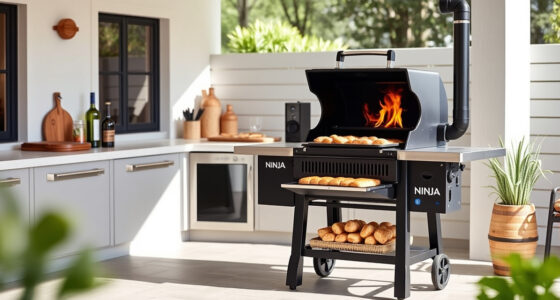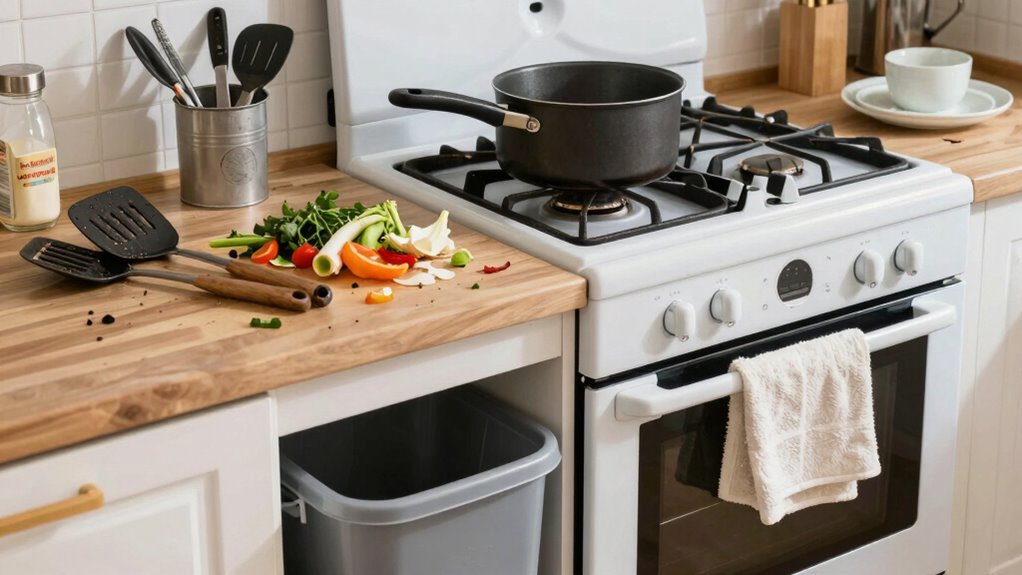

One of the most common kitchen safety oversights is neglecting appliance maintenance, which can lead to fires or malfunctions. People often forget to clean grease buildup, inspect cords, or service appliances regularly. Leaving flammable items near heat sources or forgetting to have a fully stocked fire extinguisher also increases risks. Simple safety habits can prevent accidents, but many overlook these essential steps. Keep exploring to discover how to enhance your kitchen safety and protect your home.
Open a free Amazon Business account
Business pricing, bulk buying and tax-exempt orders.
As an affiliate, we earn on qualifying purchases.
Key Takeaways
- Neglecting regular appliance maintenance increases fire and malfunction risks.
- Failing to keep fire extinguishers accessible and functional hampers fire response.
- Leaving cooking unattended, especially with flammable items nearby, raises fire hazards.
- Cluttered drawers with sharp tools and unorganized utensils cause injury risks.
- Not installing or testing smoke detectors regularly delays fire detection and response.
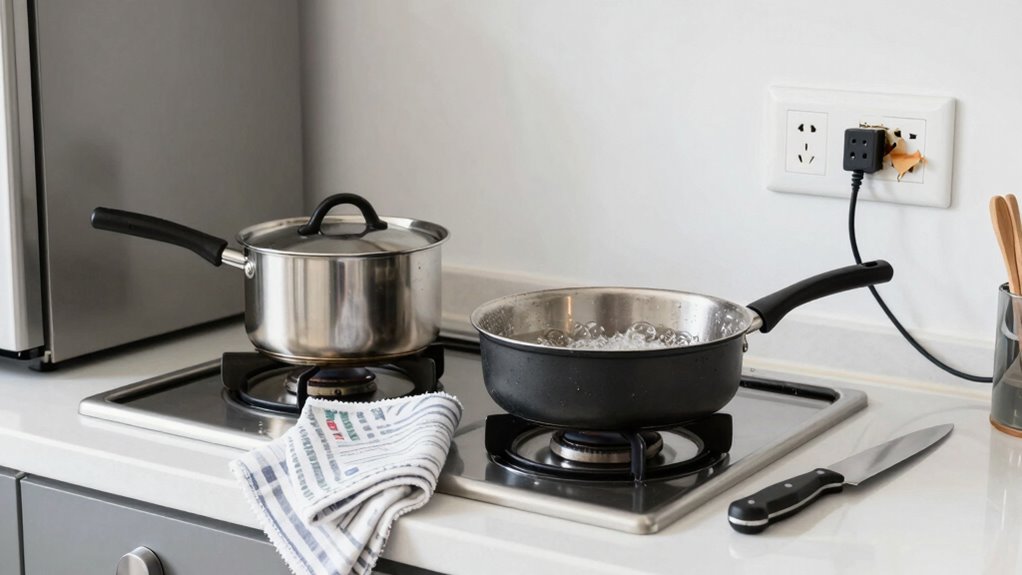
Your kitchen is one of the most common places for accidents at home, but many of these mishaps can be prevented with simple safety measures. One of the key areas often overlooked is appliance maintenance. If you neglect regular checks and cleaning, appliances like your stove, microwave, and refrigerator can become hazards. For example, a dirty stove can cause flare-ups or fires. Make it a habit to clean stovetops after each use and inspect electrical cords for fraying or damage. This simple step helps prevent potential malfunctions and fire risks. Similarly, keeping appliances in good working order reduces the chance of electrical faults, which can lead to fires or electrical shocks. Regularly servicing your appliances and replacing worn-out parts isn’t just good for longevity; it’s an essential safety step. Additionally, ensuring proper appliance safety practices**** can significantly reduce the likelihood of accidents caused by malfunctioning equipment. Regular maintenance also helps identify issues early before they become major safety concerns.
Another common oversight is ignoring fire prevention strategies. Many people forget to keep a fire extinguisher nearby or don’t know how to use it properly. In the heat of the moment, panic can lead to a small fire spreading quickly. You should check that your fire extinguisher is accessible, fully charged, and suitable for kitchen fires—preferably Class K or ABC. Keep flammable items like oven mitts, paper towels, and curtains away from heat sources. Grease buildup on stove surfaces or in the oven can ignite unexpectedly, so regular cleaning is essential. Also, never leave cooking unattended, especially when frying or boiling. A moment of distraction can turn a small flame into a dangerous blaze. Installing smoke detectors in or near the kitchen and testing them monthly adds an extra layer of safety. Remember, early detection is critical for fire prevention. Being aware of fire hazards and how to mitigate them can make a big difference in preventing tragedies.
Many accidents happen when safety precautions are ignored or forgotten. For example, placing sharp knives in cluttered drawers increases the risk of cuts. Keeping utensils organized and out of reach of children minimizes injuries. Additionally, ensuring that pot handles are turned inward on the stove prevents accidental spills and burns. Be cautious with hot liquids and steam—use oven mitts and protective covers to avoid burns. It’s also essential to keep the floor clear of spills and obstructions to prevent slips and falls. Putting safety first means being mindful of potential hazards and tackling them before they cause harm. Regularly reviewing safety practices, maintaining appliances, and practicing fire prevention can considerably reduce risks in your kitchen, making it a safer space for everyone. Incorporating these precautionary measures can help create a safer environment for all members of the household.
kitchen fire extinguisher ABC Class
As an affiliate, we earn on qualifying purchases.
As an affiliate, we earn on qualifying purchases.
Frequently Asked Questions
How Often Should I Replace Outdated Fire Extinguishers in My Kitchen?
You should replace your outdated fire extinguisher every 5 to 15 years, depending on the manufacturer’s recommendations. Regular fire extinguisher inspection is essential for safety equipment maintenance, so check the pressure gauge and look for corrosion or damage monthly. If it’s past its expiration date or shows signs of wear, replace it promptly. Staying vigilant guarantees your fire safety gear remains effective in case of emergencies.
What Are the Best Child-Proofing Measures for Kitchen Cabinets?
Did you know that nearly 40% of childhood injuries occur in the kitchen? To child-proof your cabinets, install child locks or cabinet latches to keep curious little hands out of dangerous areas. These safety measures are simple to add and highly effective at preventing access to sharp objects, cleaning supplies, or hot items. Regularly check that the locks stay secure, ensuring your child’s safety while you cook.
How Can I Prevent Food Poisoning From Contaminated Surfaces?
To prevent food poisoning from contaminated surfaces, you should follow proper cleaning protocols and prioritize surface sanitization regularly. Wash cutting boards, countertops, and utensils with hot, soapy water after each use, especially when handling raw meat or seafood. Use a disinfectant or a mixture of bleach and water to sanitize surfaces, ensuring harmful bacteria are eliminated. Consistent cleaning and sanitizing reduce the risk of cross-contamination and keep your kitchen safe.
Are There Specific Safety Tips for Using Kitchen Appliances Properly?
Using kitchen appliances safely is like handling delicate glass—you must be gentle and attentive. Always perform regular appliance maintenance to prevent malfunctions, and never ignore signs of wear. Keep electrical safety in mind: avoid overloading outlets, keep cords away from water, and unplug devices when not in use. These precautions help you prevent accidents, ensuring your appliances operate smoothly and safely, so you can cook confidently without worries.
What Should I Do if I Accidentally Spill Hot Oil?
If you accidentally spill hot oil, act quickly but carefully. Turn off the heat source first to stop more oil from splattering. For oil spill cleanup, gently cover the spill with a damp cloth or baking soda to absorb the oil, then let it cool. Remember hot oil safety by avoiding water, which can cause dangerous splatters. Never pour water on hot oil to prevent burns or fires.
kitchen appliance maintenance kit
As an affiliate, we earn on qualifying purchases.
As an affiliate, we earn on qualifying purchases.
Conclusion
By staying vigilant and following basic safety tips, you can prevent many common kitchen accidents. Imagine boiling water spilling onto your hand because you didn’t use a pot holder—that’s avoidable. Keep sharp knives stored safely, clean up spills immediately, and never leave cooking unattended. Taking these simple precautions ensures your kitchen remains a safe space for you and your loved ones. With a little awareness, you can cook confidently without risking a preventable mishap.
As an affiliate, we earn on qualifying purchases.
As an affiliate, we earn on qualifying purchases.
Flea & tick season Picks
flea and tick prevention
As an affiliate, we earn on qualifying purchases.