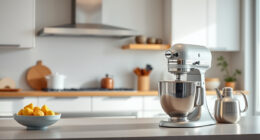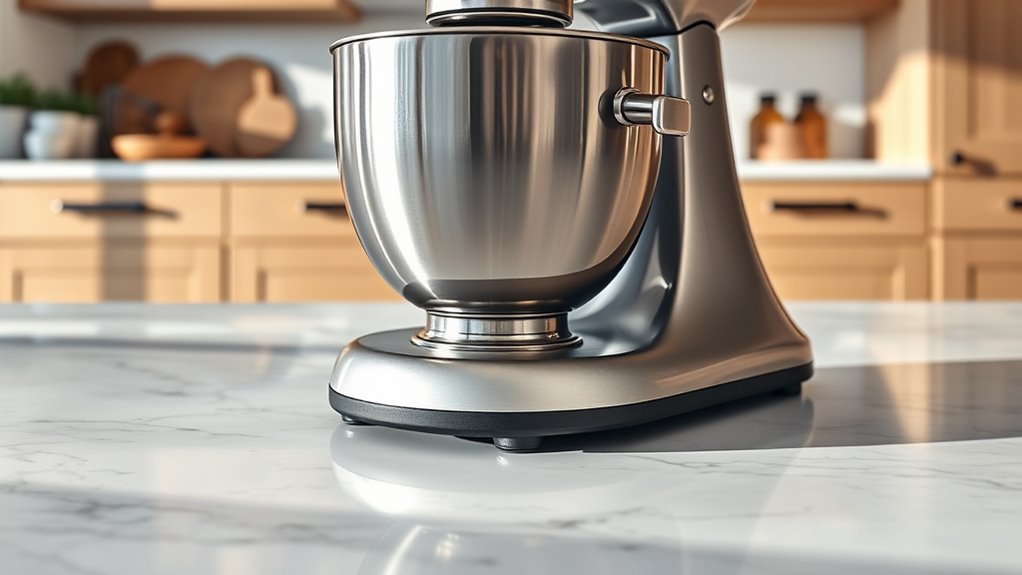
To prevent your stand mixer from walking off the counter, place a non-slip mat or grip pad beneath it to create friction and stability. Make sure it’s positioned on a flat, stable section of your countertop, away from the edges. Keep the cord tucked away and avoid pulling during use. Regularly check that the mixer’s feet are clean and secure. If you’d like to discover more tips for a safer, more stable setup, there’s even more to explore.
Key Takeaways
- Place the mixer on a flat, stable surface and avoid edges or uneven spots.
- Use a non-slip mat directly under the mixer to increase friction and prevent movement.
- Ensure the mixer’s feet or base are clean and fully contact the countertop for maximum stability.
- Manage the power cord carefully to prevent tugging or pulling that could cause the mixer to shift.
- Consider additional anti-slip accessories or grip pads for extra stability during heavy mixing.
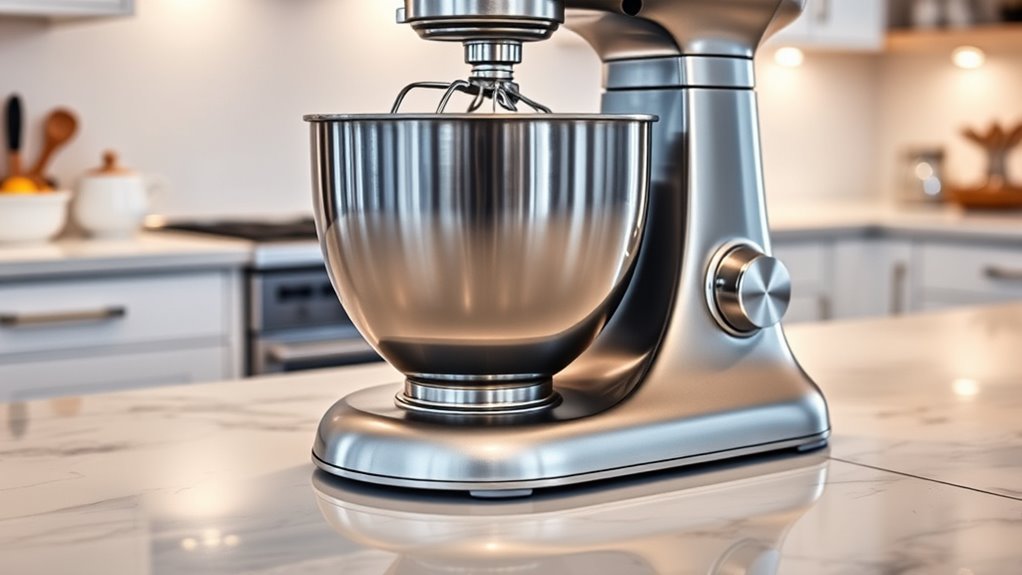
A stand mixer can be a valuable tool in your kitchen, but if it isn’t secured properly, it might unexpectedly slide or even fall off the counter during use. To prevent this, you need to focus on non slip mats and proper placement. Non slip mats are simple yet effective solutions; they create friction between the mixer and your countertop, considerably reducing the chance of movement. Place the mat directly beneath your mixer’s base, ensuring it covers enough surface area to grip firmly. This way, every time you operate the mixer, you’ll notice a stable, secure feel. Avoid placing the mixer directly on a smooth, slick surface without any grip, as it increases the risk of slipping.
Proper placement is just as vital as using non slip mats. Position your stand mixer on a flat, stable section of your countertop, away from the edge. Keep the mixer centered and avoid any uneven surfaces or clutter that could cause imbalance. When setting it down, make sure the feet or base are fully in contact with the counter; don’t rest it on uneven surfaces or partially on the edge. If your countertop has crevices or textured areas, choose a smooth, flat spot for the mixer. This ensures maximum contact and stability during operation. Additionally, countertop stability is essential to maintain a secure workspace and prevent accidental movement.
You should also pay attention to the cord placement. Keep the power cord tucked away and avoid pulling or tugging on it while mixing. Excess slack or a loose cord can cause the mixer to shift unexpectedly. When plugging in or unplugging, do so gently, and make sure the cord isn’t creating a tripping hazard or pulling on the mixer. Additionally, check the mixer’s feet or base regularly for debris or buildup that could interfere with proper placement. Clean these areas routinely to maintain ideal grip.
If you find your mixer still tends to shift despite these precautions, consider using additional grip accessories or anti-slip pads. These can be placed between the mixer and the non slip mat for extra stability. Ultimately, a combination of proper placement, a reliable non slip mat, and careful handling will keep your stand mixer steady and secure during all your culinary adventures. By taking these simple steps, you’ll prevent it from “walking” off the counter, making your baking and mixing safer and more enjoyable.

Sliding Mat for Kitchenaid Mixer, Mover Slider Mat Pad for 5-8 Qt Bowl-Lift Stand Mixer, Kitchen Appliance Slider Mat Compatible with Professional 600 Stand Mixer, Kitchen Aid Mixer Accessories
【Move Your Mixer With Ease 】 – The mixer slider mat is designed for kitchen mixers. The kitchen…
As an affiliate, we earn on qualifying purchases.
As an affiliate, we earn on qualifying purchases.
Frequently Asked Questions
Can Placing a Towel Under the Mixer Prevent It From Moving?
Placing a towel under your mixer can help prevent it from moving, as it provides grip enhancement and reduces slipping. Make sure you position the towel securely, especially under the base, to create friction. This simple trick can keep your stand mixer steady during use, especially if your countertop is smooth or slippery. Just verify the towel stays in place and doesn’t interfere with the mixer’s operation.
Does the Weight of the Mixer Affect Its Stability?
Of course, the weight of your mixer influences its stability—think of it as a heavyweight champion versus a featherweight. A heavier mixer sits firmly on your counter surface, making it less likely to walk or dance around. So, if you’ve got a lightweight model, it might be time to upgrade or add some weight (like a towel or non-slip mat). Remember, a sturdy counter surface complements the mixer’s weight for ultimate stability.
Are There Specific Surfaces That Help Keep the Mixer in Place?
Yes, certain surfaces can help keep your stand mixer in place. Opt for sturdy countertop materials like granite or quartz, which provide a stable base. You can also use rubber mats under the mixer to prevent slipping and reduce movement. These mats increase friction, ensuring your mixer stays put during use. Combining a solid surface with a rubber mat offers the best stability, making your baking experience safer and more efficient.
How Do I Fix a Wobbling Stand Mixer During Use?
Your stand mixer’s wobbling is like a shaky foundation in a house—fix it by checking the mixer’s feet for stability and tightening any loose parts. Make sure you perform regular mixer maintenance, especially on the counter surface, to prevent slipping. Placing a non-slip mat or a damp cloth under the mixer can also help keep it steady during use, transforming chaos into control and ensuring your baking remains smooth.
Is It Safe to Use Non-Slip Pads With My Stand Mixer?
Yes, it’s safe to use non-slip pads with your stand mixer as long as they’re designed for kitchen appliances. Non-slip pads help prevent your mixer from walking during heavy mixing, reducing the risk of accidents. Always check the safety considerations, ensuring the pads won’t interfere with the mixer’s vents or electrical parts. Regularly inspect the pads for wear, and follow the manufacturer’s advice for safe use.

Walfos Silicone Trivet Mats – 4 Heat Resistant Pot Holders, Multipurpose Non-Slip Hot Pads for Kitchen Potholders, Hot Dishers, Jar Opener, Spoon Holder, Food Grade Silicone & BPA Free (Black)
NON-SLIP AND HIGH HEAT RESISTANT: These trivets for hot dishes are heat-resistant from -104℉ to 446℉, Protect your…
As an affiliate, we earn on qualifying purchases.
As an affiliate, we earn on qualifying purchases.
Conclusion
By taking these simple steps, you keep your stand mixer steady like a ship anchored in calm waters. When it’s secure, you can focus on your culinary adventures without worry, letting your mixer be a reliable crew member rather than a runaway vessel. Remember, a little effort to stabilize it now prevents chaos later. Keep it grounded, and your baking will always stay on course—smooth sailing every time you step into the kitchen.

ENVTEK Mixer Slider Mat, Pine Wood Sliding Tray for KitchenAid 5 & 8 Qt Stand Mixers, Anti-Slip Moving Mat & Countertop Protector, Kitchen Accessories and Attachments for Artisan Series (5-8 QT)
✨Precision Fit for KitchenAid Bowl-Lift Stand Mixers:Engineered specifically for KitchenAid 5-8 Qt Bowl-Lift Stand Mixers, this wood slider…
As an affiliate, we earn on qualifying purchases.
As an affiliate, we earn on qualifying purchases.
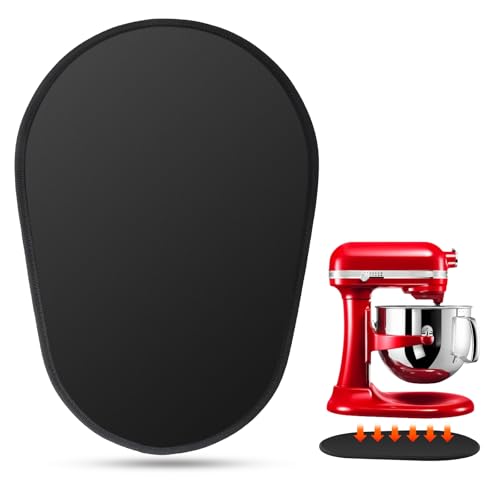
Mixer Sliding Mat for Kitchen Aid – Kitchen Counter Appliance Slider Mat Mixer Attachment for Kitchenaid 5-8 Qt Bowl Lift Stand Mixer, Mover Slider Pad Mixer Countertop Accessories Black
【Mixer Slider Mat 】The mixer slider mat is designed for KitchenAid 5-8 QT bowl lift stand mixer, fits…
As an affiliate, we earn on qualifying purchases.
As an affiliate, we earn on qualifying purchases.