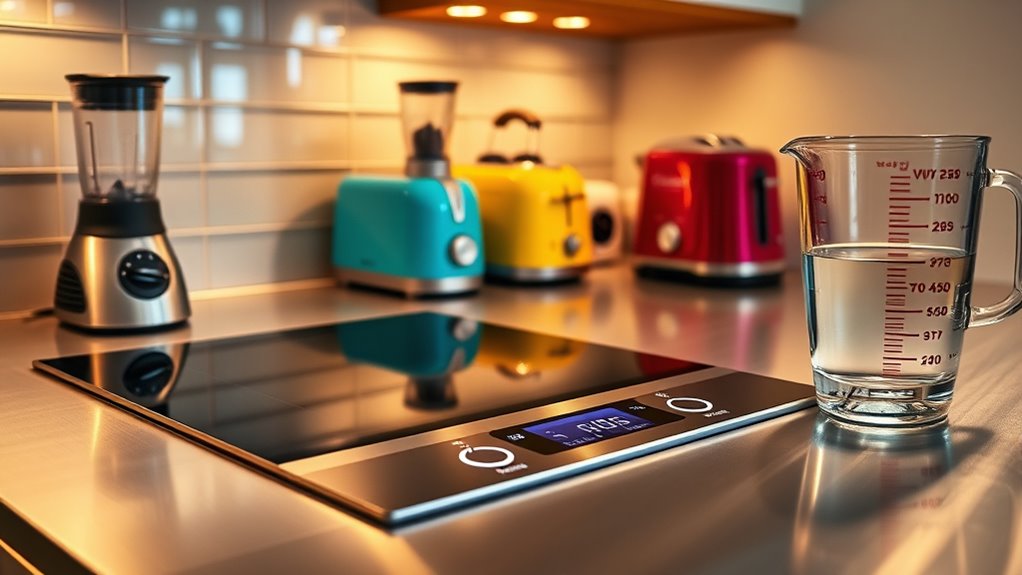

Understanding watts, BTUs, and power ratings helps you optimize your kitchen’s energy use. Watts show how much electrical power an appliance needs; higher watts usually mean a more powerful unit. BTUs measure heating or cooling capacity, helping match devices to your space. Knowing these ratings allows you to choose efficient appliances and save on energy costs. Keep exploring to discover how to put this knowledge into practical use for a smarter kitchen.
Key Takeaways
- Watts measure an appliance’s power consumption, indicating how much energy it uses during operation.
- BTUs evaluate heating or cooling capacity, matching appliance output to the space for efficiency.
- Power ratings help determine if appliances are appropriately sized, avoiding waste and unnecessary energy use.
- Analyzing usage patterns and duration impacts overall energy consumption more than wattage alone.
- Choosing energy-efficient appliances reduces power consumption and lowers long-term utility costs.
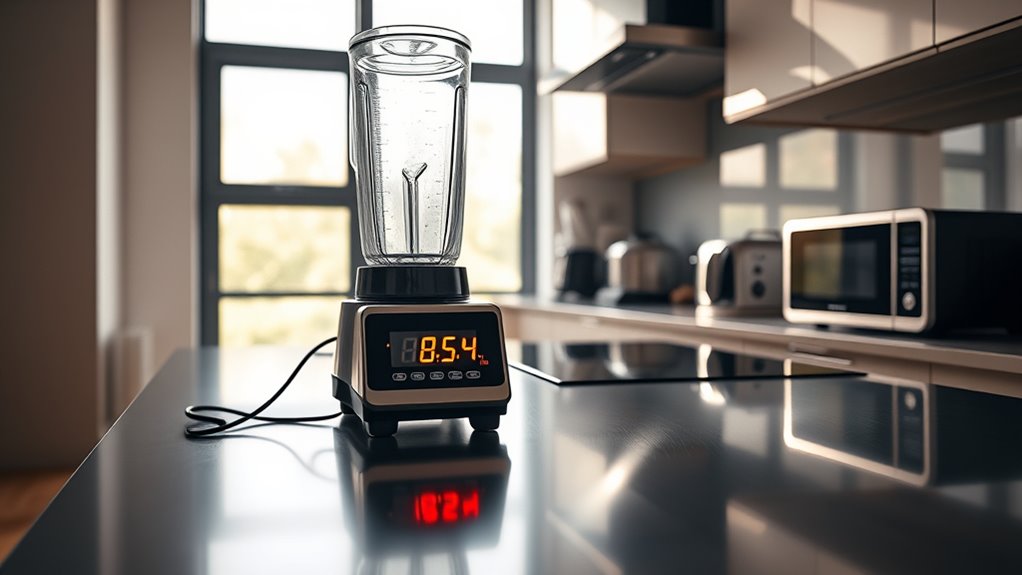
Ever wondered how some kitchens seem to run smoothly while others struggle with inefficiency? It all comes down to understanding the fundamentals of kitchen power, especially how appliances operate and how to analyze their power consumption. Knowing about appliance efficiency and conducting a proper power consumption analysis can make a huge difference in optimizing your kitchen’s performance.
Understanding appliance power and efficiency is key to a more functional, energy-saving kitchen.
When you look at your appliances, the power ratings on labels—measured in watts—tell you how much energy they need to function. A higher wattage typically means a more powerful appliance, but it doesn’t necessarily mean it’s more efficient. Appliance efficiency is key because it determines how well an appliance converts electrical energy into useful work, like cooking or cooling. An efficient refrigerator, for example, uses less power to keep your food cold, saving you money on energy costs over time. Conversely, a less efficient unit might consume more power for the same result, increasing your overall energy bills.
Performing a power consumption analysis involves examining how much energy your appliances use during typical operation. This isn’t just about reading wattage labels; it’s about understanding how often and how long you run each device. For instance, a microwave with a high wattage might seem powerful, but if you only use it for short periods, its overall energy impact remains manageable. On the other hand, a constantly running refrigerator with poor insulation can drain your energy budget without you realizing it. By keeping track of these usage patterns, you can identify appliances that are consuming more power than necessary and decide whether they’re worth replacing or upgrading.
You should also consider the power ratings of appliances measured in BTUs—particularly for heating and cooling devices like space heaters and air conditioners. BTUs indicate the capacity of these units to produce heat or cooling. An oversized unit can waste energy, while an undersized one may struggle to maintain comfort, leading to higher power consumption as the device works harder to compensate. Matching the right capacity to your space ensures better appliance efficiency and reduces unnecessary power use.
Understanding these ratings and analyzing your appliances’ power consumption helps you make informed decisions about energy use and cost savings. It allows you to identify inefficiencies, choose better-performing devices, and operate your kitchen more sustainably. Optimizing appliance performance through proper analysis can lead to significant savings and a more efficient, better-functioning kitchen.
As an affiliate, we earn on qualifying purchases.
Frequently Asked Questions
How Do Power Ratings Affect Cooking Speed and Efficiency?
Higher power ratings generally boost your cooking speed because they deliver more heat quickly. This means you can prepare meals faster, saving time. Additionally, a well-matched power rating improves energy efficiency, as you won’t waste energy trying to heat or cook with inadequate power. By choosing appliances with appropriate power ratings, you optimize both your cooking speed and energy use, making your time in the kitchen more efficient.
Can Appliances With Higher Wattage Be Used Interchangeably?
Think of appliances like musical instruments—higher wattage ones can pack more power, but they aren’t always interchangeable. You need to take into account appliance compatibility and electrical outlet requirements. Using a high-wattage appliance in an outlet not designed for it can cause damage or safety issues. Always check the wattage ratings and outlet specifications before swapping appliances to ensure safe and effective use.
How Do Watts, BTUS, and Power Ratings Impact Energy Bills?
Your energy consumption directly impacts your energy bills, and understanding watts, BTUs, and power ratings helps you manage this. Appliances with higher wattage or BTU ratings typically use more energy, increasing costs. By choosing energy-efficient appliances and monitoring their power usage, you can achieve cost savings. Being mindful of these ratings allows you to optimize your kitchen’s energy consumption, ultimately reducing your monthly expenses and supporting a more sustainable lifestyle.
Are There Safety Concerns With High-Power Kitchen Appliances?
High-power kitchen appliances can pose safety risks like electrical fires and appliance overloads if not used properly. You should guarantee your outlets and circuits can handle the appliance’s wattage, avoid daisy-chaining multiple high-power devices, and never leave appliances running unattended. Regularly check cords and plugs for damage, and consider professional wiring assessments. Being cautious helps prevent accidents and keeps your kitchen safe.
How Do I Choose the Right Appliance Based on My Kitchen’s Power Supply?
Imagine your kitchen as a bustling control center, where the right appliance fits perfectly like a puzzle piece. To choose the right one, check your power supply compatibility and appliance voltage requirements. Confirm the appliance’s voltage matches your outlet’s capacity, and verify your circuit can handle its wattage. This way, you prevent overloads or outages, keeping your kitchen safe, efficient, and always ready for your culinary adventures.
As an affiliate, we earn on qualifying purchases.
Conclusion
Now that you’re familiar with watts, BTUs, and power ratings, you’re practically a kitchen power pro. Think of these details as your secret recipe for smarter choices and better cooking experiences. With a little know-how, you can avoid potential pitfalls and keep your kitchen running smoothly. So, next time you’re shopping or operating appliances, remember: understanding the power behind your tools makes all the difference. Happy cooking and powering up with confidence!
As an affiliate, we earn on qualifying purchases.
As an affiliate, we earn on qualifying purchases.