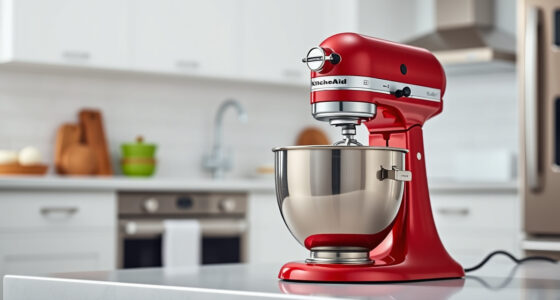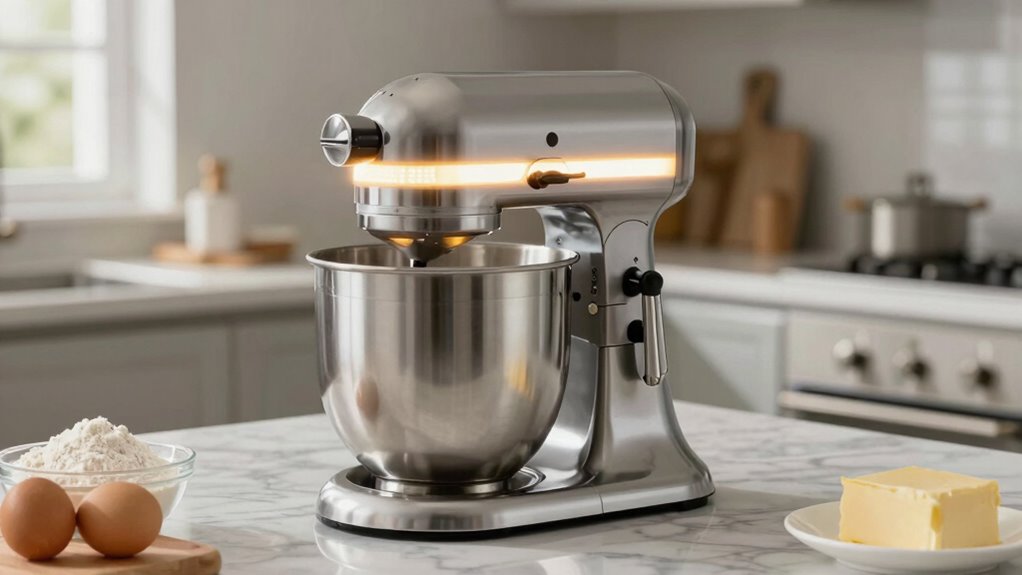
Understanding your stand mixer’s speed settings is key to perfect results. Use low speeds for delicate tasks like creaming butter and sugar or folding whipped cream, and switch to high speeds for whipping or kneading dense doughs. Gradually increase speeds to prevent splattering and overmixing, which could strain the motor. Some models offer burst or pulse options for better control. Mastering these settings helps protect your appliance and improve your baking. If you want to learn more, keep exploring how each speed works best for different recipes.

Get kitchen staples and gadgets delivered free — and shop member deals
- Fast, free delivery on millions of items
- Access to Prime Big Deal Days deals on October 6–7
- Prime Video, Amazon Music and more included
Key Takeaways
- Different speed settings are designed for specific tasks like gentle folding or vigorous kneading.
- Gradually increasing speed prevents splattering and ensures proper ingredient incorporation.
- Low speeds are ideal for delicate tasks, while high speeds are used for whipping or dense doughs.
- Using the right speed prevents motor strain, overheating, and extends the mixer’s lifespan.
- Some models include burst or pulse functions for controlled, short power bursts.
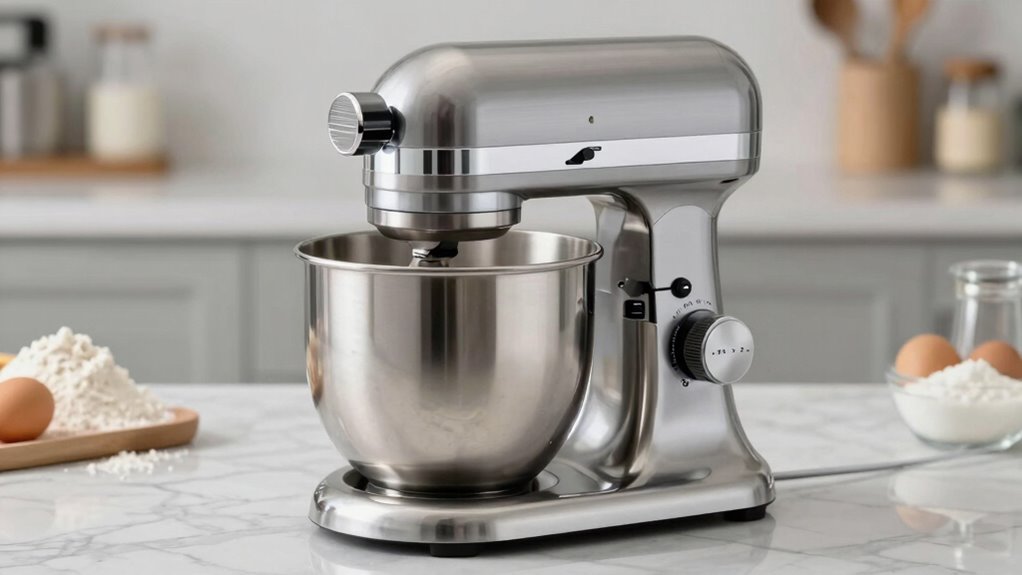
When using a stand mixer, understanding its speed settings is essential for achieving the best results. The different power settings and speed variations aren’t just arbitrary numbers—they’re designed to help you handle a variety of tasks, from gentle folding to vigorous mixing. Knowing how to adjust these settings correctly guarantees your ingredients blend as intended and prevents mishaps like splattering or under-mixing. A good grasp of projector technology can also help you choose the right equipment for your needs. Most stand mixers feature a range of speed options, typically numbered from low to high. The lower speeds are perfect for mixing delicate ingredients, such as folding whipped cream or gently combining dry components into batter. They allow you to control the force applied, reducing the risk of overmixing or breaking down delicate textures. As you increase the speed, the mixer gains more power, making it easier to whip air into egg whites or knead dense doughs. These higher speed settings are usually reserved for tasks that require vigorous action to achieve the right consistency.
Understanding power settings and speed variations also helps you tailor your approach based on the ingredients you’re working with. For instance, when creaming butter and sugar, starting on a slow speed guarantees the ingredients incorporate smoothly without splattering. Once combined, you can gradually increase the speed to achieve a fluffy, uniform mixture. Conversely, when kneading bread dough, you’ll want to set the mixer to a higher speed to develop gluten efficiently, but be cautious not to overdo it, as excessive speed can strain the motor or overwork the dough. Properly adjusting the speed can also help prevent overheating, which is especially relevant considering electric motor components and their durability. Additionally, familiarizing yourself with mixer safety tips ensures you operate the appliance effectively without risking damage or injury. Properly adjusting the speed also extends the life of your appliance; running the mixer at high speeds for extended periods can cause unnecessary wear, so it’s best to use the lowest effective speed whenever possible. It’s also helpful to understand how speed control can vary between models, offering more precise adjustments for different recipes. Many mixers come with a burst or pulse setting; these are useful for adding short, controlled bursts of power, especially when you need to incorporate ingredients gradually or avoid overmixing. Moreover, understanding piercings and their healing process can serve as a helpful analogy—just as piercing care requires patience and proper hygiene, so does operating your mixer at the right speed to avoid damage and achieve optimal results.
As an affiliate, we earn on qualifying purchases.
Frequently Asked Questions
How Do I Prevent Flour From Splattering at High Speeds?
To prevent flour splattering at high speeds, start by adjusting the mixer’s speed to a lower setting before adding flour. Gradually increase the speed as the flour incorporates, allowing for splatter prevention. Also, use the mixer’s splash guard or cover the bowl with a damp towel to contain any mess. These steps help control the mixing process, ensuring a cleaner kitchen and a smoother baking experience.
What Speed Should I Use for Kneading Dough?
Did you know that using the right speed can cut your kneading time by up to 30%? For ideal dough consistency, set your stand mixer to a low or slow speed, typically around speed 2 or 3. This gentle mixing technique ensures even kneading without overworking the dough. It helps develop gluten properly, resulting in a smooth, elastic dough. Always monitor your dough’s texture to modify speed as needed.
Can I Customize Speed Settings on My Stand Mixer?
Yes, you can usually customize speed settings on your stand mixer. Many models offer speed adjustment options, allowing you to select a precise setting that suits your recipe. Check your mixer’s control panel or dials for customization features. Mixer customization helps you achieve better mixing results, whether you’re kneading dough or whipping cream. Always refer to your user manual to understand specific controls and guarantee safe, effective use of your mixer.
How Do I Clean the Mixer’s Speed Control Area?
Cleaning your mixer’s speed control area is like giving your trusted partner a gentle hug. First, unplug the mixer, then wipe around the control with a damp cloth. For stubborn grime, use a soft brush or cotton swab dipped in rubbing alcohol. Regular mixer maintenance and careful speed calibration guarantee smooth operation. Avoid getting moisture inside, and clean regularly to keep your mixer functioning perfectly and prolong its lifespan.
Are Certain Speeds Better for Mixing Delicate Ingredients?
Yes, certain speeds are better for mixing delicate ingredients. Using lower speeds enhances speed safety and prevents splattering or overmixing, which could damage the motor durability of your mixer. For gentle tasks like folding or mixing fragile items, stick to the slow or medium-low settings. Higher speeds are ideal for tougher mixtures, but always monitor your mixer to avoid overloading the motor and compromising its longevity.
As an affiliate, we earn on qualifying purchases.
Conclusion
Understanding your stand mixer speeds helps you achieve perfect results every time. Whether you’re whipping cream or kneading dough, knowing which speed to use makes all the difference. Remember, “A little patience goes a long way.” With this knowledge, you’ll become more confident and efficient in your baking adventures. So, don’t rush—trust the process, and soon you’ll be creating delicious treats that impress everyone. Happy mixing!
As an affiliate, we earn on qualifying purchases.
As an affiliate, we earn on qualifying purchases.
Fall Picks
fall essentials
As an affiliate, we earn on qualifying purchases.