If you’re using induction cookware, your pots and pans need a special base that responds to magnetic fields to heat efficiently. Materials like cast iron or certain stainless steels work because they are ferromagnetic. A proper base also guarantees even heat distribution, preventing hot spots and uneven cooking. Quality construction with layered materials boosts heat retention and durability. Want to discover how the design of your cookware base impacts cooking performance? Keep exploring for more insights.
Key Takeaways
- Induction cookware requires a ferromagnetic base to respond to electromagnetic fields for heating.
- Proper heat distribution prevents hot spots and ensures even cooking.
- Layered construction improves magnetic compatibility and enhances heat conduction.
- Thick, sturdy bases retain heat better and promote durability.
- A well-designed base maximizes efficiency and control on induction stoves.
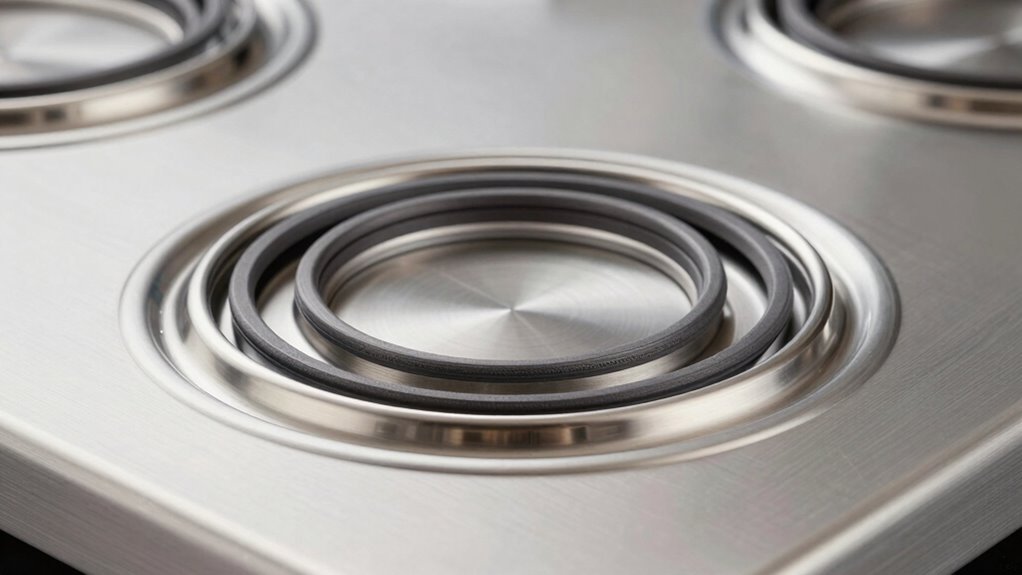
Have you ever wondered what makes some cookware work perfectly on an induction stove? The secret lies in the base of the cookware itself. Unlike traditional pots and pans, induction-compatible cookware needs a special kind of base that responds to the magnetic field generated by the stove. This magnetic compatibility is vital because, without it, your cookware simply won’t heat up. When you place a piece of cookware on an induction cooktop, the stove produces an electromagnetic field that induces electric currents within the cookware’s base. If the base isn’t made of ferromagnetic material—such as cast iron or certain stainless steels—these currents won’t form properly, and the heat won’t transfer efficiently. That’s why choosing the right base matters so much for induction cooking.
The key to induction cooking is a magnetic, ferromagnetic base that ensures efficient heat transfer and even cooking.
Beyond magnetic compatibility, heat distribution plays an essential role in how well your cookware performs. A flat, sturdy base ensures that heat spreads evenly across the bottom of your cookware, preventing hot spots that can burn food or cause uneven cooking. When the base is designed with good heat conduction in mind, it allows the heat from the induction stove to transfer quickly and uniformly, giving you better control over your cooking process. Thin or warped bases can create uneven heat, making your dishes less consistent and more prone to burning. So, when selecting induction cookware, you want a base that’s not only compatible with magnetic fields but also engineered for excellent heat distribution. This combination guarantees your stove’s electromagnetic energy is converted into consistent, efficient heat, making your cooking experience more precise.
Furthermore, the material and construction of the base influence how quickly your cookware heats up and how well it maintains heat. Thick, layered bases often provide superior heat retention and distribution, helping you achieve better results with less energy. Some high-quality induction cookware incorporates layered materials like aluminum or copper sandwiched between stainless steel, combining the best of both worlds: magnetic compatibility and excellent heat conduction. This layered construction ensures that heat is spread evenly across the entire surface, reducing hotspots and improving overall cooking performance. When you understand these key factors—magnetic compatibility and heat distribution—you’re better equipped to choose cookware that truly complements your induction stove, making your cooking more efficient, enjoyable, and consistent.
In essence, the base of your induction cookware isn’t just a simple foundation; it’s the heart of your cooking experience. It must be made of the right materials to respond to the magnetic field, and it needs to distribute heat evenly to prevent uneven cooking. Paying attention to these details ensures you get the most out of your induction stove, turning everyday cooking into a smoother, more precise process. Understanding layered construction can significantly enhance your cookware’s performance and longevity.
As an affiliate, we earn on qualifying purchases.
Frequently Asked Questions
Can I Use Non-Magnetic Cookware on Induction Stoves?
No, you can’t use non-magnetic cookware on induction stoves because it won’t activate the magnetic field needed for heating. Non-magnetic materials like aluminum or glass lack the cookware durability required for consistent use. To maximize heat distribution efficiency and make certain your cookware works properly, select induction-compatible pots and pans with a magnetic base. This guarantees even heating and a safer, more effective cooking experience.
How Do I Identify Induction-Compatible Cookware?
You can identify induction-compatible cookware by checking its magnetic properties; it’s like finding a key that fits perfectly. Use a magnet—if it sticks firmly, you’re good to go. This guarantees cooking safety and boosts energy efficiency, making your kitchen a hub of smart, eco-friendly activity. Remember, the right cookware keeps your stove functioning smoothly and your meals safe, turning everyday cooking into an effortless, efficient dance.
Do Induction Cooktops Work With Glass or Ceramic Bases?
Induction cooktops don’t work with glass or ceramic bases because they lack the magnetic properties needed for induction safety and efficiency. You need cookware with a ferromagnetic base to guarantee durability and proper heat transfer. Using incompatible materials can lead to poor performance and potential damage. Always check if your cookware has a magnetic layer—this guarantees safe, efficient cooking and maintains the durability of both your cookware and the cooktop.
What Materials Are Best for Induction Cookware Bases?
You’ll want to look for materials with strong magnetic properties, like magnetic stainless steel or cast iron, to assure good induction compatibility. These materials not only provide efficient heat transfer but also boast excellent base durability, standing up to frequent use without warping. Avoid non-magnetic metals, which may seem promising but won’t deliver the reliable performance you need. Choosing the right material guarantees a seamless cooking experience.
Is Special Cleaning Required for Induction-Compatible Cookware?
No, special cleaning isn’t necessary for induction-compatible cookware, but proper maintenance tips help keep it in top shape. Use gentle cleaning techniques like warm soapy water and non-abrasive sponges to avoid scratching the base. Avoid harsh chemicals or steel wool. Regularly clean after use, especially if food spills, to prevent residue buildup. Following these maintenance tips guarantees your cookware stays efficient and lasts longer on induction cooktops.
ferromagnetic induction pots and pans
As an affiliate, we earn on qualifying purchases.
As an affiliate, we earn on qualifying purchases.
Conclusion
So, next time you choose cookware for your induction stove, remember that a different base isn’t just a preference—it’s a necessity. It’s funny how something so simple can make such a difference in your cooking experience. When your pots heat evenly and work seamlessly, it feels like a little bit of magic in your kitchen. Sometimes, the smallest details, like the right base, turn everyday cooking into something truly special.
layered stainless steel induction cookware
As an affiliate, we earn on qualifying purchases.
As an affiliate, we earn on qualifying purchases.
induction stove heat conduction cookware
As an affiliate, we earn on qualifying purchases.
As an affiliate, we earn on qualifying purchases.