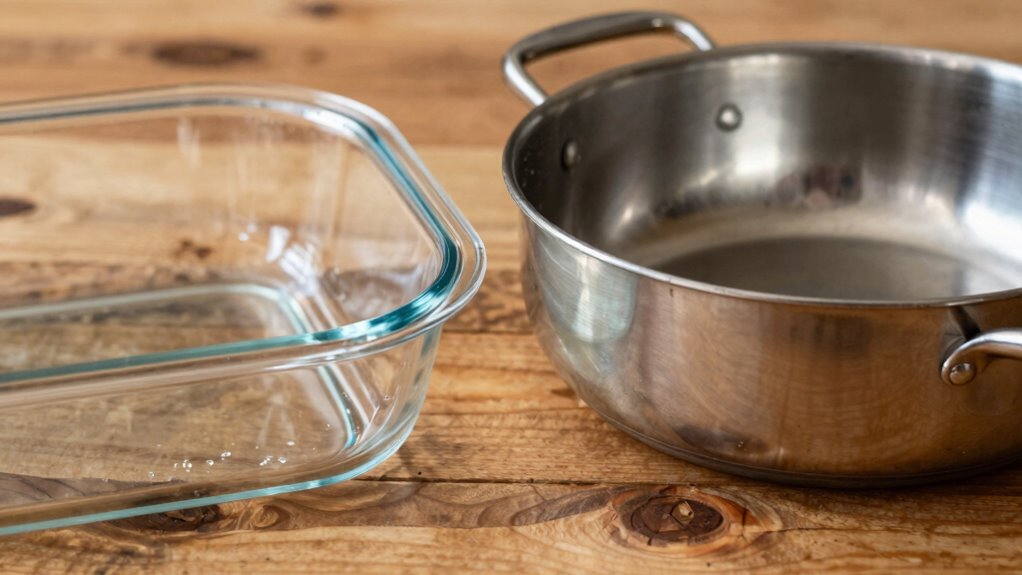

When choosing between glass and metal pans, consider your baking needs. Glass pans heat slowly and evenly, great for gentle, consistent results, but they can break easily and take longer to cook foods. Metal pans heat up quickly, ideal for cookies and quick bakes, and are more durable, but they may warp with time. Each one has pros and cons, and if you want to learn more, you’ll find useful tips below.

Get kitchen staples and gadgets delivered free with Prime
- Fast, free delivery on millions of items
- Prime Video, Amazon Music and more included
- Member-only deals all year
Key Takeaways
- Glass pans provide even heat but may require longer baking times and careful oven calibration.
- Metal pans heat quickly and offer precise control, ideal for fast, high-temperature baking.
- Glass is more prone to breaking and damage from impact or temperature shocks.
- Metal pans are durable, impact-resistant, but can warp with uneven or extreme heat.
- Choice depends on baking needs, recipe type, and willingness to handle fragile or durable materials.
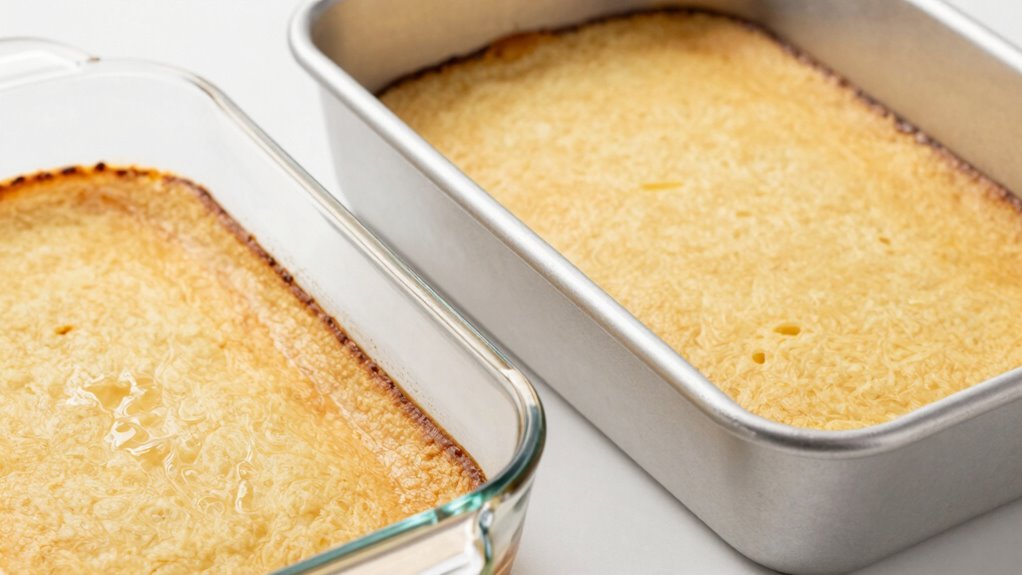
When it comes to baking, choosing the right pan can make all the difference in your results. One of the biggest decisions you’ll face is whether to go with glass or metal. Each material offers distinct advantages and challenges, especially when it comes to material durability and heat conduction. Understanding these differences helps you select the best pan for your baking needs.
Glass pans are known for their durability, especially since they resist warping and can handle a wide range of temperatures. You’ll find that they’re less likely to dent or bend over time, making them a reliable choice for regular baking. However, glass isn’t a great conductor of heat. Instead, it heats slowly and evenly, which means your baked goods might take longer to cook. While this slow heat conduction promotes even baking, it can also lead to uneven results if you’re not attentive. For example, your cake might bake unevenly if the oven temperature isn’t carefully calibrated, since glass retains heat once hot, potentially causing overbaking or uneven browning. Plus, glass pans are more prone to breaking if dropped or subjected to sudden temperature changes, so handle them with care. Additionally, the material durability of glass makes it a long-lasting choice when properly handled. Notably, the heat retention properties of glass can help maintain a consistent temperature during baking, although they require careful management to prevent overcooking. The thermal properties of glass can be especially beneficial for recipes that benefit from gentle, even heat distribution.
Glass pans are durable and resist warping but heat slowly, which can lead to uneven baking if not monitored carefully.
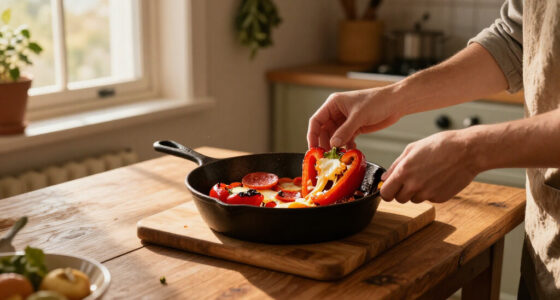
Metal pans, on the other hand, excel in heat conduction. Aluminum and steel conduct heat quickly and evenly, which allows baked goods to cook at a consistent rate. This makes metal pans ideal for recipes that require precise timing, like cookies or delicate pastries. They heat up fast, providing better control over your baking process. Metal also tends to be lighter and more durable in terms of physical impact—it’s less likely to crack or shatter if dropped compared to glass. That said, metal pans can warp over time if subjected to extreme or uneven heating, especially cheap or thin varieties. Their material durability depends on the quality; thicker, high-quality metal pans last longer and resist warping better. Furthermore, metal pans often heat and cool more quickly, which can be advantageous for certain recipes but may require more attentive temperature control. Properly preheating metal pans can also enhance baking results by ensuring even heat distribution from the start.
Choosing between glass and metal depends on what you prioritize in your baking. If you value even baking and don’t mind the slower heat transfer, glass pans are a solid choice. But if quick, consistent results are what you’re after, metal pans usually deliver. Consider how often you bake, the types of recipes you prefer, and how much care you’re willing to give your pans. Both materials have their place, and knowing their strengths and weaknesses helps you make smarter choices to improve your baking experience.
As an affiliate, we earn on qualifying purchases.
Frequently Asked Questions
Which Pan Type Is Better for Gluten-Free Baking?
For gluten-free baking, you should opt for metal pans with non-stick coatings. They heat evenly, preventing hot spots that can ruin delicate gluten-free baked goods. Metal pans are more durable, resisting warping over time, unlike glass which can be fragile. Non-stick coatings also make it easier to remove your baked items without sticking or breaking, ensuring successful results every time. Overall, metal pans with non-stick coatings are your best choice for gluten-free baking.
How Do Pans Affect the Flavor of Baked Goods?
Pans considerably influence the flavor of your baked goods through heat conduction and flavor retention. Metal pans, especially aluminum, heat quickly and evenly, preventing burnt edges and maintaining the fresh taste. Glass pans retain heat longer, which can deepen flavors but sometimes cause over-baking if not monitored. Your choice affects not just texture but also the overall flavor, so select your pan based on the desired outcome and how you want your baked goods to taste.
Are Glass or Metal Pans More Eco-Friendly?
Glass pans are generally more eco-friendly because you can recycle glass endlessly without losing quality, making it a sustainable choice. Metal pans, on the other hand, boast durability that outlasts many glass options, reducing waste over time. Think of glass as the butterfly of recycling—beautiful and endlessly reusable—while metal pans are the sturdy oak, built to last. Your choice depends on prioritizing recyclability or long-term durability.
Can I Substitute Glass for Metal in All Recipes?
You can’t substitute glass for metal in all recipes because ingredient compatibility and pan durability vary. Glass pans heat more evenly but can break easily and may not handle high temperatures well, affecting your baked goods’ texture. Metal pans are more durable and suitable for recipes requiring quick heat transfer. Always consider the recipe’s needs and the pan’s properties before swapping, to guarantee the best results.
What’s the Best Way to Store Baked Items in Pans?
When it comes to storing baked items, keeping them fresh is a piece of cake if you use the right methods. After cooling, transfer your baked goods to airtight storage containers to lock in moisture. For longer storage, refrigeration methods work well—just make sure to cover or seal the items properly. This way, your treats stay delicious and ready whenever you want them, without losing their flair.
As an affiliate, we earn on qualifying purchases.
Conclusion
So, don’t let the fear of uneven baking or surprise breakage stop you from choosing the right pan. Both glass and metal have their perks, and your choice depends on what you bake most often. If you’re worried about temperature control, go for metal—it heats up quickly and evenly. But if you prefer to keep an eye on your baked goods and avoid surprises, glass is your friend. Pick what suits your baking style best!
As an affiliate, we earn on qualifying purchases.
As an affiliate, we earn on qualifying purchases.
Halloween Picks
halloween
As an affiliate, we earn on qualifying purchases.