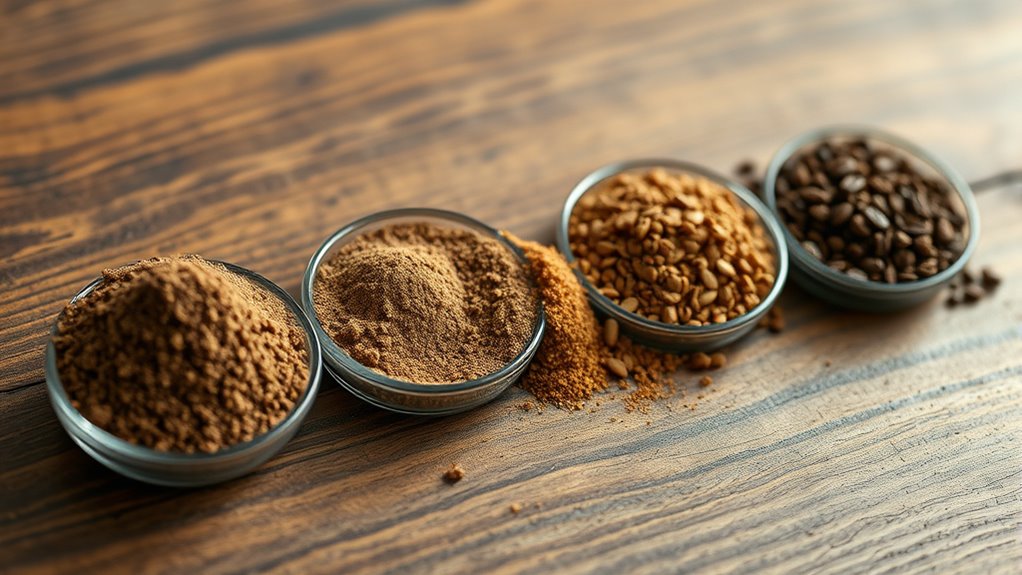

Your coffee grind size impacts how your brew extracts flavors, affecting taste and texture. A consistent grind guarantees uniform extraction, preventing over-brewed bitterness or weak under-extraction. Different brewing methods need specific grind sizes—coarse for French press, medium for drip, fine for espresso—to reveal the best flavor. Using quality equipment helps maintain this consistency. Keep exploring to discover how choosing the right grind size can transform your coffee experience.
Key Takeaways
- Consistent grind size ensures uniform extraction, leading to balanced and flavorful coffee.
- Different brewing methods require specific grind sizes for optimal flavor and extraction control.
- Proper grind size prevents over-extraction (bitterness) or under-extraction (weakness).
- Using quality equipment like burr grinders maintains particle uniformity and brewing consistency.
- Focused grind size selection unlocks the full aroma, body, and overall quality of your coffee.
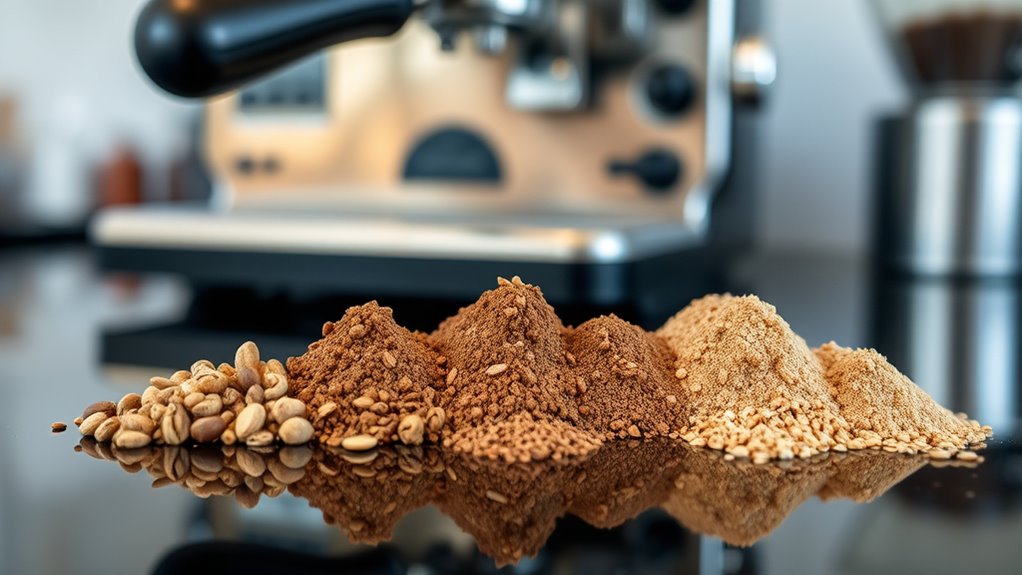
Choosing the right coffee grind size is essential to brewing a perfect cup, as it directly impacts extraction and flavor. When you’re selecting a grind, one of the most important factors to consider is grind size consistency. Uniformity in grind size ensures that each particle extracts at a similar rate, which is crucial for achieving a balanced and flavorful brew. If your grind isn’t consistent, some coffee particles may over-extract, leading to bitterness, while others under-extract, resulting in a weak or sour taste. This uneven extraction can significantly diminish the overall quality of your coffee, making it less enjoyable and more difficult to fine-tune your preferred flavor profile.
Having a consistent grind size also simplifies your brewing process. It allows you to replicate successful results reliably and makes it easier to troubleshoot any issues with flavor. For example, if your coffee tastes off, you can more confidently adjust variables like brewing time or water temperature, knowing that your grind size remains steady. This consistency becomes especially important if you use methods like espresso or pour-over, where precise grind sizes are crucial for optimal extraction. In short, grind size consistency directly impacts the flavor because it governs how evenly water interacts with coffee grounds, influencing the strength and taste of your brew.
Consistent grind size simplifies brewing and helps troubleshoot flavor issues effectively.
The impact on flavor is profound. A too-coarse grind, like what you’d use for French press, results in under-extraction, making your coffee taste weak and flat. On the flip side, a too-fine grind, such as for espresso, can cause over-extraction, producing a bitter, harsh flavor. The right grind size balances the extraction process, highlighting the coffee’s natural aromas and nuanced flavors. It’s not just about following recipes; understanding how grind size influences extraction helps you craft a more refined cup. Different brewing methods demand different grind sizes to optimize flavor extraction—coarse for French press, medium for drip, fine for espresso—and maintaining consistent grind sizes within each category ensures your coffee tastes its best every time.
Additionally, investing in a good burr grinder can help maintain grind size consistency, which is essential for achieving the best flavor outcomes. Ultimately, paying attention to grind size consistency is key to unlock the full potential of your coffee beans. It’s a small detail that has a large impact on flavor, making each cup more satisfying. When you choose the right grind size and keep it consistent, you set yourself up for a more controlled and enjoyable brewing experience. Your coffee’s aroma, body, and taste will reflect your attention to detail, transforming ordinary grounds into an extraordinary cup. So, invest in a good grinder, learn the appropriate grind sizes for your preferred brewing method, and focus on maintaining that consistency—your taste buds will thank you.
Top picks for "grind coffee explain"
Open Amazon search results for this keyword.
As an affiliate, we earn on qualifying purchases.
Frequently Asked Questions
How Does Grind Size Affect Brewing Time?
Your grind size directly impacts brewing time because a finer grind increases surface area, making extraction faster, while a coarser grind slows it down. You should also consider your brew temperature and grind consistency; higher temperatures can compensate for coarser grounds, but inconsistent grind sizes may lead to uneven extraction and longer brew times. Adjusting grind size helps optimize your brewing process for the perfect cup every time.
Can Changing Grind Size Improve Flavor?
Ironically, changing your grind size can indeed enhance flavor, even if it seems trivial. By adjusting the grind, you optimize extraction, revealing deeper flavor notes and balancing bitterness. This taste optimization allows you to better control flavor enhancement, making your brew more vibrant and satisfying. So, don’t overlook the power of grind size—small tweaks might just elevate your coffee experience from good to unforgettable.
What’s the Best Grind Size for Cold Brew?
For cold brew, you should use a coarse grind size to guarantee smooth extraction and a rich flavor. The grind size consistency is key, so aim for uniform particles to prevent over- or under-extraction. Keep in mind that coffee bean origin can influence flavor, but regardless of origin, a consistent coarse grind will help you achieve the best cold brew. Adjust slightly based on your taste preferences for ideal results.
How Often Should I Adjust My Grind Size?
You should adjust your grind size whenever you notice a change in your coffee’s flavor, extraction time, or if your brew isn’t meeting your expectations. Maintaining grind consistency is key, so check your grinder regularly and perform grinder maintenance to avoid clogs or uneven grinding. Small tweaks can make big differences, so experiment gradually and keep your equipment clean to guarantee ideal results each time you brew.
Does Grind Size Impact Caffeine Extraction?
Yes, grind size considerably impacts caffeine extraction. When your grind is too fine, it over-extracts, making your coffee bitter, while a coarse grind under-extracts, resulting in weak flavor. Fresh coffee beans and consistent grind size guarantee balanced extraction, maximizing caffeine release. By paying attention to grind size, you optimize caffeine extraction, making sure each cup is as potent and flavorful as possible, delivering a delightful, delicious brew every time.
Conclusion
Remember, the right grind size can make or break your brew, turning a good cup into a great one. As the saying goes, “You are what you eat,” but in coffee, you are what you grind. So, take the time to match your grind to your brewing method, and enjoy a perfect cup every time. When you get it just right, each sip will remind you that patience and attention pay off in every drop.