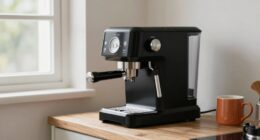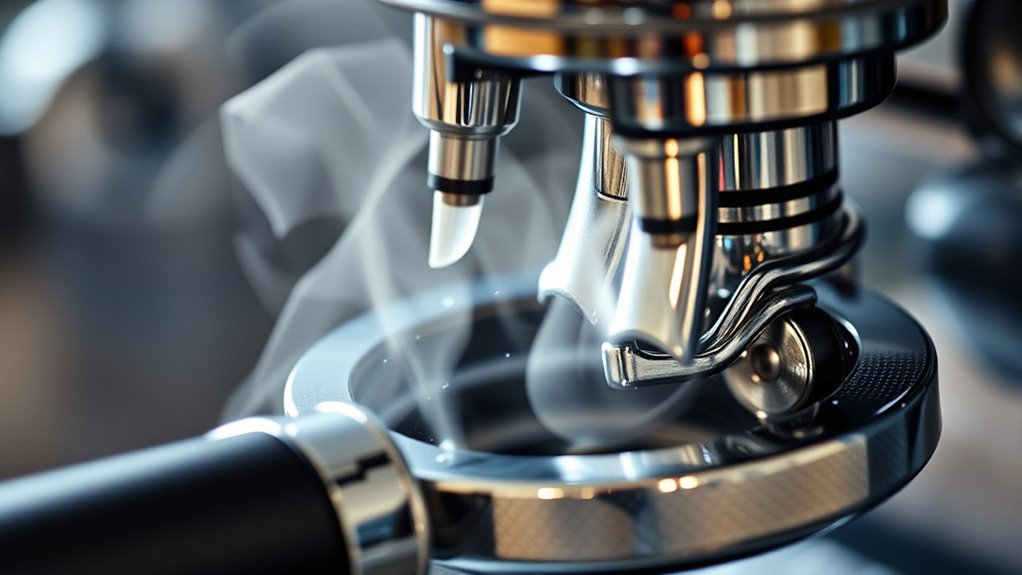

Espresso machines need around nine bars of pressure because this level guarantees hot water pushes effectively through finely ground coffee, extracting maximum flavor, aroma, and body. Too little pressure makes the shot weak and underdeveloped, while too much can cause bitterness. Consistent, high pressure ensures a balanced, rich espresso every time. If you want to understand how pressure influences your brew and what makes nine bars special, there’s more to discover below.
Key Takeaways
- High pressure ensures hot water properly extracts flavors and oils from finely ground coffee for a rich espresso.
- Around nine bars of pressure provide optimal resistance for balanced extraction and flavor development.
- Steady pressure prevents under- or over-extraction, maintaining consistent taste and aroma in each shot.
- Pump stability and control are crucial for maintaining the necessary pressure during the entire extraction process.
- Proper pressure enhances crema formation and overall espresso quality by enabling full flavor extraction.
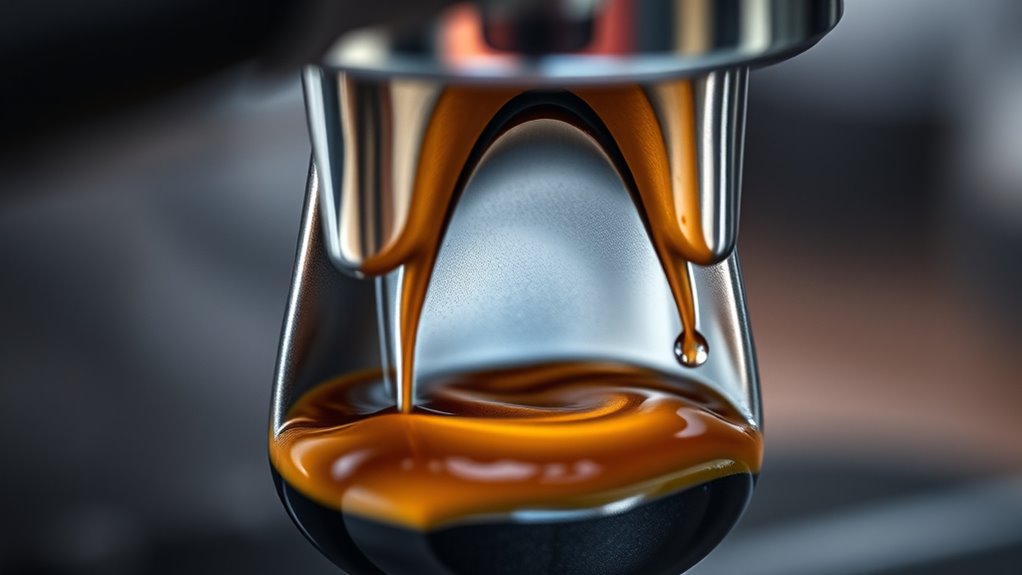
Understanding how pressure works is key to making great espresso. When you pull a shot, you’re essentially forcing hot water through finely ground coffee, extracting rich flavors and oils. To do this effectively, your espresso machine needs to generate a specific amount of pressure—usually around nine bars—to produce that perfect crema. But it’s not just about reaching high pressure; maintaining that pressure consistently throughout the shot is vital. This is where pressure consistency comes into play. If the pressure fluctuates, you might end up with an under-extracted or over-extracted shot, leading to a sour or bitter taste. Consistent pressure ensures every shot has the same depth of flavor, aroma, and body, giving you a reliably great espresso every time.
Consistent pressure is essential for perfectly extracted, flavorful espresso shots.
Central to achieving this consistency is pump technology. Most modern espresso machines rely on electric pumps, often vibratory or rotary, to generate the necessary pressure. Vibratory pumps are common in home machines—they’re small, affordable, and capable of quickly building pressure. Rotary pumps, found in higher-end models, offer smoother, more stable pressure and operate more quietly. The stability of pump technology directly influences how well your machine maintains pressure during extraction. If the pump falters or fluctuates, you’ll notice uneven extraction, which can compromise the quality of your espresso. That’s why investing in a machine with reliable pump technology pays off—it helps you produce shots with steady pressure that’s essential for balanced flavor.
Moreover, good pump technology doesn’t just provide pressure; it sustains it. During extraction, the pump maintains a consistent force, resisting any drops or spikes that could throw off the shot. This stability is especially important in longer pulls, where even slight pressure drops can lead to under-extraction. Advanced machines often incorporate pressure gauges or sensors, giving you real-time feedback and allowing you to fine-tune your technique. Some machines even feature pre-infusion, where low pressure is applied initially to saturate the coffee evenly before ramping up to full pressure. This process relies heavily on the pump’s ability to deliver steady, controlled pressure, further highlighting the importance of pump technology in achieving ideal extraction. Additionally, understanding how pressure fluctuations can impact flavor extraction helps you better appreciate the need for precise pump control.
In reality, the secret behind needing so much pressure in espresso machines isn’t just about force; it’s about precision and stability. Without pressure consistency, even the best beans can’t deliver their full potential. And with reliable pump technology, you’re equipped to control that pressure precisely, ensuring every shot is as flavorful and aromatic as it can be. Mastering pressure and understanding the role of pump technology will elevate your espresso game, giving you café-quality results at home.
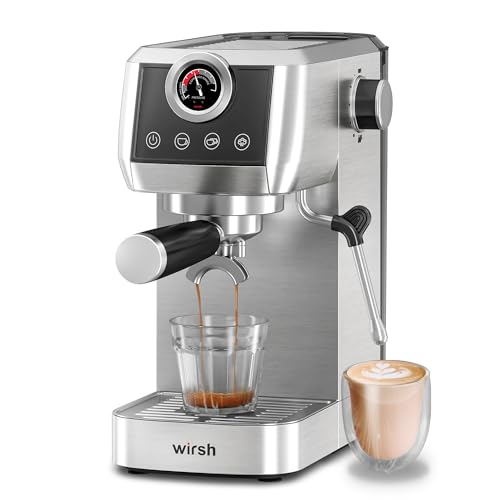
wirsh Espresso Machine, 20 Bar Semi-Automatic Espresso Maker with Pressure Gauge, Steam Wand, Stainless Steel Expresso Coffee Machine for Espresso/Latte/Cappuccino, Touch Screen,Home Barista Plus
Barista-Quality Espresso at Home: Brew the perfect espresso, latte, or cappuccino with the Wirsh "Home Barista" Espresso Machine….
As an affiliate, we earn on qualifying purchases.
As an affiliate, we earn on qualifying purchases.
Frequently Asked Questions
Can Pressure Affect the Flavor of Espresso?
Yes, pressure considerably affects the flavor of your espresso. When you maintain pressure consistency, you guarantee even flavor extraction, preventing over- or under-extraction. If pressure fluctuates, it can lead to a sour, bitter, or weak taste. Proper pressure helps extract the rich oils and flavors from the coffee, resulting in a balanced, full-bodied espresso. So, consistent pressure is key to achieving the best flavor in every shot.
Do Different Espresso Machines Require Different Pressure Levels?
Yes, different espresso machines require specific pressure levels for ideal brewing. You should focus on pressure calibration to match your machine’s design, ensuring consistent extraction and flavor. Keep in mind, higher pressure can strain your machine’s durability over time. Regular calibration helps maintain performance and extends its lifespan, so you get great espresso without risking damage. Always follow your manufacturer’s guidelines for pressure settings to maximize both flavor and machine longevity.
How Does Pressure Influence Brewing Time?
Pressure impacts your brew time considerably. When you apply the right pressure, it helps extract flavors quickly and evenly, reducing brew time. Too much pressure can cause over-extraction, making your coffee bitter, while too little results in under-extraction and a weak taste. Adjusting pressure levels ensures ideal brew time, allowing you to enjoy a balanced espresso with perfect flavor and consistency.
Is Higher Pressure Always Better for Espresso?
Higher pressure isn’t always better for espresso. You need consistent pressure to make certain a balanced extraction, which enhances flavor and aroma. Excessive pressure can strain your machine and reduce durability, leading to costly repairs. If your machine maintains pressure consistency, you’ll get a perfect shot without risking damage. Trust that the right pressure, not the highest, delivers the best espresso, preserving both taste and your machine’s longevity.
Can I Adjust the Pressure on My Espresso Machine?
Yes, you can adjust the pressure on your espresso machine, but it depends on your model. Check the pressure gauge to see if it has a calibration feature or adjustable settings. Many machines allow you to fine-tune the pressure for ideal extraction. Always follow the manufacturer’s instructions to avoid damaging your machine. Proper calibration ensures consistent shots and better flavor, making your espresso experience more enjoyable.

Turin Gallatin R HX Espresso Machine with Rotary Pump & PID & Flow Control
Made with a mirror-finished stainless steel body, the Gallatin R delivers long-lasting durability and timeless beauty. Every detail,…
As an affiliate, we earn on qualifying purchases.
As an affiliate, we earn on qualifying purchases.
Conclusion
So, next time you marvel at that rich, velvety espresso, remember it’s all about the pressure—9 bars of it, to be exact. Ironically, what seems like a simple push of a button hides a high-stakes battle of steam and force, turning water into liquid gold. Without that secret pressure, your coffee would be just warm water with a hint of disappointment. Cheers to the unseen power behind every perfect shot!

Neretva Espresso Machine 20 Bar, Super Compact Espresso Maker Stainless Steel Professional Coffee Machine Espresso with Power Steam & LED Display for Home Barista Latte and Cappuccino Maker-Silver
✅PROFESSIONAL 20 BAR PRESSURE – Embrace barista-style brewing with Neretva espresso machine! With a 20-bar pressure system and…
As an affiliate, we earn on qualifying purchases.
As an affiliate, we earn on qualifying purchases.