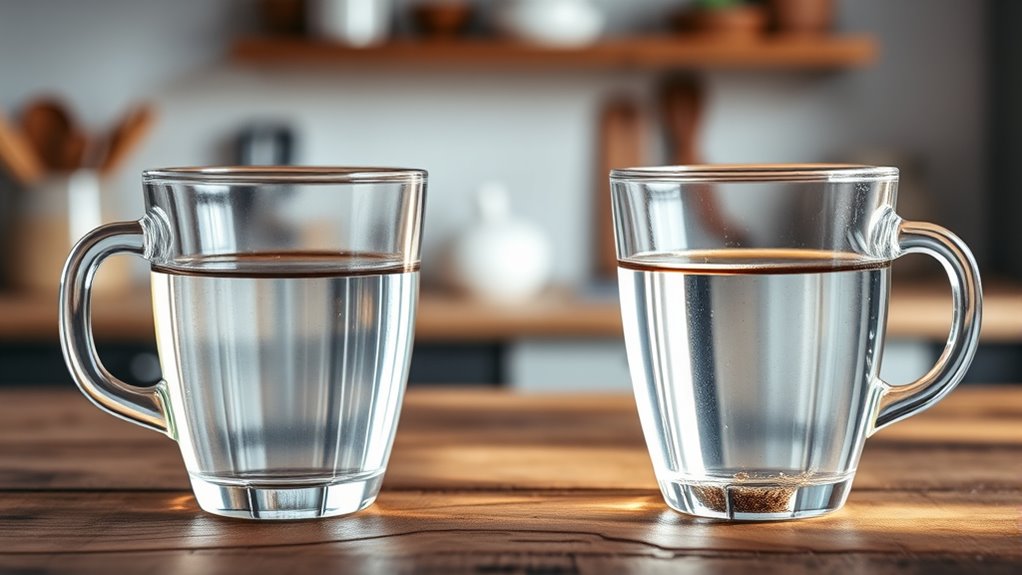

Using filtered water for coffee can make a noticeable difference in taste and your equipment’s lifespan. It removes impurities like chlorine and heavy metals that can cause off-flavors and damage your machine, helping coffee flavors shine. Plus, filtered water can bring out more nuanced notes and improve consistency. If you’re curious about how water quality impacts your brew, exploring further will give you some helpful insights for perfecting your coffee experience.
Key Takeaways
- Filtering water removes impurities and contaminants, enhancing coffee flavor clarity and protecting brewing equipment.
- Tap water quality varies regionally, influencing taste; filtering offers consistency regardless of local water conditions.
- Minerals like calcium and magnesium in water improve flavor complexity, but excess impurities can cause muddiness.
- Proper filtration balances mineral content and purity, ensuring optimal extraction and aroma in brewed coffee.
- For pure, balanced tap water, filtering may be unnecessary; for contaminated or strong-tasting water, filtration makes a significant difference.
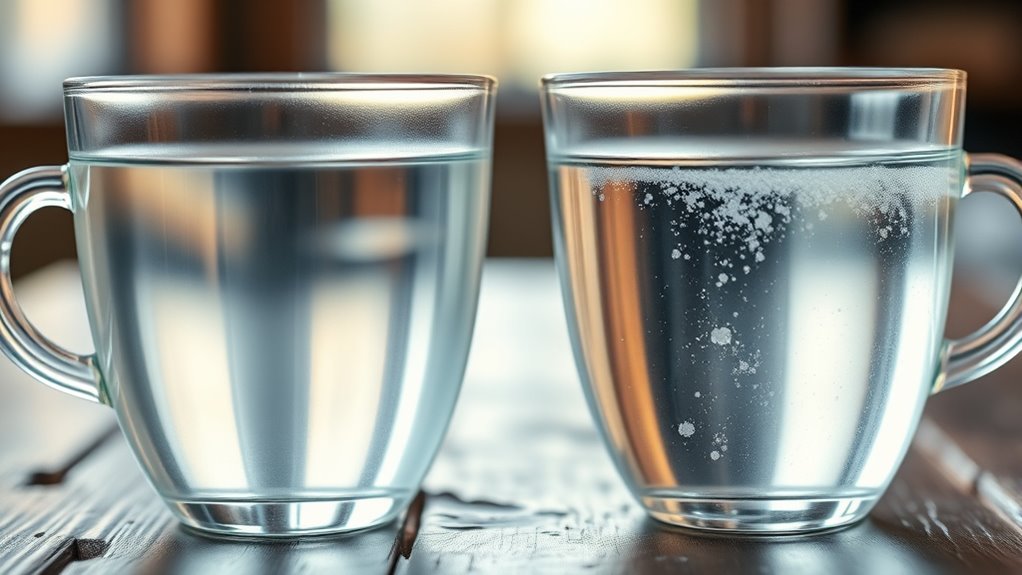
Have you ever wondered whether filtered water is truly better than tap water? When it comes to making your perfect cup of coffee, water quality plays a significant role in flavor and overall experience. The debate often centers around mineral content and water purity. Tap water, depending on where you live, can contain minerals like calcium and magnesium, which influence the taste and can even affect your coffee machine over time. Some minerals are beneficial and contribute to a richer flavor profile, but too many or impurities can muddy the taste.
Filtered water is designed to improve water purity by removing contaminants such as chlorine, chloramine, heavy metals, and other impurities that might be present in tap water. These impurities can lead to off-flavors and even cause mineral buildup in your coffee equipment, reducing its lifespan. By filtering out these substances, you’re left with a cleaner water base that allows the true flavor notes of your coffee beans to shine through. This is especially important if you’re a coffee enthusiast who appreciates clarity and nuance in each cup.
However, it’s worth noting that some filters also reduce beneficial minerals present in water. If the mineral content drops too low, it can result in a flat or dull taste because minerals like calcium and magnesium contribute to the overall flavor complexity. This is why many coffee aficionados prefer water that strikes a balance — clean enough to eliminate unwanted impurities but still containing enough minerals to enhance the coffee’s flavor. Certain water filtration systems are designed to preserve these essential minerals while removing harmful substances, offering an essential blend of mineral content and water purity.
Another factor to consider is consistency. Tap water quality can fluctuate based on location, season, and municipal treatment processes. Using filtered water ensures you get a consistent baseline, which is vital for brewing the same great cup every time. If your tap water has a strong taste of chlorine or unpleasant odors, filtering it becomes even more advantageous. It removes these elements, giving you a neutral, pure water that won’t interfere with your coffee’s aroma and flavor.
Additionally, understanding the role of minerals in water can help you optimize your brewing process and achieve the best flavor profile possible. In the end, whether filtered water or tap water is better for your coffee depends on your local water quality and personal taste preferences. If your tap water is high in impurities or has a strong taste, filtering it can make a noticeable difference. But if your tap water is already pure and balanced, you might not see as much benefit. Either way, understanding the importance of mineral content and water purity can help you make a more informed choice to brew better coffee every time.
Top picks for "water filter coffee"
Open Amazon search results for this keyword.
As an affiliate, we earn on qualifying purchases.
Frequently Asked Questions
Does Water Mineral Content Affect Coffee Flavor More Than Filtration?
Yes, water mineral content has a bigger impact on coffee flavor than filtration alone. The mineral influence, especially calcium and magnesium, affects extraction and enhances or dulls flavor nuances. Filtration can improve water clarity, but it doesn’t change mineral levels. So, if your water has high mineral content, it’s likely to alter your coffee’s flavor more profoundly than whether you use filtered or tap water.
How Does Water Temperature Impact the Effectiveness of Filtration?
Water temperature crucially impacts filtration efficiency. When water is too hot, it can cause filters to break down faster, reducing their ability to remove impurities effectively. Conversely, cooler water enhances filtration, ensuring cleaner water for your coffee. You might think hot water speeds up the process, but in reality, ideal water temperature maintains filter longevity and maximizes its performance, ultimately delivering better-tasting coffee.
Are Certain Types of Filters Better for Coffee Extraction?
Certain filter types do enhance your coffee extraction efficiency more than others. For example, activated charcoal filters remove impurities and chlorine that can negatively affect flavor, while reverse osmosis filters provide pure water that highlights subtle tastes. You should choose a filter based on your water quality and desired flavor profile. Investing in high-quality filters will guarantee a cleaner taste and better extraction, making your coffee experience truly exceptional.
Can Water Quality Influence the Longevity of Coffee Brewing Equipment?
Imagine your coffee machine as a sturdy ship sailing through clear, pure waters. If the water isn’t of good quality, it can cause water corrosion, slowly damaging essential parts. This accelerates equipment wear and demands more maintenance, risking costly repairs or replacements. Using high-quality water helps protect your investment, ensuring your brewing vessel stays in top shape longer, and your coffee remains delicious every time you brew.
Is Filtered or Tap Water Safer for Brewing if I Have Health Concerns?
If you have health concerns, filtered water is safer for brewing because it reduces waterborne pathogens and chemical contaminants. Tap water may contain traces of harmful substances or microbes that could affect your health over time. Using filtered water helps guarantee you’re minimizing exposure to these risks, making your coffee not only taste better but also safer to consume. Always check your filter’s effectiveness to maximize safety.
Conclusion
Choosing between filtered water and tap water for your coffee is like tending a garden—you want the best soil to bring out vibrant blooms. While filtered water often offers a purer taste, tap water can still do the job if it’s clean and fresh. Ultimately, it’s about nurturing your coffee’s flavor, turning each cup into a warm embrace. Whichever you pick, remember, the right water can transform a simple brew into a moment of pure joy.