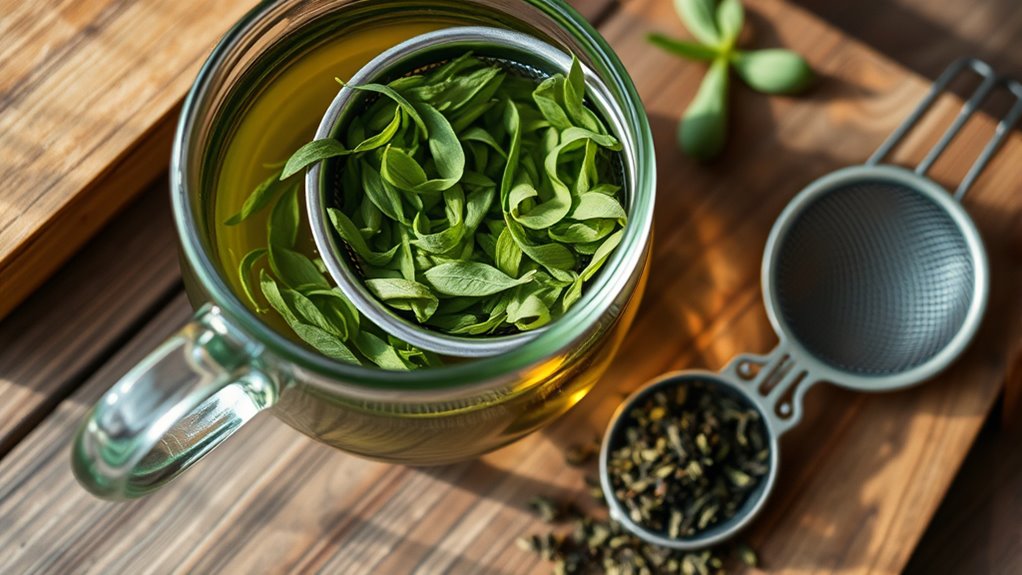

To brew loose leaf tea, start with quality, whole leaves and the right type for your flavor preference. Use a thermometer or temperature-controlled kettle to heat water to the ideal temperature—160-185°F for green and white teas, and 200-212°F for black and oolong. Preheat your teapot or infuser, add the loose leaves, and steep for the recommended time. Paying attention to these tools and tips guarantees a perfect cup every time—keep going to discover more expert advice.
Key Takeaways
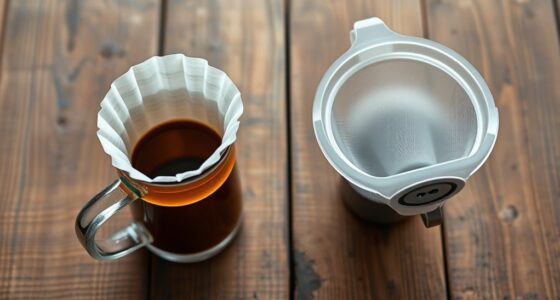
- Use a quality infuser or tea strainer to prevent loose leaves from floating in your cup.
- Preheat your teapot or cup with hot water to maintain optimal brewing temperature.
- Measure the appropriate amount of loose leaf tea based on the type and desired strength.
- Brew at the recommended temperature: 160-185°F for green/white teas and 200-212°F for black/oolong teas.
- Steep for the right duration, typically 2-5 minutes, to avoid bitterness and develop full flavor.
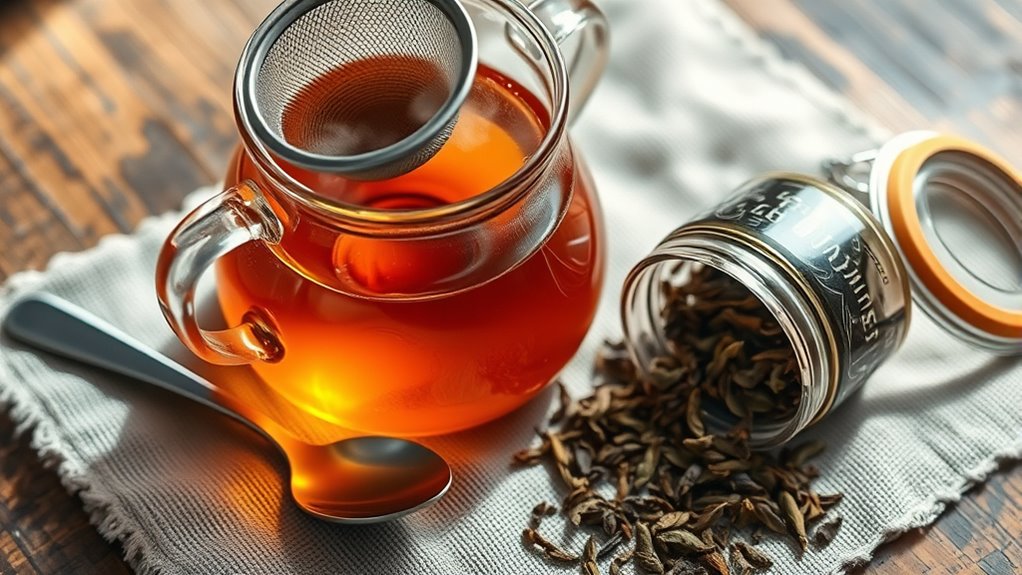
Ever wondered how to get the perfect cup of loose leaf tea? It all starts with choosing the right tea leaf selection. Not all tea leaves are created equal—some are more delicate, others more robust. If you’re aiming for a light, floral brew, opt for green or white teas, which tend to have more tender leaves. For a richer, bolder flavor, black or oolong teas are your best bet. The quality of your tea leaves makes a significant difference in flavor, aroma, and overall experience. Look for whole leaves rather than broken or dust-grade teas, as they retain more flavor and essential oils. Freshness also matters, so try to buy from reputable sources and consume your tea within a reasonable time frame to enjoy its full potential.
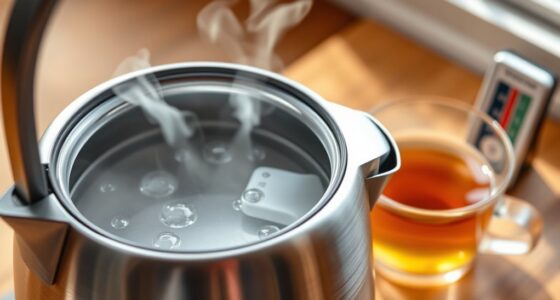
Once you’ve selected your tea leaves, the next vital aspect to contemplate is brewing temperature. Different types of tea require specific temperatures to reveal their best flavors. Green and white teas are delicate and should be brewed at lower temperatures, typically around 160°F to 185°F (70°C to 85°C), to prevent bitterness and preserve their subtle nuances. Black and oolong teas, on the other hand, benefit from higher temperatures—around 200°F to 212°F (93°C to 100°C)—which help extract their full-bodied flavors. Using water that’s too hot for delicate teas can result in a bitter, astringent taste, while insufficient heat for stronger teas may lead to weak infusions. To get it just right, consider using a thermometer or an electric kettle with temperature control. Preheating your teapot or infuser by rinsing it with hot water guarantees your brewing process starts at the ideal temperature, helping you achieve a balanced, flavorful cup. Additionally, understanding the contrast ratio of your teapot or kettle can influence how evenly heat is distributed, impacting the overall brewing outcome.
Paying attention to both tea leaf selection and brewing temperature establishes the foundation for brewing a perfect cup of loose leaf tea. The process is simple but requires mindfulness about these details. When you choose quality leaves and use the correct temperature, you’ll notice a marked improvement in taste, aroma, and overall enjoyment. Remember, patience is key—allow your tea to steep for the appropriate amount of time, usually a few minutes, to let the flavors fully develop without becoming bitter. By mastering these basics, you’ll enjoy a consistently satisfying tea experience every time. Whether you prefer a light green infusion or a robust black brew, paying careful attention to your tea leaf selection and brewing temperature guarantees your loose leaf tea always turns out just right.
Frequently Asked Questions
Can I Reuse Loose Leaf Tea Leaves for Multiple Brews?
Yes, you can reuse loose leaf tea leaves for multiple brews, promoting tea leaf sustainability. Reusing tea leaves allows you to enjoy several infusions from the same leaves, especially with high-quality teas. Keep in mind that each subsequent brew may have a milder flavor, so adjust your steeping time accordingly. Reusing tea leaves is an eco-friendly choice and helps you get the most out of your tea leaves.
How Do I Store Loose Leaf Tea to Maintain Freshness?
Did you know proper tea storage can extend freshness by up to six months? To preserve your loose leaf tea’s flavor, keep it in an airtight container away from light, heat, and moisture. Store it in a cool, dark place to maintain its aroma and taste. Proper tea storage guarantees freshness preservation, so your tea stays vibrant and flavorful with every brew.
What Is the Ideal Water Temperature for Different Teas?
For ideal steeping precision, aim for specific water temperatures for different teas: 195-205°F (90-96°C) for black, 175-185°F (80-85°C) for green, and 195°F (90°C) for oolong. Using the right water temperature guarantees your tea releases its full flavor without bitterness. Invest in a thermometer or kettle with temperature control to help you maintain these exact temperatures, ultimately enhancing your brewing experience.
Do Different Tea Leaves Require Different Steeping Times?
Imagine each tea leaf variety as a musician needing the right moment to perform. Yes, different tea leaves require different steeping durations to access their full flavor. For example, green teas may steep for 2-3 minutes, while black teas might need 3-5 minutes. Adjusting steeping durations guarantees you get the best taste from each tea leaf variety, avoiding bitterness or weak flavors.
Is It Necessary to Rinse Loose Leaf Tea Before Brewing?
No, rinsing loose leaf tea isn’t necessary for every type, but it can be beneficial. Rinsing benefits include removing dust and impurities, especially if your tea isn’t very fresh. If your tea leaf freshness is questionable, a quick rinse helps improve flavor and cleanliness. However, for high-quality, fresh leaves, rinsing might wash away delicate aromas. Decide based on the tea’s origin and your taste preferences.
Conclusion
Now that you’ve mastered the art of brewing loose leaf tea, you hold a secret akin to the alchemists of old—transforming simple leaves into a comforting elixir. With the right tools and tips, each cup becomes a ritual of mindfulness and flavor. So, embrace this ancient craft and let your tea-making journey unfold like a timeless story—rich, warm, and full of endless possibilities. Cheers to your new tea-tasting adventure!