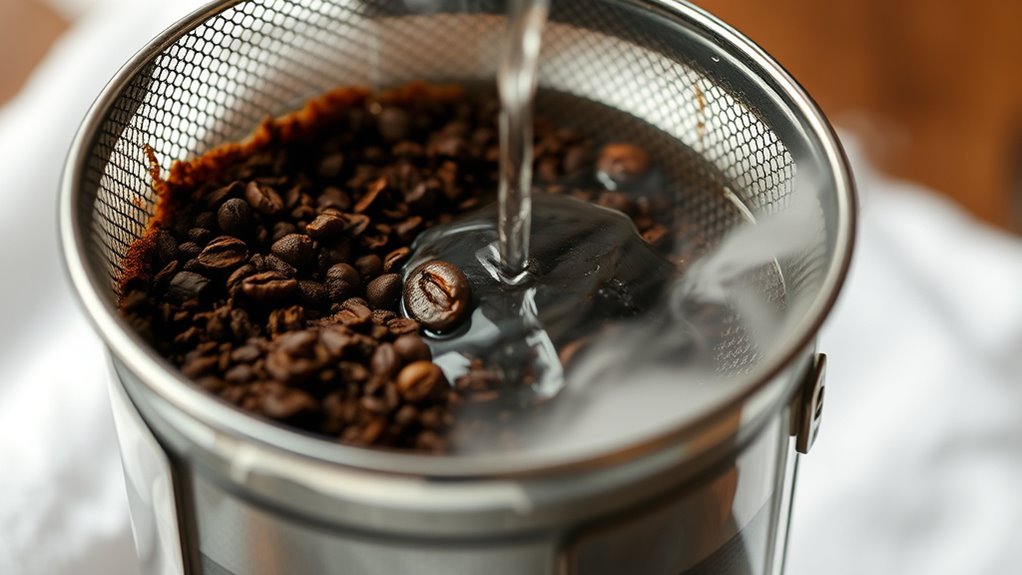

To prevent gritty coffee, you should clean your French press regularly. After each use, disassemble the parts, remove grounds, and rinse everything with warm water. Once a week, wash all components with soap and a soft brush, paying special attention to the mesh filter and crevices. For stubborn stains or oils, fill the carafe with vinegar and water, then rinse thoroughly. Consistent cleaning keeps your coffee tasting fresh and smooth; keep going for more helpful tips.
Key Takeaways
- Disassemble the French press immediately after use and rinse all parts with warm water.
- Wash all components with warm, soapy water using a soft sponge or brush, focusing on the mesh filter.
- For stubborn stains or residue, soak the carafe in a mixture of equal parts vinegar and warm water for 15-30 minutes.
- Gently scrub the interior with a soft sponge or brush after soaking, then rinse thoroughly to remove vinegar smell.
- Regularly inspect and replace the filter mesh to prevent grit and ensure smooth, grit-free coffee.
Cleaning your French press regularly is essential to maintain the best-tasting coffee and guarantee its longevity. Proper maintenance isn’t just about occasional rinsing; it’s about establishing a routine that keeps your device free of residue and buildup. The key is understanding cleaning frequency—how often you should scrub your French press to prevent stubborn coffee oils and grounds from accumulating. Typically, a good rule of thumb is to clean it thoroughly after each use, especially if you brew frequently. This prevents oils from turning rancid and keeps your coffee tasting fresh, vibrant, and free of grit.
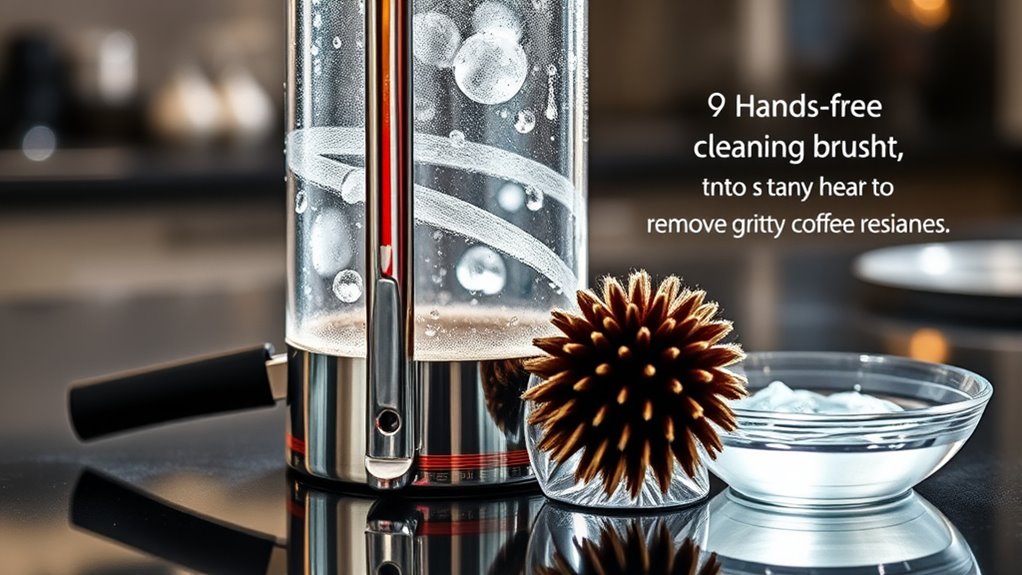
Start by disassembling your French press immediately after pouring your coffee. Remove the plunger and lid, and dump out the used grounds. Rinsing these parts with warm water helps to remove loose grounds and prevents them from drying and sticking. To guarantee proper maintenance, you should perform a deeper clean at least once a week or more often if you’re brewing multiple cups daily. This involves washing all components with warm, soapy water. Use a soft sponge or brush to scrub the mesh filter and the plunger thoroughly, paying special attention to any crevices where coffee oils can hide. Don’t forget to clean the carafe itself, rinsing out any residual oils or particles.
For a more effective clean, especially if your French press has developed a greasy film or stubborn stains, you can use a mixture of vinegar and water. Fill the carafe with equal parts white vinegar and warm water, let it sit for about 15-30 minutes, then scrub gently and rinse thoroughly. This helps break down oils and mineral deposits, restoring the French press’s performance and flavor quality. Additionally, being aware of the effects of mineral buildup from hard water can help you choose the right cleaning method, which is especially important in maintaining equipment longevity. Regularly inspecting the filter mesh and replacing it when it shows signs of wear keeps your French press functioning properly and prevents grounds from slipping through.
Maintaining a cleaning schedule tailored to your usage ensures your French press remains in prime condition. Proper maintenance involves more than just rinsing; it’s about establishing a consistent cleaning frequency that prevents buildup before it becomes a problem. By doing so, you prolong the life of your French press and enjoy consistently delicious, grit-free coffee every morning. Remember, a little effort after each use saves you from more intensive scrubbing later and keeps your coffee tasting just as fresh as the first brew.
Frequently Asked Questions
Can I Use Vinegar to Clean My French Press?
Yes, you can use vinegar cleaning for your French press as part of regular maintenance. Vinegar effectively dissolves stubborn coffee oils and mineral buildup, ensuring your French press stays fresh. To do this, fill your press with equal parts water and vinegar, let it sit for a few minutes, then scrub and rinse thoroughly. This simple French press maintenance method keeps your coffee tasting great and prevents gritty residues.
How Often Should I Replace the French Press Filter?
Did you know that replacing your French press filter every 3 to 6 months can markedly improve your coffee’s taste? You should follow a regular cleaning schedule and inspect the filter for wear or clogging. If it’s frayed, damaged, or no longer effective at filtering grounds, it’s time for a replacement. Keeping your filter in good shape ensures smooth brewing and great-tasting coffee every time.
Is It Safe to Put the French Press in the Dishwasher?
Yes, it’s generally safe to put your French press in the dishwasher, but check the manufacturer’s dishwasher safety instructions first. To avoid damage, remove the plunger and filter before washing. If you prefer cleaning alternatives, hand wash with warm, soapy water and a brush, ensuring all coffee residues are gone. Regular dishwasher cleaning can save time, but hand washing might extend the life of delicate parts.
What Alternative Cleaning Methods Prevent Coffee Oil Buildup?
To prevent coffee oil buildup, you should regularly clean your French press with warm water and a small amount of dish soap. Use a cleaning brush to scrub all parts, especially the plunger and filter screens, to remove residual oils. Rinse thoroughly to eliminate any soap. For stubborn oils, soak the parts in a mixture of vinegar and water before scrubbing with your cleaning brush, ensuring your French press stays fresh and clean.
Can I Use Baking Soda to Remove Stubborn Stains?
Yes, you can use baking soda to remove stubborn stains from your French press. Simply create a paste with baking soda and water, then apply it to the stained areas. Let it sit for a few minutes before scrubbing gently. If you prefer, try baking soda alternatives like vinegar or lemon juice for stain removal techniques. These options effectively break down stubborn stains without damaging your glass or metal parts.
Conclusion
Now that you know how to clean your French press properly, you’ll enjoy every cup without the gritty residue. Regular cleaning not only improves the taste but also extends your press’s lifespan. Isn’t it worth taking a few extra minutes to make sure your coffee stays smooth and flavorful? Keep your French press spotless, and each brew will be just as delightful as the first. Cheers to cleaner, better-tasting coffee every time!