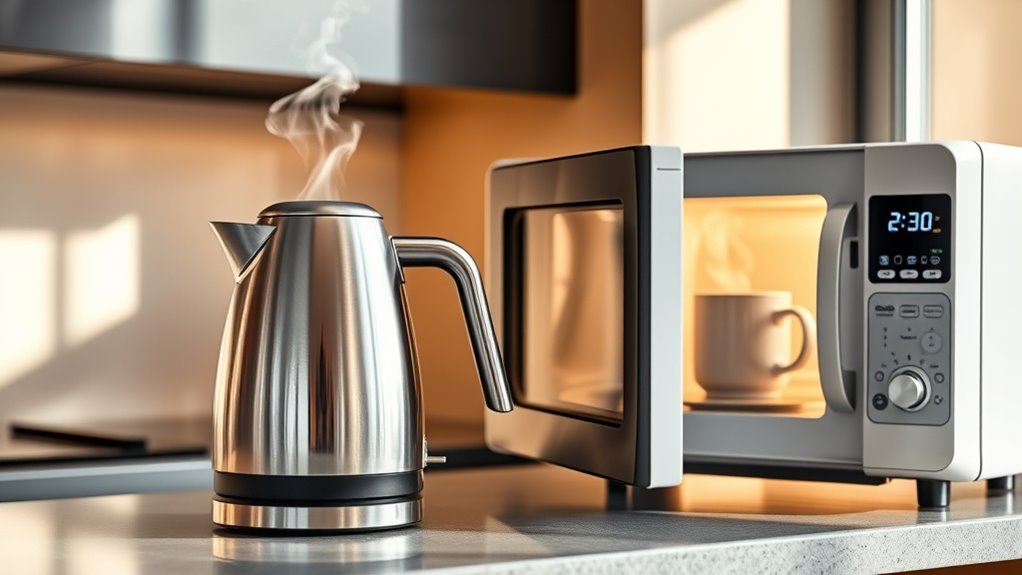
For boiling water for tea, an electric kettle is usually the best choice because it heats water faster, offers precise temperature control, and guarantees more even heating. This helps you achieve ideal brewing conditions for different teas. Microwaves can do the job in a pinch but may lead to uneven or over-heated water, affecting flavor. Keep exploring to discover which method suits your tea-making style best.
Key Takeaways
- Electric kettles heat water faster and more efficiently than microwaves, saving time and energy.
- Adjustable temperature settings in kettles ensure optimal brewing temperatures for different teas.
- Electric kettles provide more consistent and even heating, enhancing tea flavor and aroma.
- They are easier to clean and often include water filters, improving water quality for better tea.
- Microwaves lack precise temperature control and can cause uneven heating, risking over or under-brewing tea.
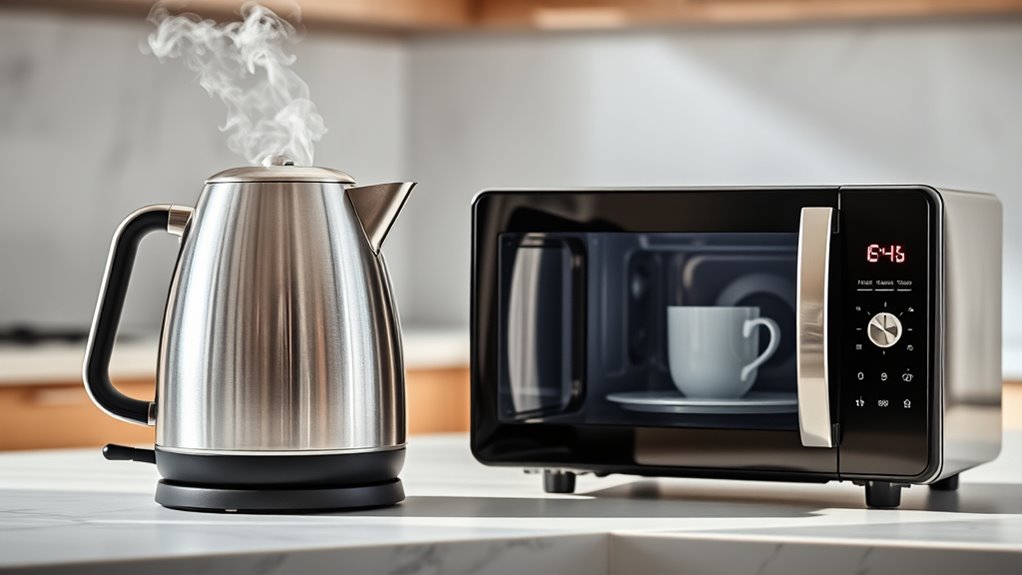
Have you ever wondered whether an electric kettle or a microwave is better for boiling water? When it comes to preparing tea, this choice can impact not only the brewing process but also the quality of the water you use. An electric kettle is designed specifically for boiling water efficiently and consistently, making it a popular choice among tea lovers. Its rapid heating element heats water quickly, ensuring you get the right temperature for different types of tea. Plus, many electric kettles come with features like temperature control, which allows you to set the ideal temperature for delicate green teas or robust black teas. This precision helps you achieve ideal tea brewing, extracting the best flavors and aromas.
On the other hand, microwaves are versatile appliances that can boil water in a pinch, especially if you’re already using it for other tasks. However, their method of heating is less uniform, which can sometimes result in uneven boiling. When you’re boiling water in a microwave, it’s harder to control the temperature accurately, so you might end up with water that’s either too hot or not hot enough. This inconsistency can affect your tea brewing process, leading to less-than-perfect cups. Furthermore, microwaves don’t typically offer features like temperature control, so you rely on guesswork, which might compromise the quality of your tea.
Water purification is another aspect to take into account. Both appliances boil water effectively, but the purity of your water depends more on the source than the device. Using filtered or purified water is essential to enhance your tea brewing experience because it removes impurities that can alter flavor. An electric kettle often has a wide opening, making it easier to clean and remove mineral deposits that can build up over time, especially if you have hard water. Some models even come with built-in filters, further improving water quality before boiling. Additionally, water quality plays a crucial role in the overall taste and aroma of your tea, so paying attention to your water source is important. Microwaves don’t have any filtration features, so you need to ensure your water source is clean before boiling in either device.
Top picks for "electric kettle microwave"
Open Amazon search results for this keyword.
As an affiliate, we earn on qualifying purchases.
Frequently Asked Questions
Which Method Preserves the Most Flavor in Tea?
Boiling water in an electric kettle preserves the most flavor during tea extraction. It heats water evenly at the right temperature, ensuring ideal flavor release. Microwaves can create uneven heating, which may affect flavor and lead to over-extraction. For the best flavor preservation, use an electric kettle to control water temperature precisely and enhance tea extraction, resulting in a richer, more aromatic cup.
Are There Safety Concerns With Using a Microwave for Boiling Water?
Using a microwave to boil water can pose safety concerns, as microwave radiation heats water unevenly, increasing the risk of water superheating. Superheated water can suddenly erupt when disturbed, causing burns. About 37% of microwave users experience this phenomenon, making it a real safety risk. To stay safe, avoid overheating water, use microwave-safe containers, and let the water sit a moment before removing it.
How Energy-Efficient Is Each Method for Daily Use?
Electric kettles are generally more energy-efficient for daily use because they heat water faster and directly transfer energy to the water, reducing waste. Microwaves tend to have higher energy consumption since they heat unevenly and waste energy in the process. If you prioritize cost efficiency and want to save on energy, using an electric kettle is your best choice for boiling water regularly.
Can Using a Microwave Affect the Mineral Content of Water?
Think of your water as a delicate song, and the microwave as a silent conductor. Using a microwave doesn’t alter water mineralization or affect microwave safety, so your water’s essential minerals stay intact. But, be cautious: uneven heating might cause superheating, so always use microwave-safe containers. Rest assured, your water’s mineral content remains steady, and your microwave remains safe, ensuring your tea’s harmony stays perfect every time.
Which Option Is Faster for Boiling Small Quantities of Water?
If you need to boil small quantities of water quickly, a microwave usually offers a faster speed comparison than an electric kettle. The microwave heats water directly and rapidly, making it more convenient for quick tasks. However, if you prefer consistent temperature control and ease of pouring, an electric kettle might be more practical, even if it takes slightly longer. Consider your convenience factor and time priorities when choosing between the two.
Conclusion
When it comes to boiling water for tea, your choice depends on your priorities. An electric kettle heats quickly and offers precise control, creating a cozy, bubbling scene perfect for a relaxing morning. Meanwhile, a microwave is convenient, silently transforming water in an instant, like a fleeting moment of calm. Both serve their purpose, but whether you prefer the warm, inviting glow of a kettle or the quick, discreet hum of a microwave, the best way is the one that fits your routine.