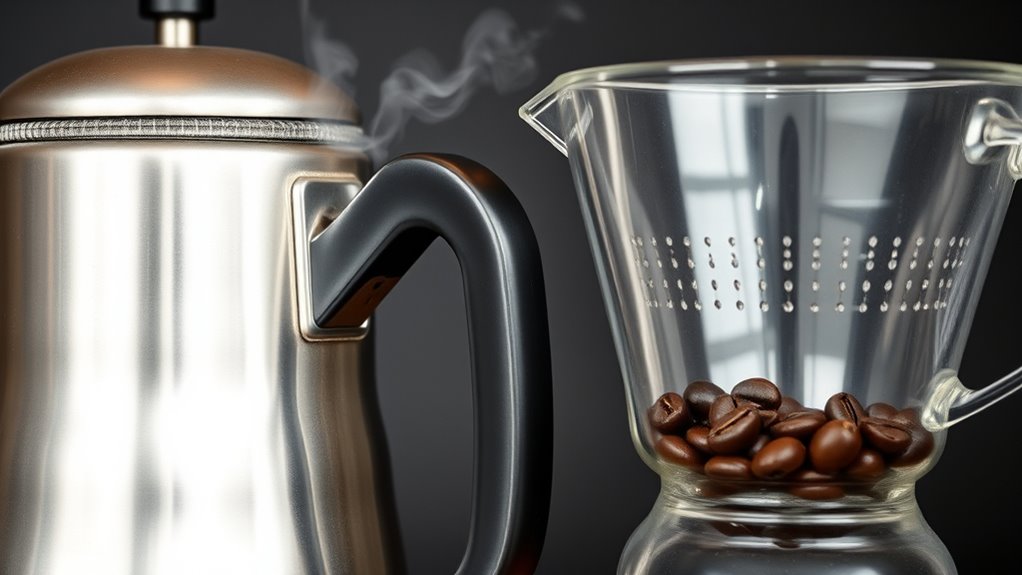
If you’re choosing between a percolator and a drip coffee maker, think about your taste and lifestyle. A percolator offers a bold, full-bodied flavor with a rich, intense brew that’s perfect if you love a strong cup and don’t mind a bit more attention during brewing. On the other hand, a drip machine gives you a cleaner, balanced flavor with quick, automated convenience for busy mornings. Keep exploring to find out which method suits your preferences best.
Key Takeaways
- Percolators deliver a bold, full-bodied flavor through repeated boiling, while drip machines produce a clean, balanced taste with controlled extraction.
- Drip coffee makers offer faster, more efficient brewing with minimal attention, whereas percolators require more manual oversight and longer cycles.
- Percolators tend to over-extract, potentially causing bitterness, unlike drip brewers that maintain color accuracy and nuanced notes.
- Modern drip machines often include programmable features for convenience, contrasting with the traditional, manual process of percolators.
- The choice depends on preferences: bold, intense flavor and traditional method versus quick, consistent, and smooth coffee.

Are you torn between choosing a percolator or a drip coffee maker for your morning brew? Both options have their loyal fans, but understanding how each impacts your coffee experience can help you make the right choice. When it comes to coffee flavor, a percolator often excels at delivering a robust, full-bodied taste. Because it cycles boiling water through the coffee grounds multiple times, it extracts a rich, intense flavor profile that many coffee lovers find satisfying. However, this repeated brewing process can sometimes lead to over-extraction if not carefully monitored, resulting in a slightly bitter or burnt taste. On the other hand, a drip coffee maker typically produces a cleaner, more balanced flavor. It uses a steady, controlled flow of hot water over the grounds, allowing for a more consistent extraction that preserves the nuanced notes of high-quality coffee beans. If you prefer a smoother, more delicate taste, a drip machine might be your best bet. Additionally, the consistency of the water flow in drip coffee makers helps maintain optimal color accuracy, ensuring each cup is brewed with precision. Brewing efficiency is another key aspect to take into account. Percolators tend to take longer to brew because the process involves boiling water multiple times and cycling it through the grounds repeatedly. While this method can be satisfying because it often produces a strong, hot cup quickly, it’s not the fastest option available. The percolator’s design also requires more attention during brewing to avoid over-extraction, which can be a downside if you’re rushing in the mornings. Conversely, drip coffee makers are generally more efficient in terms of time and ease. They heat water quickly, and the brewing process is largely automated—just add your grounds, turn it on, and wait a few minutes. Many modern drip machines even have programmable features that let you wake up to freshly brewed coffee, making them highly convenient for busy schedules. Ultimately, your choice depends on what you prioritize more: flavor richness or brewing speed and convenience. If you value a bold, intense coffee and don’t mind a slightly longer brewing process, a percolator might be your preferred device. But if you want a quick, straightforward way to enjoy a clean, well-balanced cup with minimal fuss, a drip coffee maker is likely the better option. Both brewing methods have stood the test of time, each offering distinctive benefits. Think about your taste preferences and daily routine, and you’ll find the perfect match for your morning ritual.

Presto 02811 Stainless Steel Electric Coffee Percolator – 12-Cups, Easy-Pour Spout, Stay-Cool Handle, Make 2-12 Cups
RAPID BREWING: Our coffee percolator is designed to brew exceptional coffee, hot and rich, as fast as a…
As an affiliate, we earn on qualifying purchases.
As an affiliate, we earn on qualifying purchases.
Frequently Asked Questions
Which Brewing Method Is More Energy-Efficient?
You’ll find that drip coffee makers are generally more energy-efficient than percolators, thanks to their quicker brewing times and lower energy consumption. Using a drip machine consumes less electricity, making it a better choice for sustainability-conscious people. Plus, modern drip coffee makers often have energy-saving features like auto-shutoff. So, if you’re looking to reduce your energy footprint, opting for a drip coffee machine is the smarter, more eco-friendly option.
How Do Brewing Times Compare Between Percolator and Drip?
You’ll find that percolators typically take longer—around 7 to 15 minutes—due to their continuous brewing process, while drip coffee usually finishes in 5 to 10 minutes, thanks to its straightforward extraction. The difference in brew time—extraction duration—means you get your caffeine fix faster with drip, but a percolator offers a more intense, if prolonged, flavor. So, pick your pace: quick sip or slow savor.
Can Both Methods Be Used for Specialty Coffee Beans?
Yes, you can use both methods for specialty coffee beans. The key is adjusting brewing parameters to optimize bean quality and flavor extraction. For percolators, control brewing time and temperature to prevent over-extraction, preserving delicate flavors. With drip coffee, use a precise grind and proper water temperature to highlight bean nuances. Both methods can produce excellent specialty coffee, as long as you focus on maximizing flavor extraction.
Which Method Is Better for Making Large Quantities Quickly?
If you’re aiming for efficiency, drip coffee is your best bet for making large batches quickly. Its brewing speed and batch size make it ideal when you need a swift, consistent brew for many cups. Percolators, on the other hand, are more suited for smaller, leisurely brews. So, for speed and bigger servings, go with drip coffee; it’s the more practical choice for busy mornings or gatherings.
How Does Maintenance Differ Between Percolators and Drip Machines?
You’ll find that maintenance differs between percolators and drip machines mainly in cleaning routines and part replacement. Percolators often require more frequent cleaning of the basket and tube to prevent buildup, and parts like the gasket may need replacement over time. Drip machines typically need regular cleaning of the filter basket and carafe, with fewer parts to replace. Staying on top of these tasks keeps your coffee tasting great and your machine lasting longer.

BLACK+DECKER 12-Cup Digital Coffee Maker, Programmable, Washable Basket Filter, Sneak-A-Cup, Auto Brew, Water Window, Keep Hot Plate, Black
12-CUP DURALIFE GLASS CARAFE: The sturdy 12-cup* carafe has measurement markings for accurate filling and an easy-grip handle…
As an affiliate, we earn on qualifying purchases.
As an affiliate, we earn on qualifying purchases.
Conclusion
Whether you prefer the rich, bold flavor of a percolator or the clean, convenient brew of a drip coffee maker, both have their charm. Did you know that drip coffee accounts for about 75% of all coffee consumed in the U.S.? So, while modern methods dominate, exploring a percolator can reconnect you with a classic, nostalgic experience. Ultimately, choose what suits your taste and lifestyle—both methods brew great coffee, after all.

Primula Today Aluminum Stove Top Percolator Maker Durable, Brew Coffee On Stovetop, 9 Cup, Silver
Note: 1)Too coarse a grind, too little coffee, or insufficiently tamping the grounds before brewing can all lead…
As an affiliate, we earn on qualifying purchases.
As an affiliate, we earn on qualifying purchases.
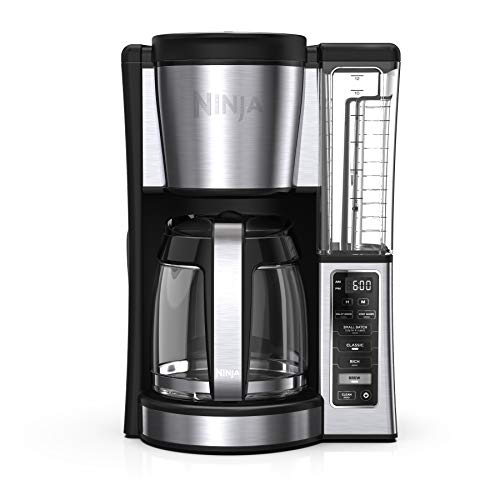
Ninja 12-Cup Programmable Coffee Brewer, 2 Brew Styles, Adjustable Warm Plate, 60oz Water Reservoir, Delay Brew – Black/Stainless Steel
2 BREW STYLES: Classic or Rich, each brew is flavorful and never bitter with custom brew strengths.
As an affiliate, we earn on qualifying purchases.
As an affiliate, we earn on qualifying purchases.