If you prefer a bright, clean cup with delicate flavors and enjoy taking your time, pour-over suits you best. It’s ideal if you’re detail-oriented and want control over each step, but it requires more effort and longer brewing. On the other hand, if you want a richer, fuller-bodied brew with less fuss, the French press is quick and simple to use. To find out which method matches your taste and lifestyle, explore the details below.
Key Takeaways
- Pour-over offers a cleaner, brighter flavor ideal for highlighting subtle, origin-specific notes, while French press produces a rich, full-bodied cup.
- Pour-over requires more time, attention, and precise control, making it suitable for enthusiasts seeking nuanced flavors; French press is quicker and simpler.
- Use pour-over if you prefer delicate aromas and clarity; choose French press for bold, robust, and thicker textures.
- Pour-over involves careful filtering and temperature management; French press emphasizes ease with minimal setup and quick cleanup.
- Your choice depends on flavor preferences—light and aromatic versus deep and full-bodied—and how much time and effort you want to invest.
Brewing Process and Equipment
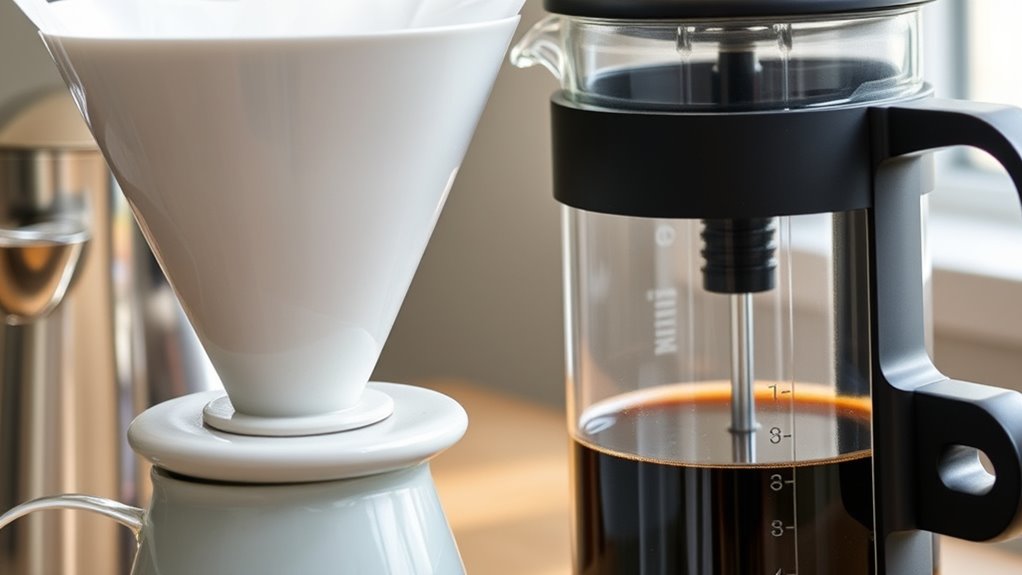
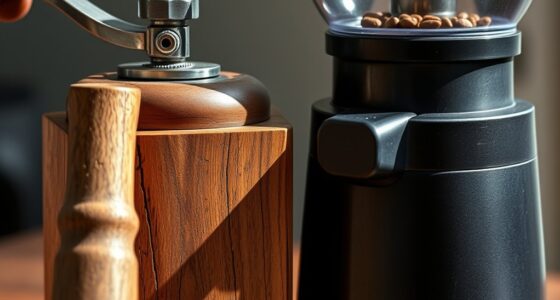
When comparing pour-over and French press brewing, understanding their equipment and processes is essential. For pour-over, you’ll need a good coffee grinder to achieve the right grind size—medium to medium-fine works best. You also control water temperature, ideally just off the boil, around 200°F, to extract the best flavors. The process involves pouring hot water slowly over coffee grounds in a cone-shaped dripper, allowing the coffee to drip directly into your cup. In contrast, a French press uses a metal or mesh plunger and a cylindrical vessel. You grind your beans coarsely and pour hot water—again, near boiling—over them. After steeping for several minutes, you press the plunger down to separate grounds from liquid. Both methods demand specific equipment and precise water temperature control for the most favorable results, and using proper equipment can significantly improve your brewing consistency.
Flavor Profiles and Textures
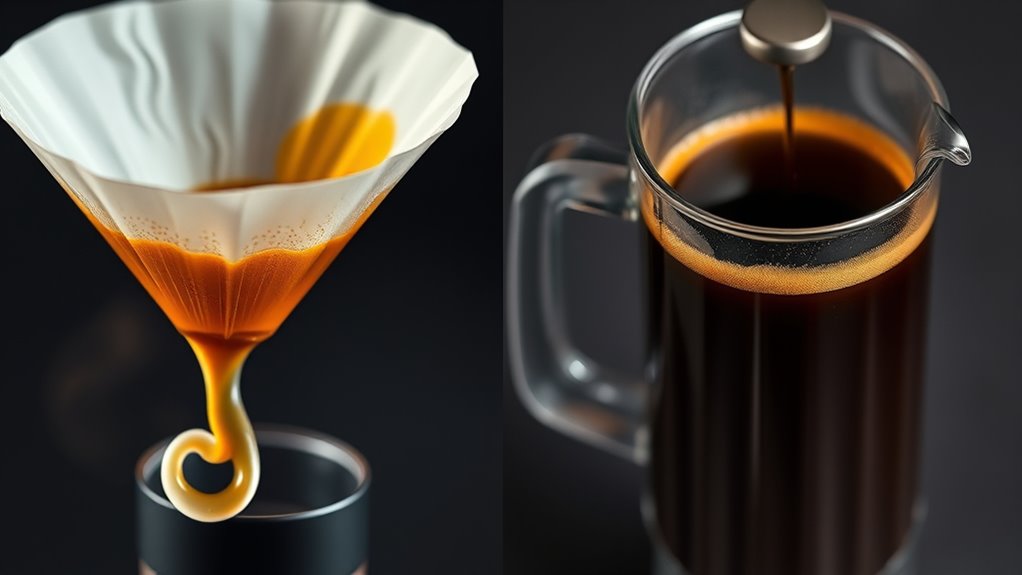
The brewing method you choose considerably influences the coffee’s flavor profile and texture. With pour-over, you’ll notice a cleaner, brighter taste, highlighting subtle notes and delicate aromas thanks to precise control over extraction. This method tends to preserve the coffee’s natural aroma, offering a nuanced flavor experience. French press, on the other hand, produces a richer, more robust cup with a fuller body and intense coffee strength. Its metal filter allows oils and fine particles to remain, creating a thicker texture and enhanced mouthfeel. If you prefer a lighter, more aromatic brew, pour-over is ideal. For a bolder, fuller flavor with a heavier texture, French press excels. Your choice directly impacts the sensory qualities and overall enjoyment of your coffee.
Ease of Use and Maintenance

Pour-over coffee requires a bit more attention to detail, but it’s generally straightforward to set up and use. You’ll need to adjust your grind size to ensure proper extraction, and maintaining consistent brewing temperature is key for good flavor. Proper color accuracy in your brewing process can also influence the final taste profile. Additionally, controlling brewing temperature helps optimize flavor extraction and prevent over-extraction or under-extraction. Exploring AI-driven solutions can further enhance your brewing precision and consistency. Cleanup involves rinsing the dripper and discarding paper filters or cleaning reusable ones. Using professional equipment is essential for quality recordings. French presses are simpler: just add coffee, hot water, and press down, with minimal setup. Maintenance is quick—just rinse the plunger and carafe. Here’s a quick comparison:
- Pour-over: precise grind size, careful temperature control, filter cleaning
- French press: easy cleanup, no filters needed, fewer parts to maintain
- Both methods require regular cleaning to prevent buildup
- Ease of use depends on your familiarity with brewing techniques
Time Investment and Convenience

While pour-over coffee offers a more hands-on brewing process that can take several minutes, it allows you to control each step for ideal flavor, which may add to your overall time commitment. You choose the grind size carefully, and the brewing duration varies depending on your technique. This method requires patience but rewards you with precision. In contrast, a French press is quicker, often ready in a few minutes, with minimal fuss. Additionally, the brewing process for each method impacts the overall convenience and time required. For example, some enthusiasts opt for tuning enhancements to optimize their vehicle’s performance, which can be a detailed process requiring additional time and effort.
Ideal Coffee Types and Personal Preferences
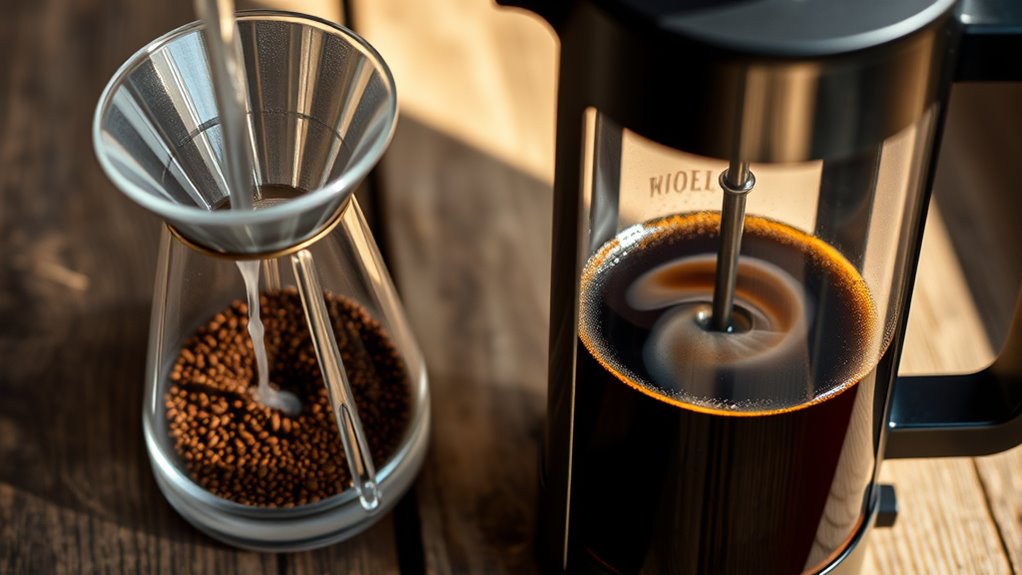
Your choice of brewing method can considerably influence the type of coffee that best suits your taste. For example, if you prefer bright, nuanced flavors, you might enjoy pour-over coffee made from beans with a specific origin, like Ethiopian or Colombian. On the other hand, if you like a richer, fuller body, a French Press with coarser grind size and bold beans may be your best option. Consider these factors:
Choose brewing methods that highlight your favorite flavors, from bright and nuanced to rich and full-bodied.
- Coffee bean origin, which affects flavor profile and acidity
- Grind size, essential for proper extraction and taste
- Brewing time, influencing brightness or body
- Personal flavor preferences, from light and fruity to deep and robust
- Understanding brewing techniques can help you refine your process and achieve your desired flavor profile. Additionally, experimenting with different brewing parameters can further enhance your coffee experience. Exploring tasting notes can also assist you in identifying the subtle distinctions between various brewing methods and beans. Incorporating brewing equipment into your routine can also make a significant difference in the consistency and quality of your coffee. Paying attention to water quality is equally important, as it impacts extraction and overall flavor.
Frequently Asked Questions
Which Method Yields the Most Consistent Brew Quality?
You’ll find that the pour-over method yields the most consistent brew quality because it relies on precise control of grind size and brew time. Using a medium-fine grind and carefully regulating pour pace guarantees steady extraction. In contrast, French press can vary due to steeping time and coarser grind. So, if consistency matters most, pour-over gives you better control over these factors, resulting in a more predictable, high-quality cup every time.
How Do Environmental Factors Affect Each Brewing Method?
Imagine brewing coffee on a chilly morning; your water temperature drops, affecting flavor extraction for both methods. In a drafty environment, pour-over’s precise control suffers, leading to inconsistent results. Similarly, a French press in a humid room may cause the grounds to clump. Environmental factors like water temperature and brewing environment play a vital role, impacting extraction and flavor, so adapt your setup to maintain ideal conditions for each method.
Can These Methods Be Adapted for Travel or Outdoor Use?
You can definitely adapt pour-over and French press methods for travel and outdoor use. Portable brewing options like collapsible pour-over drippers or compact French presses make outdoor compatibility easy. Just pack lightweight, durable gear, and you’re set for hiking, camping, or travel. Both methods allow you to enjoy fresh coffee anywhere, as long as you have hot water and space for your equipment. It’s all about choosing the right portable gear for your adventure.
Are There Health Considerations Associated With Each Method?
You should consider the health impact of each method, as they influence caffeine extraction differently. Pour-over brewing allows for precise control, resulting in a cleaner cup with potentially lower caffeine levels, which benefits sensitive individuals. French press extraction tends to produce a richer, more robust flavor with higher caffeine content. If you’re mindful of caffeine intake or acidity, choosing one over the other can help manage your health preferences effectively.
How Do Cost and Durability Compare Over Time?
You’ll find that pour-over setups generally have a higher initial cost but tend to be more durable with proper care, making them cost-effective over time. French presses usually cost less upfront but may require replacement sooner due to wear or breakage. A durability analysis shows both can last years if handled carefully, but pour-over gear often withstands daily use longer, giving you better value for your investment.
Conclusion
Choosing between pour-over and French press is like picking your favorite song—you’ll enjoy the one that resonates with your taste and lifestyle. If you prefer a clean, bright cup and enjoy the ritual, pour-over might be your perfect match. But if you crave richness and a full-bodied experience, the French press delivers. Consider your time, ease, and flavor preferences to find your ideal brewing partner—after all, the right method makes every cup a personal masterpiece.