Having both a tea kettle and a teapot is ideal for a great tea experience. The kettle quickly heats water to the perfect temperature, while the teapot allows for proper steeping to bring out the full flavor. If you want convenience and richer taste, using both tools makes a noticeable difference. Want to discover more tips on how each enhances your tea routine? Keep exploring to get the full picture.
Key Takeaways
- A kettle quickly boils water, while a teapot is used for steeping tea, serving different purposes in tea preparation.
- Having both ensures efficient water heating and optimal tea brewing for better flavor.
- Kettles prioritize rapid heating and convenience; teapots enhance flavor extraction and presentation.
- You can brew tea with just a kettle, but a teapot improves the traditional experience and tea quality.
- Whether you need both depends on your tea habits, preferences, and desire for efficiency versus tradition.
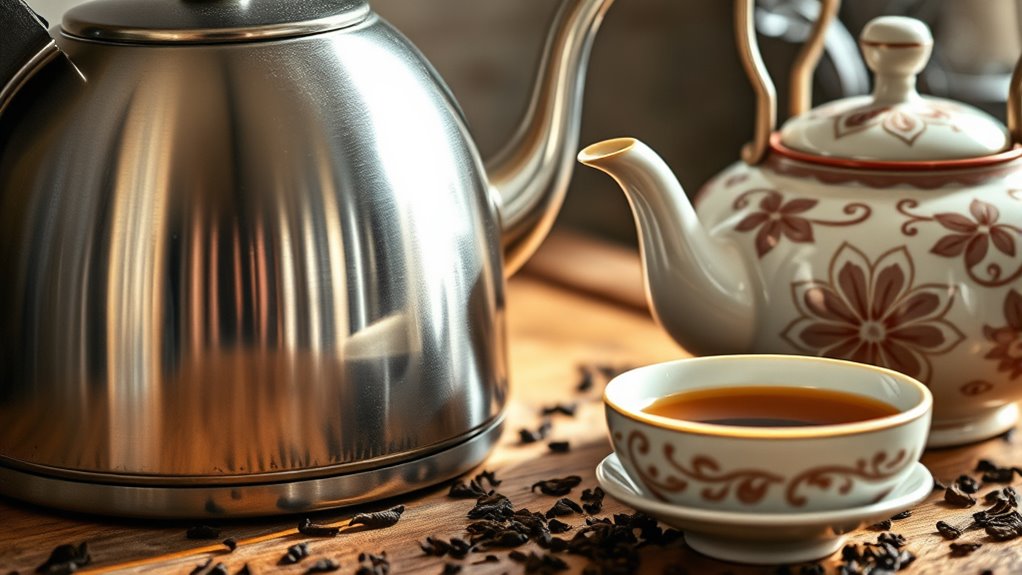
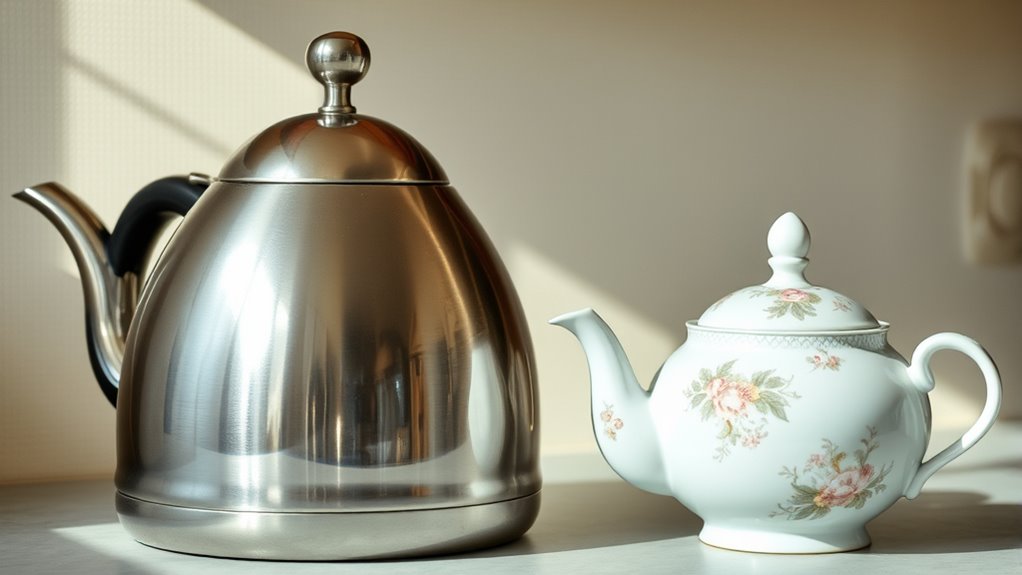
Ever wondered what sets a tea kettle apart from a teapot? The answer lies in their roles within your kitchen essentials and how they influence your tea brewing experience. Both are essential, but they serve different functions that can impact how you prepare and enjoy your favorite teas. A tea kettle is primarily designed for boiling water, making it an indispensable tool for tea brewing. Its main job is to quickly and efficiently heat water to the right temperature, whether on the stovetop or with an electric base. This makes the kettle a must-have in any kitchen, especially if you enjoy multiple cups of tea throughout the day. Its design focuses on rapid heating, durability, and ease of pouring, so you can quickly get your hot water ready without hassle. When selecting a tea kettle, consider factors like material—stainless steel, glass, or cast iron—as they affect heat retention and ease of cleaning. Electric kettles often come with temperature controls, giving you precise control over water temperature, which is key for different types of teas. In contrast, a teapot is more about the actual brewing process. It’s where you steep your tea leaves or tea bags after boiling the water with your kettle. Teapots come in a variety of styles—ceramic, glass, cast iron—and are designed to enhance the tea brewing process by maintaining the right temperature for the steeping period. They often feature a built-in infuser or strainer, making it easy to brew loose leaf teas without messy leaves floating around. A teapot is also a centerpiece for serving, adding aesthetic appeal and tradition to your tea ritual. While a kettle focuses on getting the water hot, a teapot’s role is to optimize the flavor extraction during steeping. You might find that having both makes your tea experience more enjoyable and efficient. The material of the teapot can influence how well it retains heat and affects the flavor of the tea. You might find that having both makes your tea experience more enjoyable and efficient. The kettle quickly provides hot water, and the teapot allows you to steep your tea perfectly, preserving its aroma and flavor. If you’re serious about tea brewing, these kitchen essentials complement each other perfectly. You don’t necessarily need both, but they work hand-in-hand to elevate your tea ritual. Without a kettle, boiling water can be slow and inconvenient, especially if you’re in a hurry. Without a teapot, you might sacrifice the full flavor profile of certain teas or lose the traditional charm of brewing. Ultimately, understanding their differences helps you decide whether to invest in one or both, enhancing your overall tea experience and making your kitchen more functional.
Top picks for "kettle teapot need"
Open Amazon search results for this keyword.
As an affiliate, we earn on qualifying purchases.
Frequently Asked Questions
Can a Teapot Be Used on the Stove?
Yes, you can use a teapot on the stove if it’s stove-compatible and made from durable materials like cast iron or stainless steel. Check the bottom for any markings indicating stove compatibility, as some teapots are designed specifically for stovetop use. Using a stove-safe teapot guarantees it withstands heat without damage, making it a versatile option for brewing and serving tea directly from the stove.
What Materials Are Best for Tea Kettles and Teapots?
You want the absolute best, right? For tea kettles and teapots, stainless steel is unbeatable—it’s durable, resists rust, and heats evenly. Cast iron is legendary for heat retention and durability, perfect for slow, flavorful brewing. Glass is elegant and lets you watch your tea brew, but it’s less durable. Consider your durability needs and style preferences to choose the perfect material—your tea experience depends on it!
How Do I Clean a Stained Teapot?
To clean stains from your teapot, start by filling it with equal parts vinegar and water, then bring it to a boil. Let it sit for 15-20 minutes to loosen stains, then scrub gently with a soft brush or cloth. For stubborn spots, sprinkle baking soda inside and scrub again. Regular teapot maintenance helps prevent stains and keeps your teapot looking and functioning like new.
Are Electric Kettles Faster Than Stovetop Ones?
Ever wondered if electric kettles are faster than stovetop ones? They definitely are, thanks to their electric kettle speed, which heats water quickly with consistent temperature control. Stovetop kettle efficiency depends on your stove and kettle material, but electric models often boil water faster overall. So, if speed matters, an electric kettle is your best bet. Wouldn’t you prefer the convenience of quick, hot water at your fingertips?
Is a Teapot Suitable for Brewing Herbal Infusions?
A teapot is perfect for brewing herbal infusions because it allows you to steep herbs directly, enhancing flavor and aroma. Compared to a teapot vs infuser, many teapots come with built-in infusers, making it easier to enjoy herbal infusion benefits without loose herbs floating around. Plus, a teapot helps maintain the right temperature, ensuring your herbal infusions are flavorful and full of health benefits.
Conclusion
In the end, whether you need both a tea kettle and teapot depends on your tea ritual. Just like a trusty steed in a knight’s arsenal, each tool has its purpose. A kettle heats your water swiftly, while a teapot lets your tea steep to perfection. Embrace the harmony of both, and your tea experience will be as delightful as a Victorian afternoon. So, don’t be a simpleton—equip yourself wisely for a true tea lover’s journey.