TL;DR
A growing number of bars are offering guided, multi-course cocktail tastings inspired by omakase, a format that has become familiar at sushi restaurants. Examples range from a $55 New York menu to a roughly $100 Manhattan experience, but demand and the format’s staying power remain unclear.
Omakase-style cocktail tastings are appearing at bars in New York and Atlanta, extending a dining format associated with sushi into guided, multi-course drinks. The menus aim to pair cocktails, food and bartender interaction, but how much demand the experiences have—and whether the trend will last—is not yet clear.
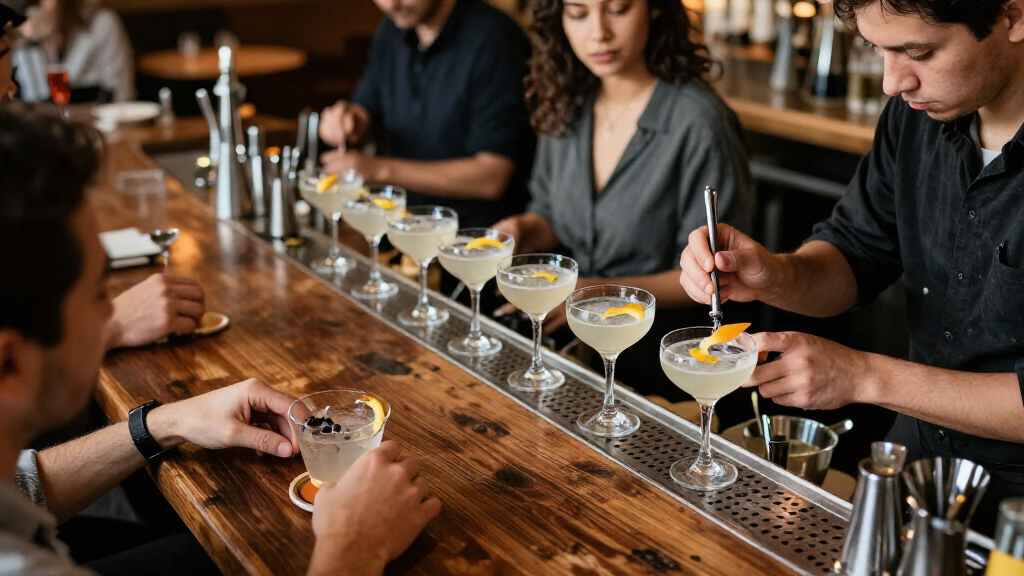
At Ophelia, a Midtown Manhattan lounge, the 90-minute “Omacocktail” experience includes seven small cocktails and small bites and is sold through Bucket Listers for around $100. The reported final drink is presented with drops of Louis XIII Cognac and paired with caviar. The drinks may be smoked, clarified, atomized or finished with edible glitter, making presentation a visible part of the experience.
Ophelia beverage director Amir Babayoff said the tasting is intended to let guests sit with a bartender and learn about how drinks are made. Elsewhere, Cocktail Omakase, a New York bar founded by Cocktail Kingdom CEO Greg Boehm in collaboration with Tokyo’s Bar Libre, offers a $55, four-course tasting with individual food pairings. Its menu changes every two weeks, and guests sit facing the bartender. Atlanta’s Tiger Sun serves a four-course cocktail tasting with food for $95 per person inside a refurbished tour bus, with menus themed around films.
The examples illustrate different versions of the format: some emphasize elaborate presentation, while others frame the tasting as a sequence built around interaction, ingredient choices and a theme. The source report says cocktail tasting menus remain relatively rare. It does not provide sales figures, repeat-visit data or other evidence measuring how many customers are choosing them.
Bars Sell Cocktails as a Guided Experience
The format gives bars a way to present cocktails as a connected sequence rather than separate orders. A tasting can make room to explain ingredients and techniques, pair drinks with food and let a bartender shape the progression. For customers, that may offer a more structured and educational night out than ordering one drink at a time.
It also gives bars a distinct product to market, with a set price and a defined experience. That can appeal to guests seeking novelty or a special occasion, but the reported examples vary in cost and presentation, and the source does not establish whether these menus are profitable or attract a sustained audience. The distinction matters: visibility and theatricality are not proof of lasting demand.
As an affiliate, we earn on qualifying purchases.
From Sushi Counters to Cocktail Bars
Omakase means, in broad terms, “I leave it to you”: the guest entrusts the selection to the person preparing the meal. The source report traces the practice to sushi stalls in Japan during the Edo period, from 1603 to 1868, where vendors chose fresh fish for customers. In later decades, omakase became closely associated with high-end sushi experiences and spread internationally.
The word is now used for experiences beyond sushi. The report cites a taco omakase at Pujol in Mexico City, pizza omakase at Pasquale Jones in New York and a vinyl omakase at Austin listening bar Equipment Room. That broadening has prompted debate over whether a cocktail tasting should use the term. Critics say a predetermined series of drinks alone does not capture the relationship and trust implied by omakase; supporters say the approach can be adapted when it emphasizes hospitality, technique and seasonal ingredients.
“Everyone wants to know what’s going on behind the scenes these days.”
— Amir Babayoff, beverage director at Ophelia
As an affiliate, we earn on qualifying purchases.
Demand and Meaning Remain Contested
The available reporting does not establish how many customers are booking these tastings, whether guests return, or whether operators can sustain the format financially. The scale of the trend is also uncertain: the examples show bars experimenting in several cities, but they do not establish how widespread the practice is across the industry.
There is disagreement over whether cocktail menus qualify as omakase. Yamao says the term describes a relationship, not merely a fixed tasting sequence; Nishida says bars can use it when technique, seasonality and hospitality are central. The source does not set a shared standard for the label, and it is unclear whether more operators will adopt the term or use simpler descriptions such as cocktail tasting menu.
As an affiliate, we earn on qualifying purchases.
For now, the next developments are the menus themselves. Cocktail Omakase says its four-course offering changes every two weeks, while Tiger Sun builds new tastings around film themes. Those rotating programs give the bars a way to introduce new drinks and themes, though the source does not report future expansion plans or booking targets.
Whether the format becomes a durable part of bar service will depend in part on whether guests continue to book it and whether bars can deliver an experience that feels distinct from a conventional flight of drinks. For customers, the practical details to check are the price, number of courses, food pairings and how much the menu can be customized. The broader question—whether “omakase” describes a meaningful service approach or has become a marketing label—remains open.
multi-course cocktail tasting experience
As an affiliate, we earn on qualifying purchases.
As an affiliate, we earn on qualifying purchases.
Key Questions
What is a cocktail omakase?
It is a guided sequence of cocktails, often paired with food and served with interaction between guests and the bartender. The format varies by bar, and there is no shared standard described in the source.
Where are these cocktail tastings being offered?
The report describes examples at Ophelia and Cocktail Omakase in New York and Tiger Sun in Atlanta. It also mentions an omakase-style vinyl experience at Equipment Room in Austin, which is not a cocktail tasting.
How much do the reported tastings cost?
The reported prices are around $100 at Ophelia, $55 for Cocktail Omakase’s four-course menu, and $95 per person at Tiger Sun. Prices and offerings may change.
Does every cocktail tasting count as omakase?
That is disputed. Shinya Yamao says a fixed sequence alone is not enough because omakase involves a relationship between guest and creator. Hiro Nishida says the approach can suit bars when it centers on technique, seasonal ingredients and hospitality.
Is the trend proven to be popular?
Not from the information reported. The source gives examples of bars offering the format but no booking totals, customer-return data or broader market figures. Its level of demand and long-term staying power remain unclear.
Source: rss