Your drip coffee maker may be slow because of a grind that’s too fine, clogged filters, or mineral buildup, all of which restrict water flow. Water temperature also plays a role—you want it between 195°F and 205°F for faster extraction. Regular cleaning, using the right grind size, and ensuring your machine heats properly can help speed things up. Check out the full guide to uncover more tips to get your brew flowing faster.
Key Takeaways
- Check and adjust the grind size to medium for optimal water flow and extraction speed.
- Ensure water temperature is between 195°F and 205°F for efficient brewing.
- Regularly clean filters and descale the machine to prevent clogs and mineral buildup.
- Use hot water or pre-warm the machine to reduce heating time.
- Brew smaller batches or reduce coffee quantity to speed up the overall process.

If you’re looking to start your day quickly, understanding the speed of your drip coffee maker can make all the difference. One of the main factors that influence how fast your coffee brews is the grind size of your beans. If your grind is too coarse, water will flow through it too quickly, resulting in under-extraction and a weaker brew, but it can also cause the brewing process to take longer because the water isn’t efficiently extracting flavors. Conversely, a grind that’s too fine can clog the filter, slowing down the water flow and making the process sluggish. Finding the right balance—medium grind for most drip machines—ensures water passes through evenly, speeding up the brew without sacrificing flavor.
Another essential aspect impacting brew time is water temperature. If your water isn’t hot enough, it won’t extract flavors efficiently from the coffee grounds, leading to a longer brewing process because the water struggles to extract the full profile of the beans. Ideally, you want your water between 195°F and 205°F (90°C to 96°C). Many drip coffee makers are preset to this range, but if yours is older or adjustable, verify the temperature settings. Using water that’s too cool can cause slow extraction, making your coffee take longer to brew, while overly hot water might cause over-extraction or bitterness, but it typically doesn’t slow down the process. Ensuring your machine heats water to the *ideal* temperature guarantees a quicker, more consistent brew. Additionally, water temperature can directly impact the extraction efficiency and overall brew time.
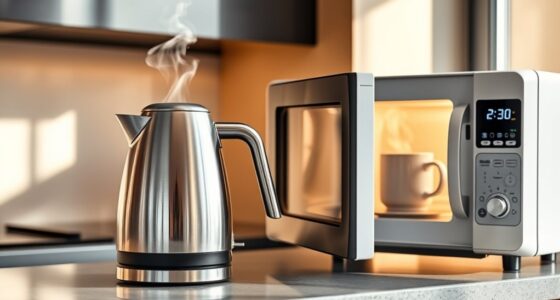
Other factors can also contribute to slow brew times. For example, a clogged filter or mineral buildup can restrict water flow, causing delays. Regularly cleaning your machine and changing filters helps maintain *peak* flow rates. If your coffee maker has a large capacity, it naturally takes longer to brew, but you can reduce this by brewing smaller amounts or using a machine with a faster brewing mechanism. Also, if the water reservoir is filled with cold water from the tap, it might take longer for the machine to reach the desired temperature, extending brew time. Pre-warming your machine or using hot water from a kettle can help speed up the process.
Frequently Asked Questions
Can Mineral Buildup Cause Slow Brewing?
Yes, mineral buildup from mineral deposits can cause slow brewing. When you neglect descaling procedures, these deposits clog the water passages, restricting flow and increasing brew time. Regularly descaling your coffee maker helps remove mineral deposits, ensuring water moves efficiently through the machine. This maintenance keeps your coffee maker running smoothly, improves brew speed, and maintains the quality of your coffee.
Does Water Temperature Affect Brew Speed?
Yes, water temperature affects your brew speed. If the water isn’t hot enough, it takes longer to extract flavors fully, slowing down the brewing process. Make sure your coffee maker’s water heating system is functioning properly and that the temperature control is set correctly. Proper temperature control helps guarantee hot water quickly reaches the ideal brewing temperature, speeding up the process and improving your coffee’s taste.
How Does Coffee Grind Size Impact Brewing Time?
Think of coffee grind size as a relay race; smaller particles sprint through filters faster, speeding up your brew, while larger ones lag behind. Using a consistent grind guarantees even water flow, preventing delays. Fine grinds, like a quick runner, deliver a quicker brew, whereas coarser particles slow things down. Adjusting grind consistency and particle size directly influences your brewing time, helping you enjoy your coffee sooner.
Is Using a Larger Water Reservoir Faster?
Using a larger water reservoir can make your coffee brew faster because it improves brewing efficiency. When the reservoir capacity is bigger, your coffee maker doesn’t need to work as hard to heat and pump water through the system. This reduces the overall brewing time, allowing you to get your coffee quicker. Keep in mind, though, that the actual speed also depends on your machine’s design and heating capabilities.
Do Different Coffee Brands Influence Brew Speed?
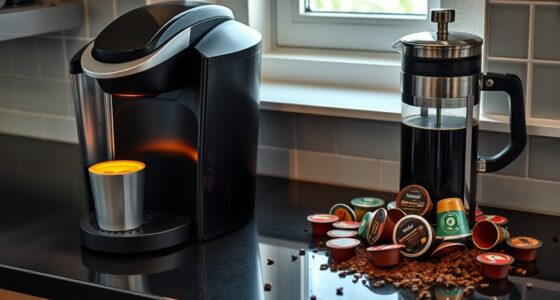
Yes, different coffee brands can influence brew speed, but it’s subtle. Imagine opening a bag, noticing brand consistency in grind size and roast, which affects flow rate. Some brands have a denser grind or darker roast, slowing water through the beans, altering the flavor profile and brew time. So, choosing a consistent brand helps maintain steady brewing, preventing surprises and ensuring your coffee’s taste and speed stay just right.
Conclusion
Now that you know what’s causing your slow brew, imagine what could happen if you tweak just one thing. Will it suddenly speed up, or could there be an unexpected surprise lurking inside? The answers are within your reach. With a few simple adjustments, you might unseal a secret to faster brewing—and maybe even discover more about your coffee maker than you ever thought possible. Are you ready to find out what’s next?